Honorary Committee Previous editions Contact
Karol Szymanowski International Music Competition is an opportunity for outstanding young artists. An opportunity to broaden the scope and increase the momentum of their career. An opportunity to get international recognition and to win a great prize.
The competition takes place every five years in four performing disciplines: piano, violin, string quartet and voice. The fifth, special category is the composing competition, taking place a year ahead of the performing competition.
In each category, the participants are judged by a jury made up of the most outstanding personalities of the musical world and listened to by influential critics, agents, media, and warmly supportive audiences. The total prize money of nearly 300,000 € as well as invitations to perform in concerts mean that winning the competition might become a transformative moment in each participant’s life.
The repertoire, selected with great consideration, encourages one to discover music, moving beyond canons and fossilized habits. It is a tribute to the phenomenon of Karol Szymanowski and other exquisite artists, ones equally uncompromising as him. It is a tribute to music as the spiritual language of the whole humanity.
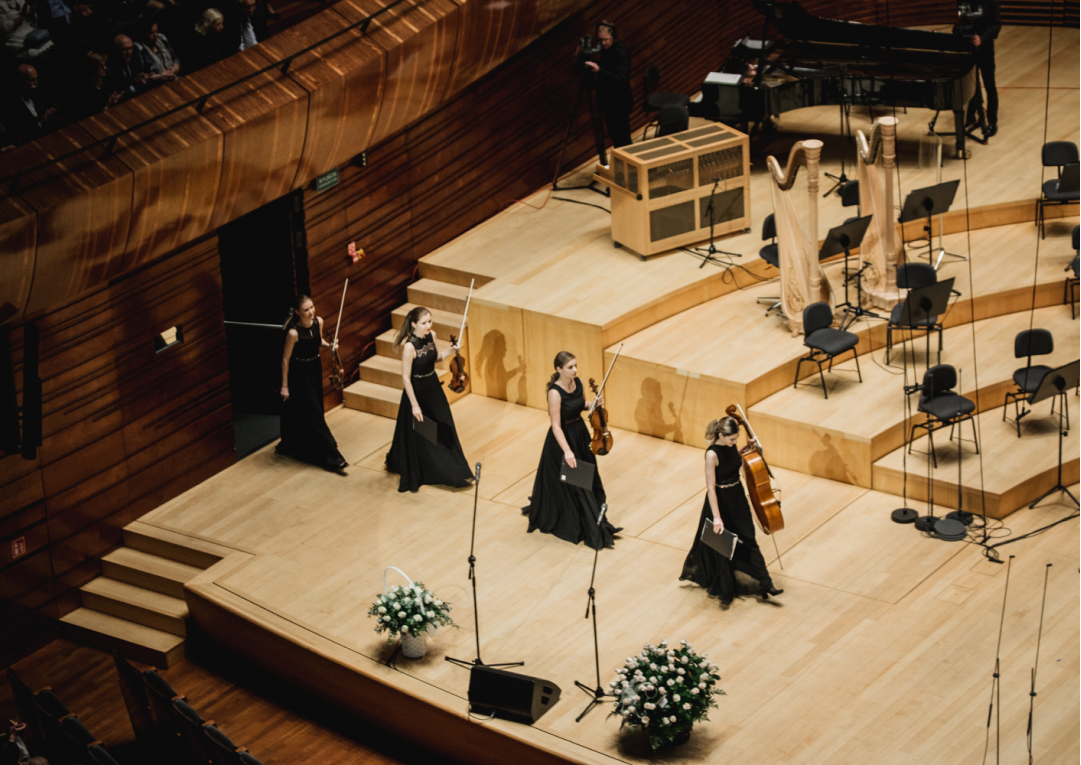
The participants find great allies in the amazing concert halls of the Karol Szymanowski Academy of Music and the Polish National Radio Symphony Orchestra in Katowice, boasting unique acoustic properties. Another factor of no mean significance is the unique atmosphere of Katowice, a city bustling with surprises and contrasts, successfully redefining its post-industrial identity through music.
The competition is organised by the Polish National Radio Symphony Orchestra in Katowice, in cooperation with the Ministry of Culture and National Heritage; the City of Katowice; Polish Radio; Karol Szymanowski Academy of Music in Katowice; and the Karol Szymanowski Music Society in Zakopane. The Strategic Partner of the competition is Polskie Wydawnictwo Muzyczne PWM. The Media Partner is Polish Music Information Centre.
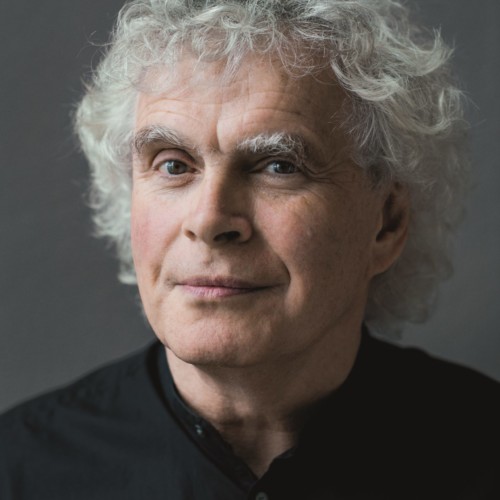
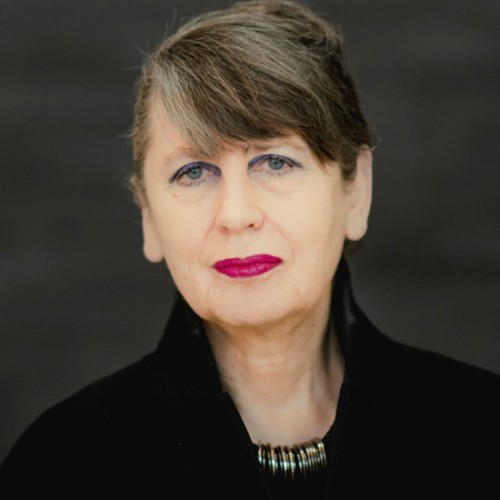
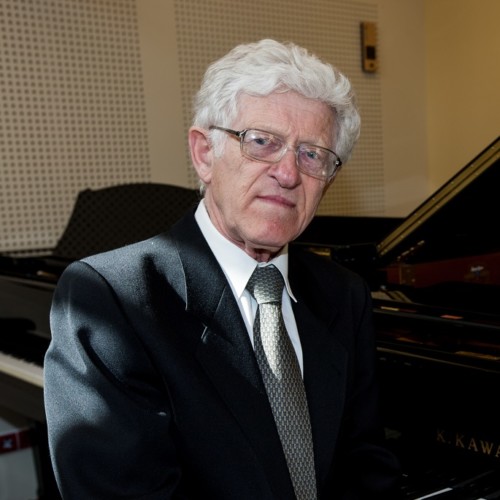
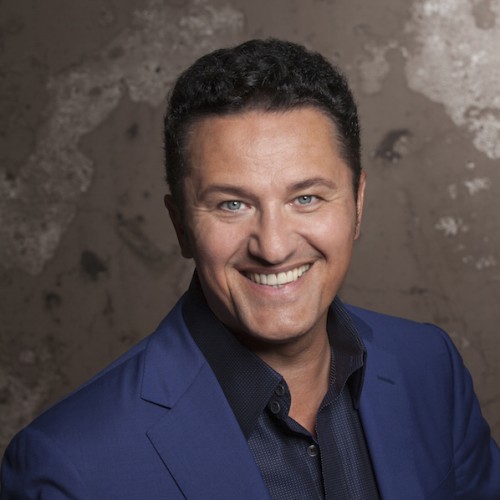
Sir Simon Rattle was born in Liverpool and studied at the Royal Academy of Music.
For some years Principal Guest Conductor of the Rotterdam and Los Angeles Philharmonic Orchestras, in 1980 he became Principal Conductor and Artistic Adviser of the City of Birmingham Symphony Orchestra, stepping up to Music Director from September 1990 until August 1998. He is also Founding Patron of the Birmingham Contemporary Music Group and since the early 1990s, has been a Principal Artist of the Orchestra of the Age of Enlightenment.
In September 2002 Sir Simon became Chief Conductor and Artistic Director of the Berliner Philharmoniker, where he remained until June 2018.
In September 2017, Simon took up the position of Music Director of the London Symphony Orchestra.
From 1970 to 1976, Eugeniusz Knapik studied at the State Higher School of Music (now the Karol Szymanowski Academy of Music) in Katowice, tutored by Henryk Mikołaj Górecki (composition) and Czesław Stańczyk (piano). In 1976, he was granted a scholarship from the French Government, enabling him to undertake composition studies with Olivier Messiaen in Paris.
He has been continuously performing as a soloist, as well as in duos and ensembles, both in Poland and abroad. He rose to fame as the first Polish performer of O. Messiaen’s Vingt regards sur l’enfant-Jésus (Twenty Contemplations on the Infant Jesus) cycle; the recording of the piece, made in 1979 (published by the DUX label in 2011), won the Fryderyk 2012 and the Diapason d’Or 2012 awards. Eugeniusz Knapik has given multiple performances during the Warsaw Autumn International Festival of Contemporary Music.
He has won numerous prizes in composing competitions. His pieces have twice represented the Polish Radio at the UNESCO International Rostrum of Composers in Paris. He has also won the Polish Composers’ Union’s annual prize and the Minister of Culture and Arts prize. In 1999, he won the President of the City of Katowice Award, while in 2005 he was awarded the Knight’s Cross of the Polonia Restituta order, the Commission of National Education Medal, and the Medal for Merit in Culture ‘Gloria Artis’. In 2009, he was created a honorary member of the Polish Composers’ Union. In 2014, he won the Lutosławski Medal.
In 1988, commissioned by the director of the Théâtre de la Monnaie, he began work on The Minds of Helena Troubleyn opera trilogy. In recent years, he reached for monumental works, including: Up into the Silence, Moby Dick, Beauty Radiated in Eternity, Concerto of Song Offerings.
Eugeniusz Knapik serves as head of the Composition and Theory of Music Department at the Karol Szymanowski Academy of Music in Katowice. From 2002 to 2008, he served as the Academy’s rector.
Born in Gdynia on 28th May 1949, Joanna Wnuk-Nazarowa has been living in Krakow since she was five. It was also there that she graduated from the State Music High School (diploma in piano theory, also attending violin and oboe classes). She studied at the Academy of Music in Kraków, in the conducting and composition class (1974 graduate, tutored by professor K. Penderecki). She continued her education in conducting masterclasses with professor H. Swarovsky (Austria, 1971-72). She completed her opera internship at the Silesian Opera in Bytom in 1973. From 1973 to 1974, she was the musical director of the Teatr Ludowy in Nowa Huta, and from 1977 to 1979 she held the same post at the Stary Theatre in Kraków. Since 1974, she has been a lecturer at the Academy of Music in Kraków and member of the Department for Analysis and theory of Music. She has participated in numerous seminars and scientific sessions. She has published both articles for general press and scientific texts (including several publications on Zygmunt Konieczny’s theatre works). As a conductor, she participated in important international festivals (Warsaw Autumn, Oregon Bach Festival).
In 1991, she won the competition for the post of General Director of the State Philharmonics in Kraków. She contributed significantly to rebuilding the Philharmonics’ seat after a fire (11.12.1991). She achieved the concert hall being reintroduced into use in less than half a year and the whole building in a year after the fire. The renovation of the building was an example of extraordinary efficient organisation and funds management.
While preparing concert programmes for the Kraków Philharmonics, she ensured a special place for Polish music. She was particularly invested in the programme of musical education for the youth. She was consultant for the Programme Council of the Kraków 2000 Festival and member of the Villa Decius society.
She became Minister of Culture and Arts, recommended by the Unia Wolności party. She served at the post from 30.10.1997 to 25.03.1999. During her term in office, she was an ardent supporter of the development of national minorities’ culture. As minister, she actively participated in significant international fora: a global UNESCO conference on culture in Stockholm (Multiculturalism of societies); a global meeting of ministers of culture in Canada (Our creative diversity), and a meeting of ministers of culture of the European Union countries. In December 1998, she was head of the Polish delegation to an international conference on asset restitution for the victims of the Holocaust held in Washington.
From 2000 to 2018, she served as general and programme director of the Polish National Radio Symphony Orchestra in Katowice. She was the initiator and originator of every project of the Orchestra: Maraton twórczości Góreckiego (Górecki’s Works Marathon), Pociąg do muzyki Kilara (Feeling Kilar), Muzyczne Podróże Morskie (Musical Sea Journeys), Dzień Kilara (Kilar Day), Noc Kilara (Kilar Night), Festiwal Górecki-Penderecki w 75. rocznicę urodzin (The Górecki-Penderecki Festival on the 75th birthday), and the biennial Festiwal Prawykonań - Polska Muzyka Najnowsza (Festival of Premieres - Polish New Music).
Joanna Wnuk-Nazarowa’s music for theatre is a significant part of her composing work (including the music for Eugène Ionesco’s Exit the King, Molier’s The Misanthrope at the Stary Theatre, William Shakespeare’s Richard III at the Wybrzeże Theatre, Gombrowicz’s Operetka at the Horzyca Theatre in Toruń), alongside her music for television theatre (including Słowacki’s Sen Srebrny Salomei [The Silver Dream of Salomea], classified within the TVP’s Theatre’s golden hundred). She has also arranged music for a number of TV plays (including ones directed by Kazimierz Kutz: Kolacja na cztery ręce [Four-handed Supper], Antygona w nowym Jorku [Antigone in New York], Emigranci [The Emigrants], Wujaszek Wania [Uncle Wania], and Ziarno zroszone krwią [A seed sprinkled with blood]).
Having retired, in 2018, she began composing more intensively. The year 2020 marked 47 years from her composing (National Philharmony in Warsaw) and conducting (Kraków Philharmonics) debuts.
Joanna Wnuk-Nazarowa has been awarded multiple honours and prizes, including The Gold Cross of Merit (2005), Silver (2005) and Gold „Gloria Artis” Medals, Honorary Award of the Polish Composers’ Union (2009), Knight’s Cross (2011) and Officer’s Cross of the Order of Polonia Restituta (2018), Gold Medal of Merit for National Defence, The „Kobieta Humanitas” [Woman Humanitas] prize in the Culture category (2015), Gold Medal for Protector of Places of National Memory, The „Meritorious Activist ofCulture ” honorary badge, 3rd-degree Minister of Culture and Arts’ Award for Educational Activity, Honorary Coryphée of Polish Music (2018), ZAiKS’ Award for the Centennary of the Society(2018), and the Lithuanian Darius and Girėnasa Medal (1998). In 2021, she was made Honorary Citizen of Katowice.
Andrzej Jasiński was born in Częstochowa in 1936. In 1959, he graduated with honours from the State Higher School of Music in Katowice in professor Władysława Markiewiczówna’s class. A year later, he won the Grand Prix of the M. Canals International Piano Competition in Barcelona, and subsequently completed his studies in Paris (1960-1961) with professor Magda Tagliaferro. He made several tours around the former USSR. He has also performed in Europe, Japan, Brazil, and Uruguay. He has performed in every philharmony in Poland. He participated in numerous music festivals, including seven performances at the Polish Piano Festival in Słupsk. He made archive radio recordings, including ones with the WOSPR. He has performed and recorded an album with the NOSPR wind quintet.
Since 1962, he has been teaching at the Academy of Music in Katowice. He has been head of the Piano Department for many years (since 1973). His active teaching work resulted in educating a number of performing pianists and teachers. From 1979 to 1982, he taught at the Higher School of Music in Stuttgart. He has taught piano courses in multiple countries, including ones given regularly for 30 years at the Mozarteum in Salzburg. He continues intensive collaboration, both as a teacher and a juror, with musical institutions in Japan and in China. Since 1975, he has been a juror of numerous piano competitions worldwide, including the Queen Elisabeth of Belgium, M. Longue, A. Rubinstein, P. Tchaikovsky, F. Busoni, and van Cliburn competitions. He has been juror of the Fryderyk Chopin International Piano Competition in Warsaw nine times and chair of its jury three times. He has received multiple high state honours for his artistic and educational activity, including the Commander’s Cross of the Order of Polonia Restituta and the Gloria Artis Medal. He was awarded honorary doctorates from the Katowice, Warsaw and Lviv academies of music.
Piotr Beczala is one of the most renowned and sought-after tenors of our time and a constant guest in the world’s leading opera houses. The Polish-born artist is acclaimed by audiences and critics alike not only for the beauty of his voice, but also for his ardent commitment to each character he portrays.
Since his debut as Duca in Rigoletto by Verdi in 2006, Piotr Beczala is a regular guest at the Metropolitan Opera New York. Here, he has performed in a new production of Tchaikovsky’s Eugene Onegin opposite Anna Netrebko, Prince in Dvorak’s Rusalka, Edgardo in Donizetti’s Lucia di Lammermoor, Rodolfo in Puccini’s La Bohème, as well as in the title roles of Gounod’s Roméo et Juliette and Faust. In 2011, he accompanied the MET on a tour to Japan, singing Rodolfo and Edgardo. 2012 saw Piotr Beczala make his role debut as Chevalier des Grieux in Laurent Pelly’s new production of Massenet’s Manon, alongside Anna Netrebko as the eponymous heroine, conducted by Fabio Luisi. The production was part of the “HD live” series by the MET and was broadcast live in cinemas throughout the US and over 50 countries worldwide. It was released on DVD, as was his interpretation of the Duke in a new production of Rigoletto, alongside Diana Damrau in January 2013, for which he received the ECHO Klassik Award “Singer of the Year” in 2014. In the 2015/16 season he was making his highly acclaimed debut in the title role of Wagner´s Lohengrin opposite Anna Netrebko at the Semperoper Dresden.
In addition to his operatic work, he has sung many of the great choral and orchestral vocal works with the world’s most distinguished orchestras and maestri. Celebrating his 20th stage anniversary Piotr Beczala gave a concert at Theatre Wielki in Warsaw in 2012. Also in 2012, he sang the New Year’s Eve concerts at the Semperoper Dresden for the second consecutive year. The concerts, which were led by Christian Thielemann, were broadcast on TV and released on CD and DVD by Deutsche Grammophon. In 2014 he joined a spectacular group of colleagues for Le Concert de Paris, an annual concert event and celebration at the Eiffel Tower with an estimated live audience of more than half a million people.
Piotr Beczala’s is represented on dozens of CDs in a vast array of works, ranging from staples of the repertory, including Faust live from Vienna (Orfeo) and La Traviata from Munich (Farao), which was nominated for a 2008 Grammy Award, to such rarely-heard works as Szymanowski’s Król Roger and Offenbach’s Rheinnixen (Accord) and - Strauss II’s Simplicius (EMI). In addition, Piotr Beczala sings on a recording of Lucia di Lammermoor with Natalie Dessay in the title role and Valery Gergiev leading the Mariinsky Opera on the Company’s own label.
Piotr Beczala was born in Czechowice-Dziedzice in Southern Poland and received his initial vocal training at the Katowice Academy of Music, where he was given instruction by such illustrious singers as Pavel Lisitsian and Sena Jurinac. His first engagement was at the Landestheater Linz and in 1997 he became a company member of the Zürich Opera. The Zurich audience could hear him as Alfredo in La traviata, Edgardo in Lucia di Lammermoor, the title role of Faust, Tamino in Mozart’s Die Zauberflöte, Elvino in Bellini’s La Sonnambula, and also as the soloist in orchestral songs by Richard Strauss, Riccardo in Verdi’s Un Ballo in maschera as well as Rodolfo in La Bohème.
Entries: 1.07-30.09.2022
The composition competition is a tribute to Karol Szymanowski, a great master craftsman of composing, who could use his art to lead a spiritual dialogue with the world of current affairs, simultaneously creating works of timeless value. Such are the works we are awaiting: ones belonging to the current times and universal, touching upon matters of significance for us today, simultaneously reaching beyond the horizon of this-worldiness.
We await works in one of the four disciplines: piano, violin, voice, or string quartet. The composition competition takes place a year ahead of the performing competition so as to enable the inclusion of the winning pieces as obligatory in its repertoire.
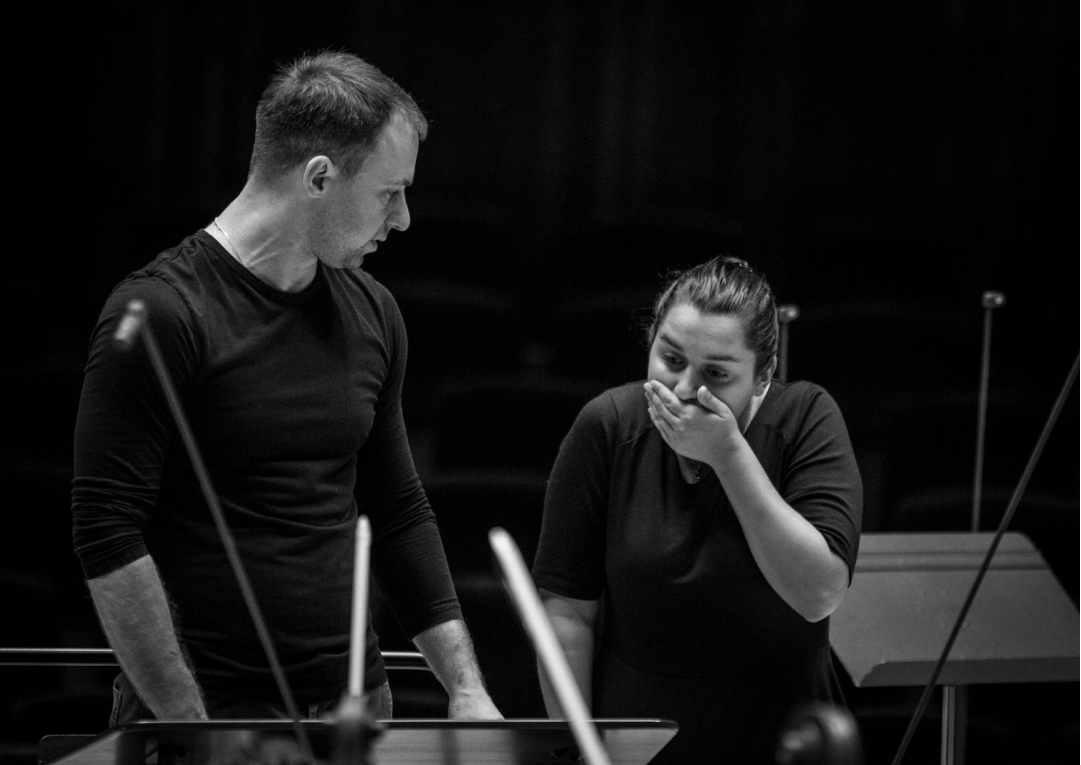
In addition to being awarded monetary prizes, the winning pieces will be published and included in the repertoire of the performing competition in 2023.
The prizes for the awarded compositions in the piano, violin and voice disciplines:
1st prize 3,000 €
2nd prize 2,000 €
3rd prize 1,000 €
The prizes for the awarded compositions in the string quartet discipline:
1st prize 4,000 €
2nd prize 3,000 €
3rd prize 2,000 €

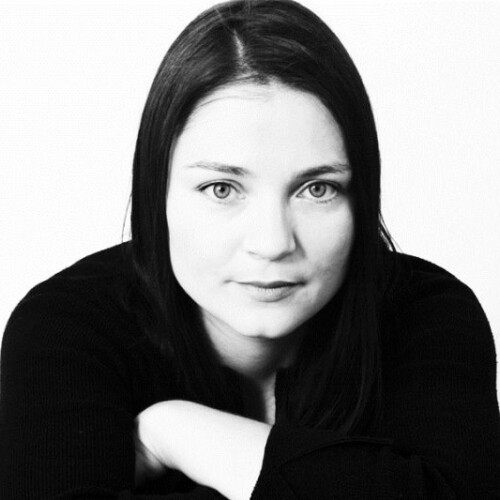
An organist and composer of international renown. He graduated from the Luigi Cherubini Conservatory in Florence and from the Conservatoire National Supérieur de Musique et de Danse de Paris.
Filidei’s music is very expressive but, at the same time, unobtrusive. He is a master of building up tension and deftly manoeuvring orchestration.
He has mastered the exceptional capability of employing sounds of any kind in his compositions. Not only that, but he can also create a beautiful piece with the use of animal sounds, mechanic ones, or silence.
Filidei is a laureate of such prestigious awards as: Siemens Förderpreisträger, Abbiati Award, Les Grands Prix Internationaux du Disque - Académie Charles Cros, or the Simone and Cino Del Duca Foundation’s 2018 Commande awarded by the Académie des Beaux-Arts. Filidei has also been composer-in-residence for numerous ensembles and music festivals.
He has been played with a number of world-class orchestras, including WDR, SWR, RSO Wien, ORT, RAI, the Tokyo Philharmonic, Bayerischen Rundfunk, LaVerdi, and numerous modern music ensembles.
Filidei also teaches composition. He has taught at the Royaumont Foundation’s Voix Nouvelles program, the University of Iowa, Takefu, the International Academy in Tchaikovsky City, Darmstädter Ferienkurse, and many other distinguished institutions worldwide.
A composer and vocalist. As an artist, she breaks down stereotypes and enjoys international recognition, both as a creator of her own music and as an interpreter of the most challenging works of the vocal repertoire.
She delivers a fascinating blend of the 50s’ and the 60s’ musical means with contemporary electro-acoustic elements. The New York Times has called her one of the greatest composers and vocalists in the world.
She has worked with multiple prestigious philharmonics, such as Walt Disney Concert Hall in Los Angeles, Konzerthaus in Vienna, Konzerthaus in Berlin, Musikgebouw in Amsterdam, Musikverein Wien, Elbphilharmonie in Hamburg, Philharmonie in Berlin, in Cologne, Luxembourg, Moscow, Essen, Royal Albert Hall, Royal Festival Hall in London, Casa da música in Porto, National Sawdust in New York, Seattle Symphony, Chicago Symphony, Baltimore Symphony, L’Opéra de Reims, National Philharmonic in Warsaw, and many more.
Her discography consists of more than a dozen titles, including the “Fryderyk” Award-winning Cascando and Apparition, Dream Lake, Blots on the Sun, Not I, or Poems with her vocal interpretations of songs by Copland, Berg and Szymański.
The artist has been honoured with such prestigious awards as: “Passport” Award of the “Polityka”, Coryphaeus of Polish Music, European Composer Award, Erste Bank Kompositionspreis, “Gloria Artis” Medal, and many more.
Agata Zubel is also active in teaching, she is a lecturer of the Academy of Music in Wroclaw. What’s more, she and Cezary Duchnowski perform as the ElettroVoce duet.
A musicologist and director-editor-in-chief of the PWM Edition.
He graduated from the Jagiellonian University in Krakow, where he also obtained his PhD under the supervision of Prof. Alicja Jarzębska, and Ruprecht-Karls-Universität in Heidelberg.
He worked at the Institute of Music at the Silesian University in Cieszyn. Currently, he is a lecturer at the Institute of Musicology at the Jagiellonian University in Krakow.
Daniel Cichy is a laureate of the Ray E. & Ruth A. Robinson Musicology Award, the Deutscher Musikrat and Ernst-von-Siemens-Musikstiftung scholar, and other recognized awards.
In 2009 he released his book Internationale Ferienkurse für Neue Musik w Darmstadcie. Dzieje, rola i znaczenie w myśli teoretycznej, praktyce kompozytorskiej i życiu muzycznym drugiej połowy XX wieku.
Moreover, he is active as a music critic and journalist.
The PWM is our strategic partner, preparing editions of the awarded compositions for performances in the performing part of the Competition.
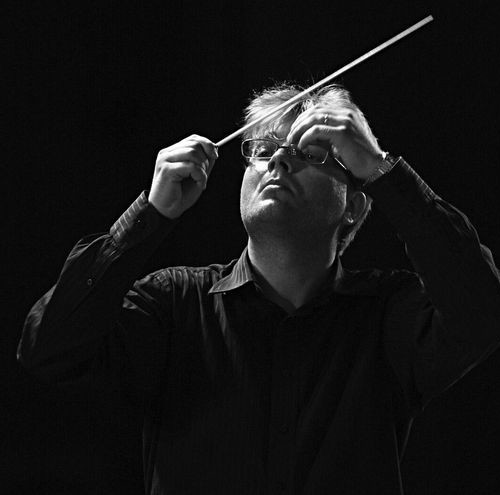
A composer and artistic director of the Ensemble Multilatérale. He actively promotes modern music, e.g. by organizing Controtempo Festival in Rome.
The artist simultaneously studied jazz at CNR in Marseille and composition and analysis at Conservatoire National Supérieur de Musique et de Danse, and later he continued education at IRCAM Institute.
His compositions have been performed by such ensembles and orchestras as: Klangforum Wien, Orchestre Philharmonique de Radio France, Seattle Symphony, New York Philharmonic Orchestra, Ensemble Intercontemporain, and more.
His albums are well recognized with such awards as: Diapason d'Or, "Preis der Deutschen Schallplattenkritik" and "Coup de Cœur" Académie Charles Cros.
He has composed for numerous institutions like: Ircam, Radio France Philharmonic Orchestra, New York Philharmonic Orchestra, Casa Da Musica w Porto, and festivals like Aix-en-Provence.
An important part of his work is education. He is often invited to various conferences, courses, or master classes worldwide.
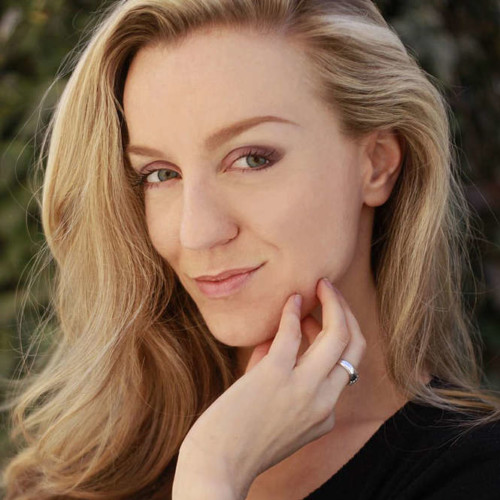
A composer and a poet. She graduated from Columbia University and the Royal Conservatoire of the Hague. Moreover, she holds a degree from Twente University, where she studied Chemical Engineering.
Her art works, both literature and music, are imagination stimulating. They are described as lyrical and experimental. She creates vocal, orchestra, and electronic compositions, often blending traditional instruments with electronic sounds.
Hirs’s compositions have been performed by such ensembles as: Amsterdam Sinfonietta, ASKO|Schönberg, Royal Concertgebouw Orchestra, Klangforum Wien, Musikfabrik, and the artist herself as she performs at international festivals.
She has been invited by the Nieuw Ensemble to develop a program for the OpenMusic and contemporary compositional techniques course, which later she ran at the Conservatorium van Amsterdam. She has also worked at Columbia University and has given guest lectures at Guildhall School of Music and Drama in London.
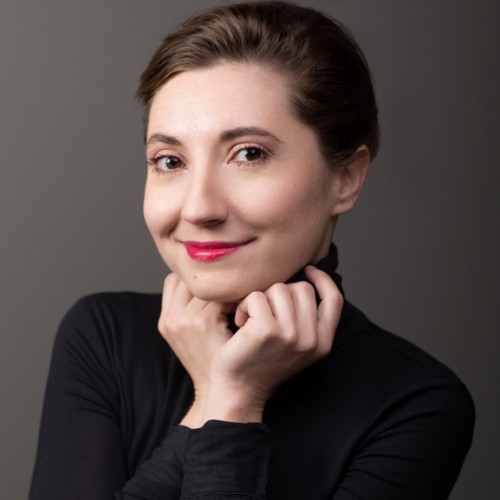
An Estonian composer. She studied at the Tallinn Secondary Music School, the Estonian Academy of Music, and the Conservatoire Superieur de Paris.
Drawing inspiration from Gregorian chant, oriental melodies, spectral music, and the avant-garde experiments of IRCAM, Tulve creates compositions that perfectly reflect the cultural richness of her country of origin. The sonic center of her works is not only timbre, but also intonation tensions, harmonic structures or melodic shapes, and the axis of her entire oeuvre - the constant transformation of life energy, which takes many forms and contains within itself numerous contradictions.
The composer has participated in Darmstadt International Summer Course for New Music, International Bartók Festival in Szombathely, and electronic music course at IRCAM in Paris.
Currently, she is a professor of composition at the Estonian Academy of Music and art director of the Estonian Music Days. The artist has been honoured with the Estonian Order of the White Star and French Ordre des Arts et des Lettres.
| 01.07.2022 | beginning of the call for entires |
| 30.09.2022 | deadline for entries |
| 31.10.2022 | announcement of the results of the competition |
Apply: https://szymanowski-competition.appassimo.com
Rules of the 2nd Karol Szymanowski International Music Competition - composition
The most important rules:
The above are only some of the most important rules of the Competition. Please read the complete Rules.
Piano

Violin
Manolis Ekmektsoglou
String quartet
Voice

Entries: 1.11.2022-31.01.2023
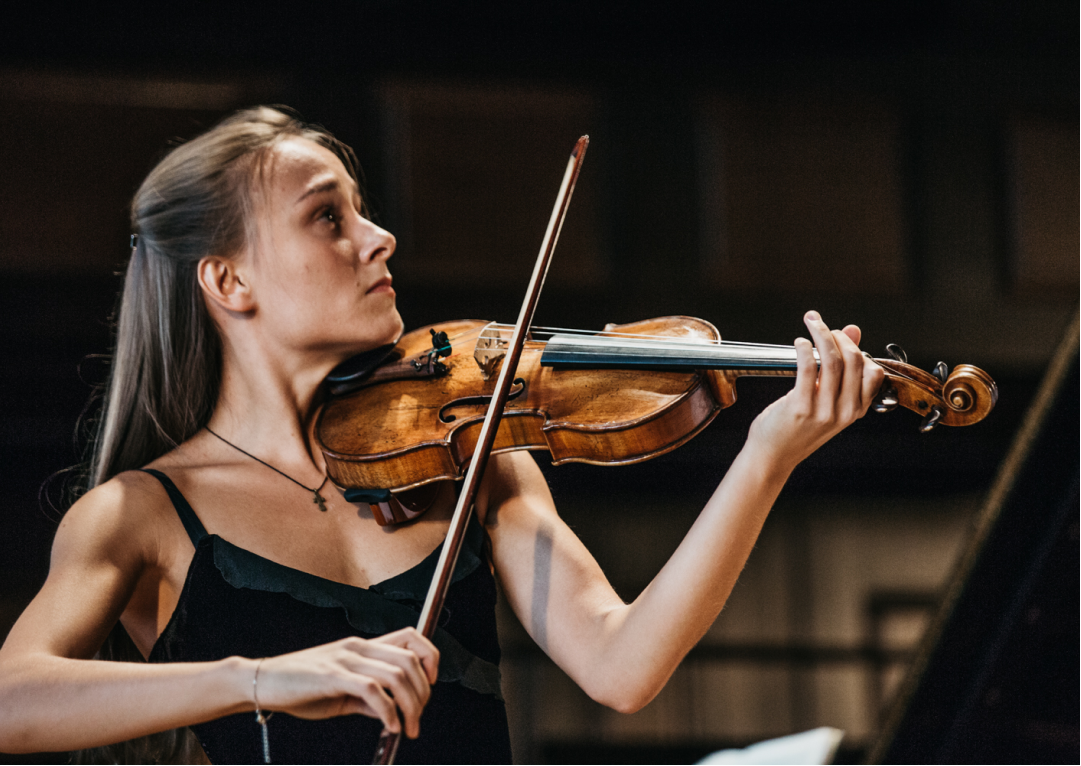
In Karol Szymanowski’s music, the violin is a symbol of friendship and love. The composer was a long-time close friend of the ingenious virtuoso Paweł Kochański, who became a professor at the New York Juilliard School after leaving Poland. Kochański inspired Szymanowski and accompanied him on his way to creating his two phenomenal violin concertos.
Love was what Szymanowski felt for his ‘chosen people’, as he would call the Górale people of the Podhale region. It is the violin that reflects the echoes of their music best. The Karol Szymanowski competition searches for violinists who are able to express the sense of such love and friendship best.
Rules of the 2nd Karol Szymanowski International Music Competition
Rules for the Qualifying Committee
Appendix No4 - Competition Repertoire in the violin discipline
The winners will receive high monetary prizes and the title of a laureate will surely open up new artistic opportunities before them.
1st prize 25,000 €
2nd prize 18,000 €
3rd prize 10,000 €
Special prize for the best performance of a piece by Karol Szymanowski: 5,000 €.
Special prize for the best interpretation of a contemporary piece: 1,000 €.
Honourable mention for the best accompanying pianist: 2,000 €.
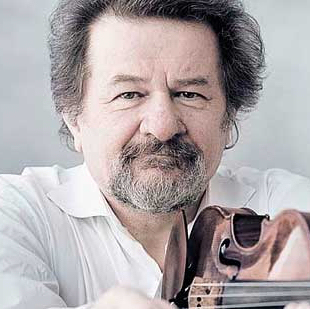
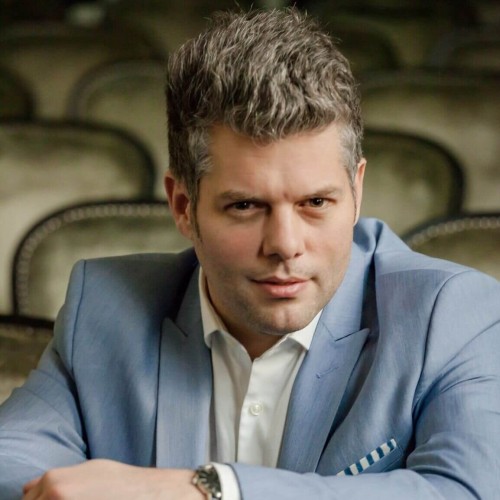
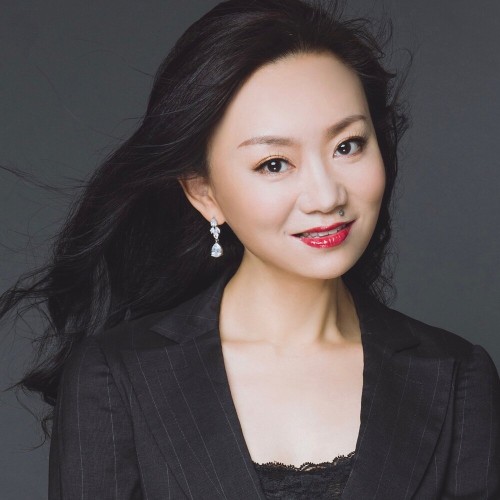
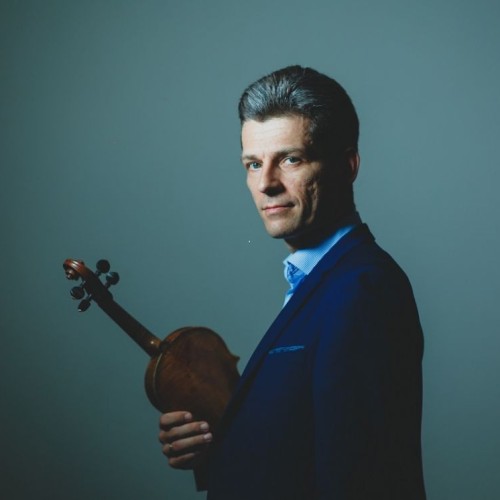
Laureate of multiple prestigious competitions. In 1983, he became a member of the famous Berliner Philharmoniker, with whom he spent 35 years as the first concertmaster and soloist. He was also the first violin of the Philharmonia Quartet Berlin. The ensemble found international acclaim and renown, performing in the most prestigious concert halls – from Japan to the United States. Critics place them among the global elite of such ensembles, one American reviewer having even written that they set the global artistic standard for quartets. The ensemble has recorded multiple albums, many of which won awards, including, twice, the Echo Klassik, a prestigious one awarded by German critics. The artist regularly performs as a soloist – with various orchestras, from Scandinavia to South America, as well as with recitals – in foremost musical centres of the world. Moreover, he serves on the juries of multiple international string competitions. For 20 years now, he has also been busy with conducting. For instance, he was the conductor-cum-chief of the Capella Bydgostiensis chamber orchestra, with whom he performed e.g. in Switzerland and recorded several albums (for CD Accord and Cavalli-Records).
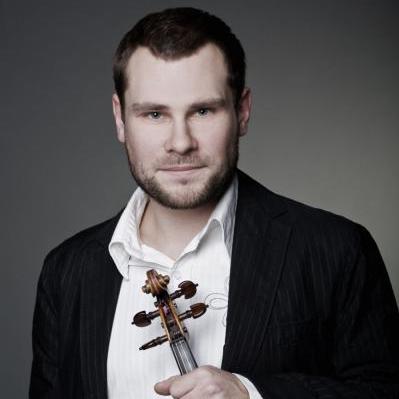
Debuted in 1994 as a 13 years old, with Pyotr Tchaikovsky’s Violin Concerto in D major. Since then, he has already performed with all the major Polish orchestras, as well as orchestras from abroad, including the Orquesta Real de Sevilla, Orquesta Nacional de España, Munich Philharmonic, Orchestre de la Suisse Romande, Dresdner Philharmonie, Philhar- monisches Orchester Dortmund, Orchestra di Santa Cecilia, Orquesta Nacional in Madrid, Orchestra del Maggio Musicale in Florence, Czech Philharmonic in Prague, Royal Stockholm Philharmonic, Orquestra Sinfônica do Estado de São Paulo, Concerto Köln, Orquesta Sinfónica Valencia, and Sinfonia Varsovia. In 2009 and 2011, at Antoni Wit’s invitation, he was a soloist in the Polish National Philharmonic’s tours of Great Britain. Another significant area of his artistic activity is chamber music. He performs with his father, as well as with the Zehetmair Quartett, highly successful internationally. Jakub Jakowicz has recorded multiple albums and teaches at the Chopin University of Music in Warsaw.
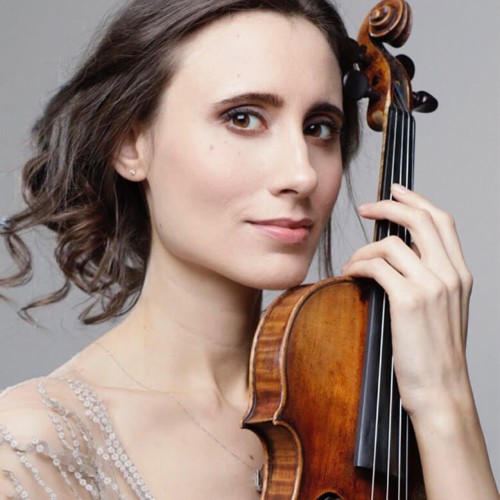
Can boast of concerts with orchestras the world over, such as the London Philharmonic, Brussels Philharmonic, City of Birmingham Symphony, Strasbourg Philharmonic, Royal Liverpool Philharmonic, Rheinische Philharmonie, Tampere Philharmonic, Malmö Symphony, Auckland Philharmonia, Singapore Symphony, and Nagoya Philharmonic Orchestra. In 2017, she performed at Wigmore Hall with concerts dedicated to Polish music. She has also released The Polish Violin album, with pieces by Polish composers only, including Karłowicz, Szymanowski, Wieniawski, and Moszkowski. She made prepremiere recordings of Andrew Schultz’s pieces, which brought her a nomination for the Australian Classical Music Awards in the “Best performance of an Australian composition” category. The artist’s discography is exceptionally rich. Among the numerous recordings made by Jennifer Pike one can find Sibelius’ Violin Concerto recorded with the Bergen Phil-harmonic Orchestra under the baton of Sir Andrew Davis, as well as Mendelssohn’s Violin Concerto with the City of Birmingham Symphony Orchestra with Edward Gardner. She is currently an artist in residence at Oxford University.
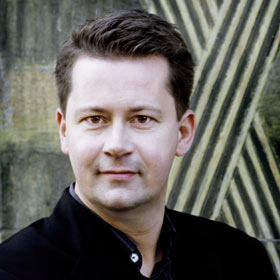
Award winning violinist Peter Herresthal has appeared with orchestras and ensembles world wide from Melbourne Symphony, with Thomas Adès conducting his Concerto at the Melbourne festival, Vienna Radio Symphony in Konzerthaus Wien, BBC Philharmonic, Atlanta Symphony, London Sinfonietta to numerous performances with the major Scandinavian Orchestras including Oslo and Stockholm Phil.
He has recorded 22 violin concertos earning ten nominations and five Norwegian Grammys.
His Nørgård recording was shortlisted for a Gramophone Award and was Editors Choice in The Strad and International Record Review.
The last seasons Peter has been touring Europe and US with Kaija Saariahos aria “Vers toi es si loin” written for him and more than 30 performances of her violin concerto "Graal Theatre", most recently recording the work for BIS with glowing reviews in BBC and Grammophone Magazines a TV production for BBC and nominations for a US Grammy Award.
Peter Herresthal is Professor at the Oslo Academy and the Royal Academy of Music Copenhagen , visiting Professor at the Royal College of Music London and NYU Steinhard School New York.
1st prize laureate at the Mozart International Violin Competition in Salzburg and the International Violin Competition in Indianapolis, as well as 3rd prize at the Queen Elisabeth Violin Competition in Brussels. He regularly performs in the most famous concert halls the world over: Carnegie Hall, Concertgebouw, Royal Festival Hall, Palais des Beaux Arts, Suntory Hall, and Berlin Philharmonic. He is a frequent guest with such significant orchestras as the BBC Symphony Orchestra, Budapest Festival Orchestra, Hungarian National Philharmonic Orchestra, London Symphony Orchestra, Estonian National Philharmonic Orchestra, Helsinki Philharmonic Orchestra, and Hong Kong Philharmonic Orchestra. He can boast of 20 albums, having made premiere recordings of pieces by Kurtág, Ligeti, Schnittke, Gubaidulina, Reich, and Wigglesworth. He is currently a professor of the Liszt Fer- enc Academy of Music in Budapest and the University of Cologne. Together with Katalin Kokas, he is a co-founder and artistic director of the Festival Academy Budapest. From 2010 to 2018 he was the first violinist of the internationally acclaimed Kelemen Quartet.
First prize laureate at the China National Competition in 1984, Grand Prize and five other main prizes at the Margeurite Long-Jacques Thibaud Competition in 1987 roku. She plays concerts all over the world. She has given recitals in North America, Europe, Asia, and Africa; visited such halls as the Amsterdam Concert- gebouw, Carnegie Hall, Kennedy Center, Royal Festival Hall, Suntory Hall in Tokyo and Vienna Concert Hall. She has performed as a soloist with top-class orchestras: the Baltimore Symphony Orchestra, BBC Symphony Orchestra, Radio de France Orchestra, New Japan Philharmonic Orchestra, and Russian Phil-harmonic Orchestra. Qian Zhou is a highly active pedagogue, being head of the string instruments department at the Yong Siew Toh Conservatory of Music. Her students achieve significant success in international music competitions. She has taught multiple violin masterclasses and sat on the juries of numerous competitions. She chairs The Artist Committee, is a jury member of the Singapore International Violin Competition, and artistic director of the Singapore Violin Festival.
Laureate of violin competitions in Poznań (Zdzisław Jahnke), Warsaw (Tadeusz Wroński) and in Brescia in Italy. Winner of first prizes at chamber music competitions in Copenhagen and Sondershausen. He studied with Roman Lasocki and Herman Krebbers. As a soloist, he has performed with the best Polish orchestras, such as NOSPR, Sinfonia Varsovia and most of the nation’s philharmonic ensembles. He has recorded over 40 albums for such labels as EMI Poland, ECM, CHANDOS, BIS, CD ACCORD, DENON, DUX, NAXOS, SONY CLASSICAL Poland, and DACAPO. Since 2001, he has been the 1st violin of the Silesian String Quartet, with whom he also regularly performs the world over. The ensemble has won multiple accolades, including nine Fryderyks, as well as the Gramophone Classical Music Award for recording Grażyna Bacewicz’s string quartets, and the Kory- feusz Muzyki Polskiej award. In 2022 they released a seven-disc album with Mieczysław Weinberg’s complete string quartets. Szymon Krzeszowiec is the head of the String Instruments Department at his alma mater, also teaching violin there. He is an artistic adviser of the Zakopiańska Akademia Sztuki courses and the Mieczysław Wajnberg International Violin Competition.
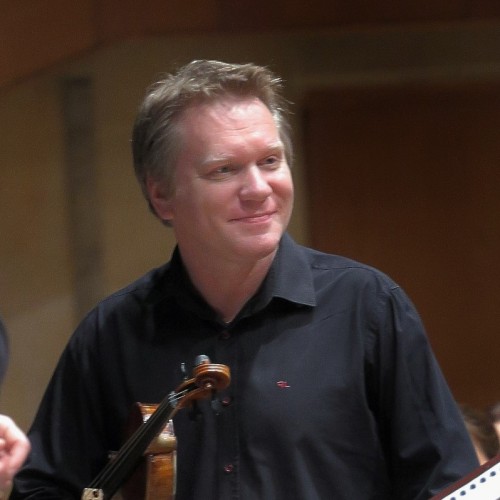
Laureate of violin competitions in Poznań (Zdzisław Jahnke), Warsaw (Tadeusz Wroński) and in Brescia in Italy. Winner of first prizes at chamber music competitions in Copenhagen and Sondershausen. He studied with Roman Lasocki and Herman Krebbers. As a soloist, he has performed with the best Polish orchestras, such as NOSPR, Sinfonia Varsovia and most of the nation’s philharmonic ensembles. He has recorded over 40 albums for such labels as EMI Poland, ECM, CHANDOS, BIS, CD ACCORD, DENON, DUX, NAXOS, SONY CLASSICAL Poland, and DACAPO. Since 2001, he has been the 1st violin of the Silesian String Quartet, with whom he also regularly performs the world over. The ensemble has won multiple accolades, including nine Fryderyks, as well as the Gramophone Classical Music Award for recording Grażyna Bacewicz’s string quartets, and the Kory- feusz Muzyki Polskiej award. In 2022 they released a seven-disc album with Mieczysław Weinberg’s complete string quartets. Szymon Krzeszowiec is the head of the String Instruments Department at his alma mater, also teaching violin there. He is an artistic adviser of the Zakopiańska Akademia Sztuki courses and the Mieczysław Wajnberg International Violin Competition.
Selection stage:
· the recording must contain
- no fewer than 2 stylistically varied pieces, composed in different epochs, but no earlier than in the year 1800;
- solo violin pieces are allowed, provided that they do not exceed 50% of the total time of the recording
· the image must be captured with one camera, without any cuts during the performance of a given piece; the image must show the violinist’s complete silhouette from a distance no greater than 5 metres.
· acceptable file format of video: mp4, .mov, .webm, link from youtube
· File-size limit for videos: up to 5GB with a choice whether to upload the file natively (up to 5GB) or paste a youtube link.
· it is permissible to perform the repertoire while recording from notes or memory
The Competition programme must be performed from memory.
The following pieces are exceptions from the above restriction:
- Ludwig van Beethoven’s piano and violin sonatas to be performed in the 1st stage (point 1) - piano and violin sonatas to be performed in the 2nd stage and
- Witold Lutosławski’s Partita for violin and piano
For sonatas by Ludwig van Beethoven, Franz Schubert, and Johannes Brahms, we recommend using urtext editions, such as G. Henle Verlag or Bärenreiter-Verlag,
Competition Repertoire:
1st Stage / 20-30 minutes
1. second movement of any sonata for piano and violin by Ludwig van Beethoven except for the Violin Sonata in A major op. 47 (The Kreutzer Sonata)
2nd Stage / 45-60 minutes
a. Karol Szymanowski – Violin sonata in D minor op. 9
b. Ludwig van Beethoven – Violin sonata in A major op. 47 (The Kreutzer Sonata)
c. Felix Mendelssohn-Bartholdy – Violin sonata in F major (1838)
d. Maurice Ravel – Violin sonata in G major
e. Franz Schubert – Violin sonata in A major D. 574
f. Johannes Brahms - Violin sonata No 1 in G major op. 78
g. Violin sonata No 2 in A major op. 100
h. Violin sonata No 3 in D minor op. 108
i. Robert Schumann – Violin sonata No 2 in D minor op. 121
j. Gabriel Fauré – Violin sonata in A major op. 13
k. César Franck – Violin sonata in A major M.8
l. Richard Strauss – Violin sonata in E flat major op. 18, TrV 151
m. Ottorino Respighi – Violin sonata in B minor
2. one virtuoso piece to be chosen from the following
a. Ernest Chausson – Poème for violin and orchestra op. 25, arr. for violin and piano
b. Maurice Ravel - Tzigane, rapsodie de concert for violin and piano
c. Camille Saint-Saëns – Introduction et rondo capriccioso in A minor for solo violin op. 28
d. Havanaise in E major for solo violin op. 83
e. Pablo de Sarasate – Fantasy on themes from Georges Bizet’s Carmen opera
f. Karol Szymanowski – Nocturne and Tarantella for violin and piano op. 28
g. Henryk Wieniawski – Fantaisie brillante sur (...) „Faust” de Gounod op. 20
h. Thémé original varié op. 15
i. Polonaise Brillante in A major op. 21
j. Franz Waxman – Fantasy on themes from Georges Bizet’s Carmen opera for violin and orchestra, arr. for violin and piano
k. Eugène Ysaÿe / Camille Saint-Saëns - Caprice d'après l'Étude en forme de valse de Saint-Saëns
l. Béla Bartók – Rhapsody No.1 for violin and piano BB 94a
m. Rhapsody No.1 for violin and piano BB 96a
n. Arnold Schönberg – Fantasy for violin and piano op. 47
o. Witold Lutosławski – Partita for violin and piano
3. any miniature for violin and piano / duration3-5minutes
4. one of the three pieces awarded in the composition competition [its performance time does not count in the performance time for the remainder of the programme to be performed in the 2nd stage]
3rd Stage
| 1.11.2022-31.01.2023 | entries |
| 1.03.2023 | announcement of the list of participants who have qualified for the competition |
| 4.09.2023 | performance order draw |
| 5–7.09.2023 | 1st stage |
| 9–10.09.2023 | 2nd stage |
| 14.09.2023 | final |
| 23.09.2023 | laureates' concert |
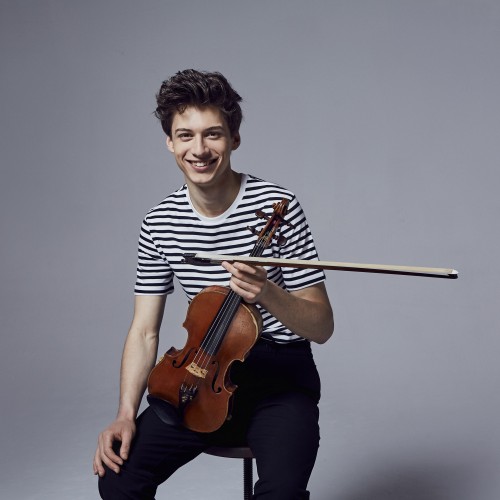
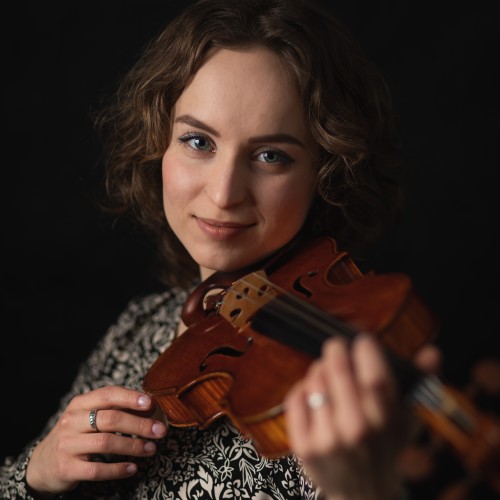
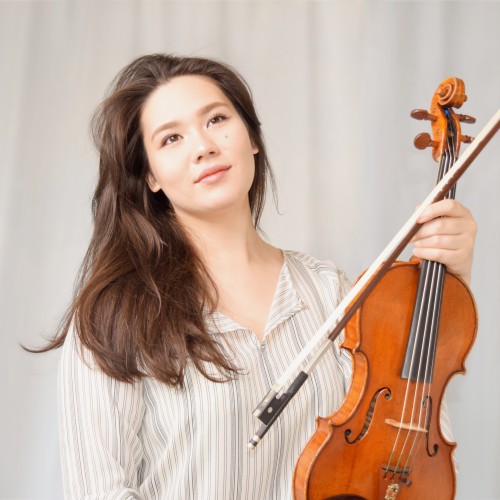
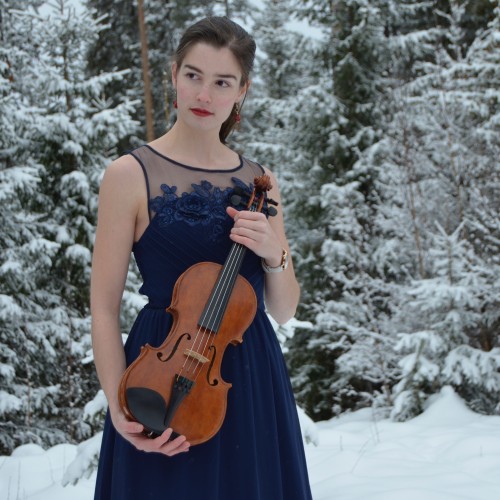
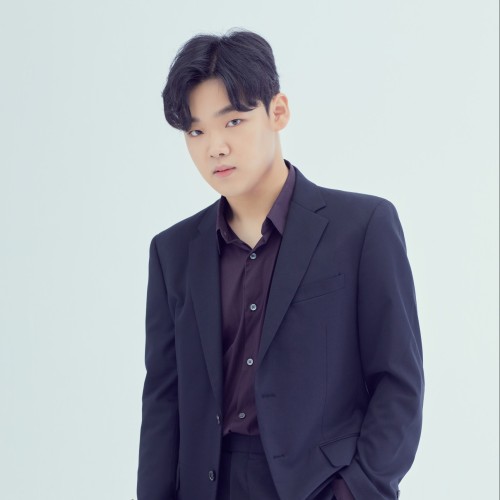
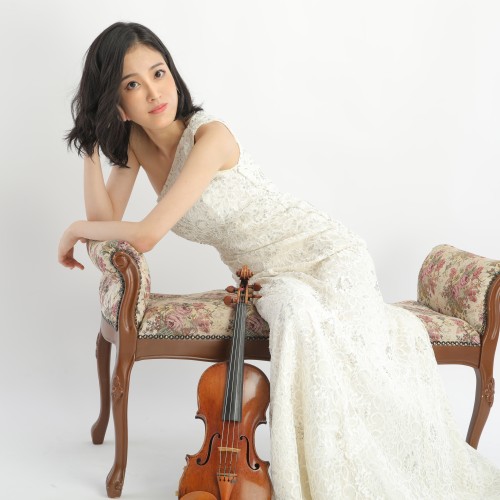
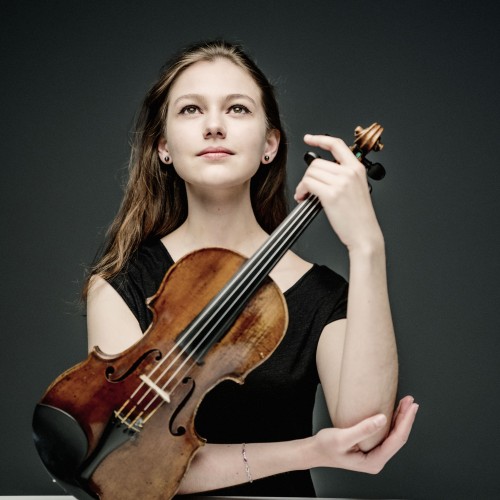
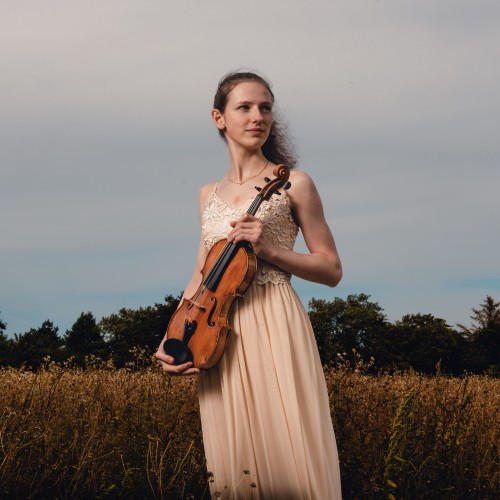
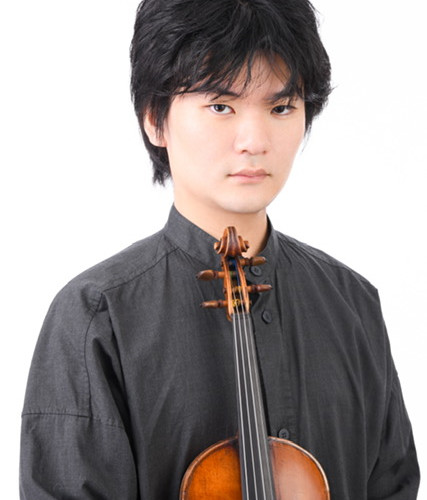
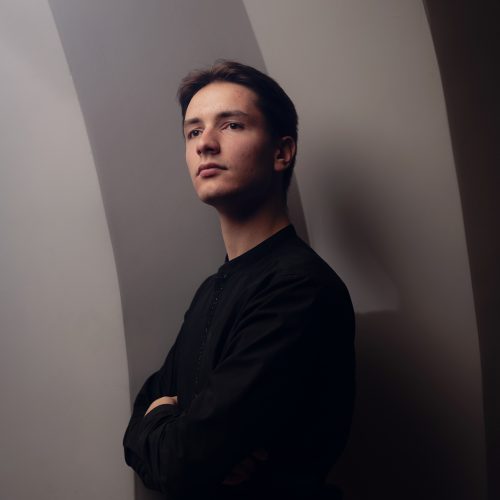
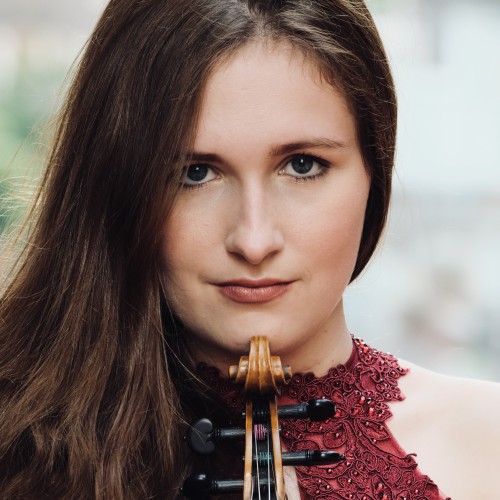
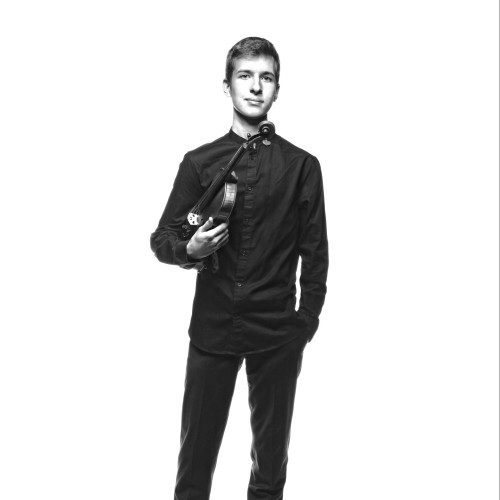
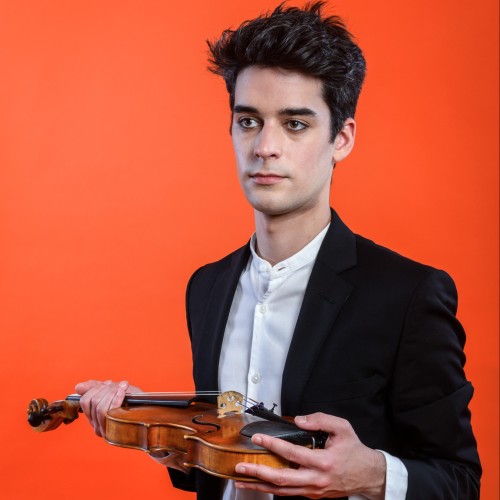
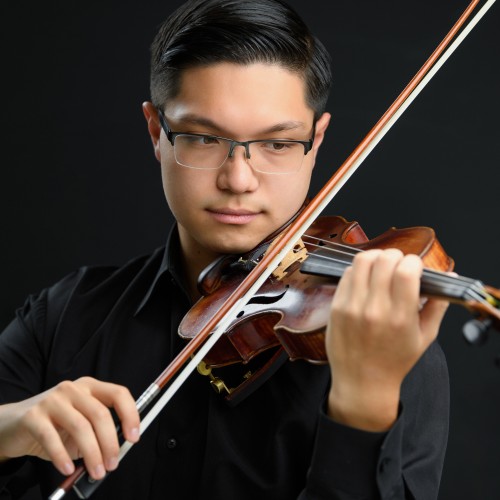
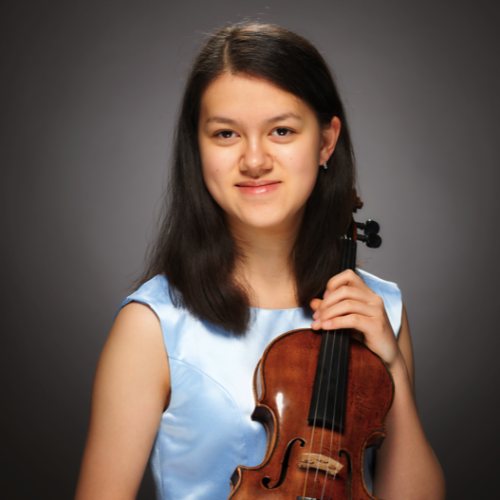
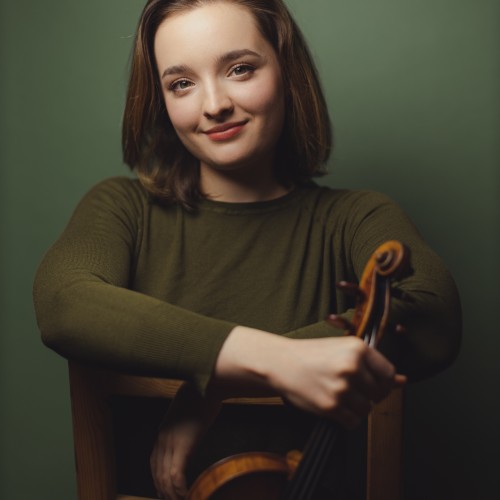
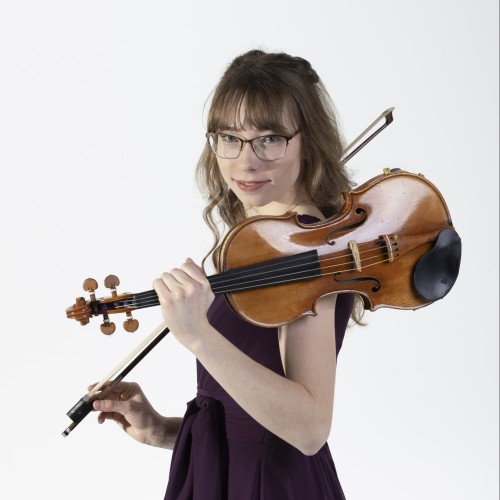
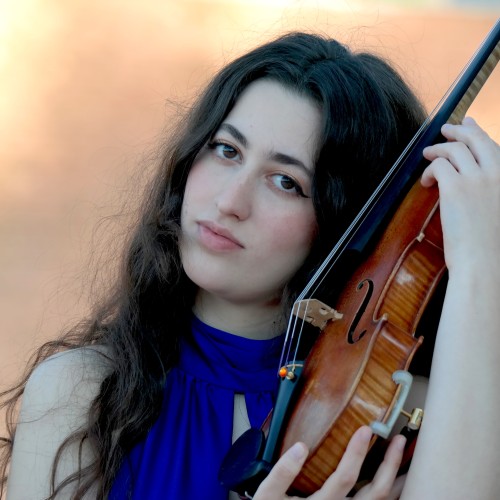
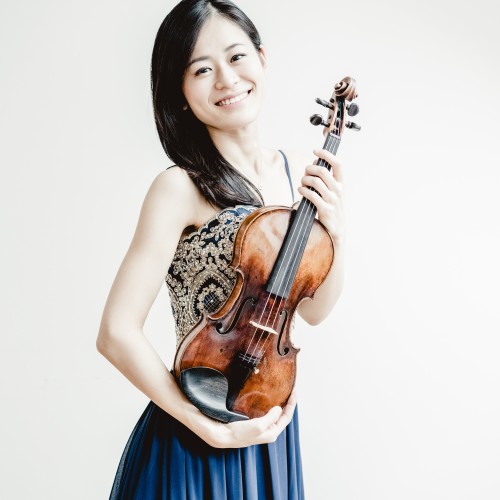
Alena Hove currently studies at the Colburn Conservatory under the internationally acclaimed Robert Lipsett. She has performed with the Pacific Symphony, Burbank Philharmonic, San Fernando Valley Symphony Orchestra, Seattle Symphony, Seattle Philharmonic, and more. Her recent accomplishments include being selected as the featured artist of the Colburn Conservatory's upcoming season, where she will be performing the Korngold Violin Concerto with Stéphane Denève and the Colburn Orchestra at the Walt Disney Concert Hall.
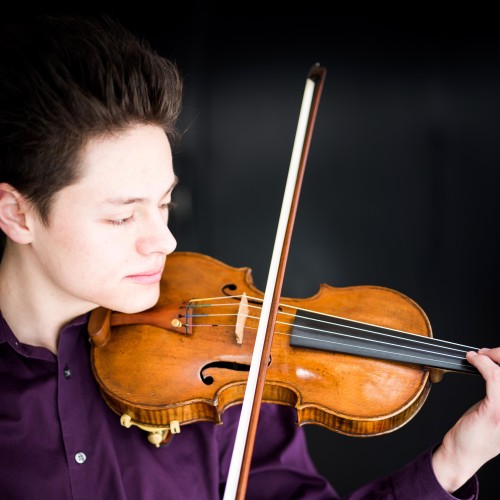
Bjørg first tried the violin at the age of 4. At 5 years old she started her studies at the Barratt-Due Institute of Music, a place she's studied at since. In 2020 Bjørg was a soloist in a concert series with the Oslo Philharmonic for the first time, leading to an experience that led her play 15 concerts. In 2022 she perfored as a soloist with known Norwegian orchestras as well as the festival orchestra for the Mozartmania festival in Spain. Bjørg has taken part in many competitions, among these The Cooper International Violin Competition. She's known as a chamber musician and a composer. She’s received many forms of support and is currently the loaner of a G.B Guadagnini 1773 violin.
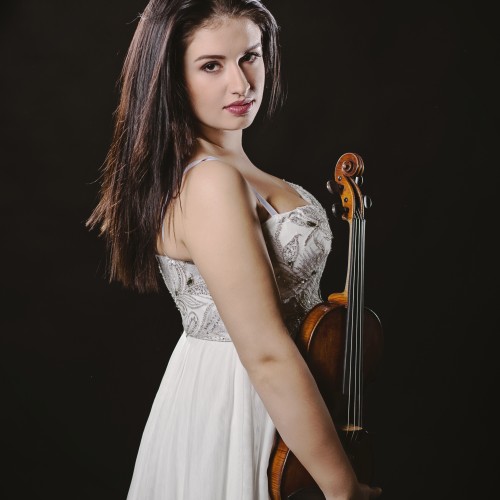
Dongyoung Jake Shim gained international recognition winning 1st Prize/Bach Prize at the Stulberg International String Competition. After winning a prize both at the Irving M.Klein International String Competition and the Zhuhai International Mozart Competition, he was also one of the Laureates at the J.S.Bach Competition. He gave debut performances on three different continents including venues such as Carnegie Hall and Lincoln Center. He has appeared at chamber music festivals including the The Verbier Festival and Perlman Music Program. He is currently an AD candidate at the Curtis Institute studying with I.Kavafian and S.Ashkenasi. His former teachers include D.Weilerstein at the NEC.
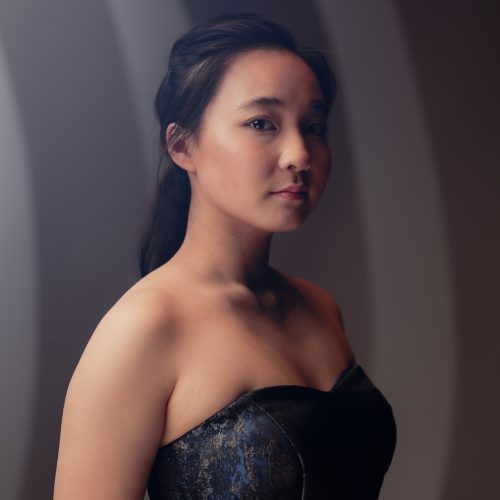
Eimi Wakui is a winner and laureate of a number of international competitions such as Tibor Varga Violin Competition, Euro Asia Competition, Oleh Krysa Violin Competition, Mirecourt Violin Competition, Vaclav Huml Violin Competition, Yankelevitch Violin Competition, Schoenfeld International String Competition, Antonio Vivaldi Competition. And she was a finalist awarded special prizes and given concerts in three competitions in Poland, as International Karol Lipiński Violin Competition, International Violin Competition-Toruń and Mieczysław Wajnberg International Violin Competition and etc. Currently she is studying at University Mozarteum Salzburg with Prof. Pierre Amoyal.
Born in 2000, Élise Bertrand began playing the piano at the age of 5, the violin at the age of 8, and composition three years later, as an autodidact.
After studying at the CRR in Toulon, she entered the CRR in Paris at the age of 14 where she studied the violin with Suzanne Gessner and composition with Nicolas Bacri.
She obtained her bachelor’s degree and her master's degree in violin at the CNSMDP in the class of Roland Daugareil and extended her studies in last grade of composition classes still in the CNSMDP (harmony, counterpoint...)
In 2022, she was admitted for a master's degree in chamber music with the pianist Gaspard Thomas in the CNSMDP and became Artist in Residence at the Queen Elisabeth Music Chapel in the class of Augustin Dumay. Since 2023, Elise has been playing a violin by Joseph Gagliano, Naples 1796, on loan from the Fondation d’entreprise Société Générale C’est vous l’avenir.
She participated in the Academy of Villecroze (2019), in the Seiji Ozawa and International Menuhin Music Academy in the summer of 2021 and 2022, in the Jaroussky Academy (2021-2022) in the Tchaikovsky promotion and in the Stauffer Academy of Cremona with Gil Shaham in 2023.
Élise won numerous violin, chamber music and composition competitions.
In the fall of 2019, she won the 2nd Prize of Ginette Neveu International Competition and the Special Prize for the best interpretation of the contemporary piece. A month later, she won the 1st Prize and the special prize at the Léopold Bellan International Competition.
In 2022, Elise won the 1st prize at the Rotary Club Paris competition and, a few months later, the Honor Prize (first prize) at the International Competition for Young Talents in Normandie.
As a violinist, she participated in many projects both as a soloist, chamber musician (La Roque- d’Anthéron, in recital at the Sommets Musicaux de Gstaad and La Roche-Posay in 2022, at the Aix-en-Provence Easter Festival in March 2021) and within orchestras (OPRL, the Douai Orchestra Hauts-de-France region, Les Dissonances, the Idomeneo orchestra, the Ensemble Les Apaches...).
The musician wishes to defend the little-known repertoire, both on the violin and in chamber music, as well as contemporary music, thus mixing interpretation and creation. Published by Billaudot and Klarthe, her pieces are commissioned by ensembles, eminent instrumentalists, competitions, institutions and are broadcasted by France Musique, Radio Classique and ARTE Concert.
In May 2022, Élise was invited to the ClassicalNext international conference fair given in Hannover, giving the floor to three composers. The same year, her Sonate-Poème, Op.11 was rewarded with the medal of the Academy of Sciences, Letters and Arts of Arras.
Articles are also dedicated to her in Classica, Diapason, Pianiste, Traversières magazine and The Strad Korea.
Her first CD "Lettera Amorosa" (on Klarthe label) presenting her works is praised by critics and the press. It is notably named "Contemporary disc of the week” in September 2022 by Emilie Munera and Rodolphe Bruneau Boulmier.
Elise is chosen Composer of the year by Classeek Ambassador Program for the season 2023-2024 and has commissions for that season by the Modigliani quartet, Musée de L’Homme (Paris), Concours International de Flute Maxence Larrieu, Festival d’Auvers sur Oise and Festival Les Inouies.
Elvin Hoxha Ganiyev is a solo concert violinist with a broad and diverse repertoire who is currently pursuing his Konzertexamen degree at Folkwang Universität der Künste in Essen with Prof. Aleksey Semenenko and his second Master’s degree in Instrumentalsolist program of UdK Berlin with Mark Gothoni simultaneously. He holds a Master’s Degree from Hochschule für Musik Theater und Medien Hannover in Germany, where he studied with Professor Krzysztof Wegrzyn, and also a Bachelor’s Degree from Escuela Superior de Música Reina Sofía in Spain, from the class of Professor Zakhar Bron.
Helene is studying at the UdK Berlin with Prof. L. Honda-Rosenberg. As a scholarship holder of the Int. Music Academy in Liechtenstein she takes part in the intensive weeks with A. Chumachenco, I. Turban and M. Bouchkov. Helene is prize winner of the 15th Int. Violin Competition in Honour of K. Lipinski and H. Wieniawski in Lublin, the Int. Kocian Competition in Usti nad Orlici and the Tibor Varga Junior Competition. As a chamber musician she was awarded with the WDR3-Klassikpreis and several broadcasts in WDR and NDR. As a soloist she has performed with the Staatskapelle Halle and the Sion Festival Orchester. She plays a L. Ventapane violin loan from the Deutschen Musikinstrumentenfond.
Hyeon Hong, violin, has won the Grand Prize in the New York International Classic Competition and 2nd prize in the Vietnam International Competition. In addition, she has been awarded first prizes in the Ewha Kyunghyang Competition, TBC Music Competition, Eumyeon Competition, and has also been awarded major prizes at the Busan Music Competition and numerous other competitions. Hyeon has been concerto soloist with the Bucheon Philharmonic Orchestra, Sun Symphony Orchestra, Gyeonbuk Provincial Symphony Orchestra, and the Seoul National University Philharmonic Orchestra.
At the age of 10, Hyeon made her debut at Seoul Arts Center Recital Hall, and was also invited to perform for the Korea Metropolitan Council. At age 16, she performed a recital at the Berliner Philharmonie Kammermusiksaal. Hyeon has performed in concert halls including Lincoln Center, Seoul Arts Center, Jordan Hall, TLI Art Center, and Berliner Philharmonie Kammermusiksaal. She has served as concertmaster of the Seoul National University Orchestra and the New England Conservatory Philharmonic Orchestra. From 2021-22, she was a full scholarship fellow at the Music Academy of the West Festival. Hyeon is a graduate of Yewon School, Seoul Arts High School and completed her undergraduate at Seoul National University with Professor Kyung Sun Lee. She is currently pursuing her M.M at New England Conservatory with Donald Weilerstein on a Dean’sScholarship.
Violinist Hyojin Ellen Kim has established a remarkable career, showing great promise as an international performer, culminating in her New York debut with the Mid-Atlantic Philharmonic Orchestra, at the Merkin Hall. Kim has also performed with the Moravian Philharmonic at the Smetana Hall, Prague, and the Dacapo Kammer Philharmonie at Herkulessaal, Munich. After spending her early academic years in Korea, Kim moved to New York and recently graduated from the Juilliard School and now continuing her studies for a Master's degree. Kim currently studies with Hyo Kang and Adele Anthony, and her chamber coaches include Emanuel Ax, Astrid Schween, Jerome Lowenthal, Areta Zhulla, and more.
Issei Kurihara Grand Prix of International Violin Competition Naleczow. 3rd prize of international competition “Uladimir Spivakov” , 1st prize of Yankelevich international violin competition. Top prize and many special prizes of “Rodolfo Lipizer Prize “international violin competition. 1st prize of International Beethoven Competition,1st prize of Joseph Mayseder International Violin Competition.1st prize of Tadeusz Wroński international solo violin competition. He has performed with following orchestras Vienna Camerata Orphica and Altomonte Orc.Linz,National Symphony Orchestra of the Republic of Bashkortostan,Brasov Philharmonic Orchestra,National symphony orchestra “Serghei Lunchevici”.
Jakub Staszel was born in 2003. He began his musical education at the age of 7. He is currently studying at the I. J. Paderewski Academy of Music in Poznan in the class of Prof. Marcin Baranowski. He participated in music courses in the classes of professors such as Prof. Gil Shaham, Prof. Midori Goto, Prof. Noah Bendix - Balgley, Prof. Ning Feng. He participated in the MorningSide Music Bridge International courses. Jakub's major competition achievements include: - 1st prize at the 7th International "Pulawy and Violin" Competition (2022) - 2nd prize at the 15th International Karol Lipinski and Henryk Wieniawski Violin Competition (2021).
Born in Budapest, Hungary, Kristof started his violin studies at the age of four. Currently he is a student of Kristof Barati and Peter Kovats at the Franz Liszt Academy of Music, Budapest. He has won numerous national and international violin competitions including the Ilona Fehér International Violin Competition in 2017.Ever since making his orchestral debut with Budapest Strings at the age of thirteen he is regularly performing with both Hungarian and European orchestras such as the Franz Liszt Chamber Orchestra, the Haydn Philharmonie or the Cluj Philharmonic Orchestra.He is regularly taking part in festivals such as the Festival Academy Budapest, Kaposfest, Auer Festival.
A passionate young violinist hailing from Lisbon, Manuel has performed on numerous stages in countries such as the UK, Belgium, Denmark and China. He debuted as soloist at the age of twelve with Orquestra Gulbenkian under the baton of Michael Zilm and has performed both as a soloist and chamber-musician ever since, alongside Johannes Schlaefli, the Hermes Ensemble, Tony Nys, Karen Gomyo and Kyril Zlotnikov, and performing with orchestras across his native Portugal. He is a prize-winner in several solo and chamber music competitions, namely Prémio Jovens Músicos, Vasco Barbosa Competition, the Triomphe de l’Art Competition and the Jeunesses Musicales Spain Competition.
Matthew Hakkarainen is the first American violinist to win first prize at the Lipizer International Violin Competition, in Gorizia, Italy. He received his B.M. from the Curtis Institute of Music, where he studied with Pamela Frank, and currently attends the Juilliard School, studying with Sylvia Rosenberg and Ronald Copes. Matthew won the New World Symphony Concerto Competition, performing as a soloist with Michael Tilson Thomas and the NWS. He also won the Aspen Music Festival Violin Competition. Matthew has appeared as a soloist with the Baton Rouge Symphony Orchestra, Jacksonville Symphony, Louisiana Philharmonic Orchestra, Orchestra Sinfonica Bulgaria Classic di Plovdiv, and others.
Maya Wichert started playing the violin at the age of four. Since 2015 she is student at the University of Music and Performing Arts in Munich, today she is in the class of Prof. Lena Neudauer. In addition, Maya receives private lessons from Prof. Krzysztof Węgrzyn. Maya has already performed as a soloist with such orchestras as Ulm Philharmonic Orchestra, Jena Philharmonic, Baden-Baden Philharmonic, Munich Chamber Orchestra, Symphony Orchestra of Liechtenstein and the Southwest German Philharmonic Orchestra Konstanz. Maya received numerous awards at international violin competitions and is the winner of the Discovery Award of the International Classical Music Awards (ICMA).
Polish violinist Mira Marton spent ten years in specialist music schools in her native country before gaining a place at The Yehudi Menuhin School under the tutelage of Lutsia Ibragimova. She now studies with Radu Blidar at the Royal College of Music in London, where she receives the Russell Race Scholarship. Mira’s concert experience includes performing in major venues around the world, among others, Wigmore Hall in London, Forbidden City Concert Hall in Beijing, the National Philharmonic Hall in Warsaw. The violinist’s future engagements include a recording of Matthew Taylor’s Concertino for Violin and Strings with BBC NOW Orchestra and several other concerto performances around the UK.
Triinu Piirsalu an Estonian violinist. In 2019 she started her Bachelor studies in the Sibelius Academy with prof. Réka Szilvay. During 2022/23 she was an exchange student at the Norwegian Academy of Music with prof. Peter Herresthal. From autumn 2023 she will start her master studies in the Hochschule für Musik und Theater München with Prof. Mi-kyung Lee.
Triinu is an active musician who often plays with different chamber music groups and as a soloist with major orchestras in Estonia.Triinu has taken part in several competitions in Estonia and abroad and latest have been in Jan 2023 II edition of Anja Ignatius Violin Competition in Finland - 1st prize. Triinu has taken part in several masterclasses with Mi-kyung Lee, Vilde Frang, Stella Chen, Florian Donderer and others.
In her free time Triinu enjoys playing folk music from different countries.
Russell Iceberg has recently won grand prizes at the Golden Violin Competition, the Peter Mendell award, and top prizes at the Allentown Symphony’s Schadt Competition, including the audience award. Russell’s mentors have included Andrew Wan, Blair Milton, Robin Scott and Ian Swensen. Russell has performed as soloist with the Maryland Symphony Orchestra, the Northwestern University Alumni Symphony, the Colorado College Summer Music Festival Orchestra, and L’orchestre I Medici de McGill. Russell has advanced to live rounds and semi-finals of prestigious competitions including the YCA, Wigmore Hall, Premio Paolo Borciani, Trondheim, Chesapeake, and WDAV as a string quartet violinist.
Sara in an award-winning violin soloist. She is playing on A.Stradivarius violin on a generous loan from Florian Leonhard Fine Violins. Currently she studies with Professor Zakhar Bron at ESMRS in Madrid. As a soloist she was touring all around Europe, Asia, USA, Israel and Mexico. Sara performed hundreds of concerts with professional orchestras in the most prestigious venues, such as Carnegie Hall, Walt Disney Hall in LA, Berlin Philharmonie, NFM Wroclaw, Konzerthaus Berlin to name a few. Sara collaborated with Wroclaw Philharmonic, Martinu Philharmonic, Slovak Sinfonietta, Armenian State Philharmonic, Novosibirsk Philharmonic, Presidential Symphony Orchestra, Prague Chamber Orchestra, Tel Aviv Soloists Orchestra and many others.
She is 1st prize/Grand Prize winner of 60 violin competitions, among others H.Wieniawski&K.Lipinski, G.P.Telemann, New York International Artists Association and Novosibirsk International Violin Competitions. She is also 3rd prize winner of Wajnberg and Wronski International Violin Competitions.
In 2022 she signed a contract with renowned agency - Columbia Artists Management and went on USA tour with The Polish Wieniawski Philharmonic Orchestra (31 concerts in 17 states) where she performed Tchaikovsky and Wieniawski Violin Concertos.
She is a Japanese Violinist, based in Vienna.In 2019, was selected as a semifinalist of Queen Elisabeth Competition 2019.In 2022, won 1st Prize at 1st VŠMU International Violin Competition, 1st Prize at 26th International Chamber Music Competition “Giulio Rospigliosi” as Piano Duo, Jury Encouragement Prize at 8th Sendai International Music Competition, and Special Prize at 10th Fritz Kreisler International Violin Competition, 2022. She studied in Japan under Prof.Machie Oguri, currently she is studying under Prof. Michael Frischenschlager since 2017 and under Prof. Peter Schuhmayer since 2022, under Prof. Stefan Mendl for chamber music at University of Music and Performing Arts, Vienna.
Sherzod Abdiev, born in Tashkent/Uzbekistan in 1999 year, began studying the violin at age 6. He attended Academic Music High School under Moscow State Conservatory, under tutilage Lyudmila Slavianova, and currently studies with Professor Qian Zhou at Yong Siew Toh Conservatory of Music in Singapore. He performed a recital with State Symphony Orchestra of Uzbekistan in Tashkent at age 19. He has won 1st prize “Merzlyakovka priglashaet” Moscow (2018). He participated in masterclasses with Shalom Mintz, Krzysztof Wegrzyn, Sergey Ostrovsky, Dora Schwarzberg. He plays a Panormo 1795 violin generously loaned from Rin Collection.
Yurina Arai was born 1994 in Japan. She is recipient of numerous awards at both domestic and international competitions. She has won 1st Prize at the 5th International Jascha Heifetz Competition, 2nd Prize at the 69th Prague Spring International Music Competition, 1st Prize at the Arthur Grumiaux International Competition for Young Violinists, and 2nd Prize(1st prize not awarded) at the 32nd Valsesia Musica International Competition. Since graduating from Tokyo University of the Arts in 2017, she has continued her studies at the University of Music and Performing Arts in Vienna,Austria. She is currently studying with Prof. Christian Altenburger.
She is a Japanese Violinist, based in Vienna.In 2019, was selected as a semifinalist of Queen Elisabeth Competition 2019.In 2022, won 1st Prize at 1st VŠMU International Violin Competition, 1st Prize at 26th International Chamber Music Competition “Giulio Rospigliosi” as Piano Duo, Jury Encouragement Prize at 8th Sendai International Music Competition, and Special Prize at 10th Fritz Kreisler International Violin Competition, 2022. She studied in Japan under Prof.Machie Oguri, currently she is studying under Prof. Michael Frischenschlager since 2017 and under Prof. Peter Schuhmayer since 2022, under Prof. Stefan Mendl for chamber music at University of Music and Performing Arts, Vienna.
Elvin Hoxha Ganiyev is a solo concert violinist with a broad and diverse repertoire who is currently pursuing his Konzertexamen degree at Folkwang Universität der Künste in Essen with Prof. Aleksey Semenenko and his second Master’s degree in Instrumentalsolist program of UdK Berlin with Mark Gothoni simultaneously. He holds a Master’s Degree from Hochschule für Musik Theater und Medien Hannover in Germany, where he studied with Professor Krzysztof Wegrzyn, and also a Bachelor’s Degree from Escuela Superior de Música Reina Sofía in Spain, from the class of Professor Zakhar Bron.
Jakub Staszel was born in 2003. He began his musical education at the age of 7. He is currently studying at the I. J. Paderewski Academy of Music in Poznan in the class of Prof. Marcin Baranowski. He participated in music courses in the classes of professors such as Prof. Gil Shaham, Prof. Midori Goto, Prof. Noah Bendix - Balgley, Prof. Ning Feng. He participated in the MorningSide Music Bridge International courses. Jakub's major competition achievements include: - 1st prize at the 7th International "Pulawy and Violin" Competition (2022) - 2nd prize at the 15th International Karol Lipinski and Henryk Wieniawski Violin Competition (2021).
Special award for Karol Szymanowski piece interpretation - Maya Wichert
Special award for the best interpretation of a contemporary piece awarded in the composition competition - Seina Matsuoka
Honorary mention for the outstanding participant of the 2nd stage - Sara Dragan
The best accompanying pianist - Kiguchi Yuto
Entries: 1.11.2022-31.01.2023
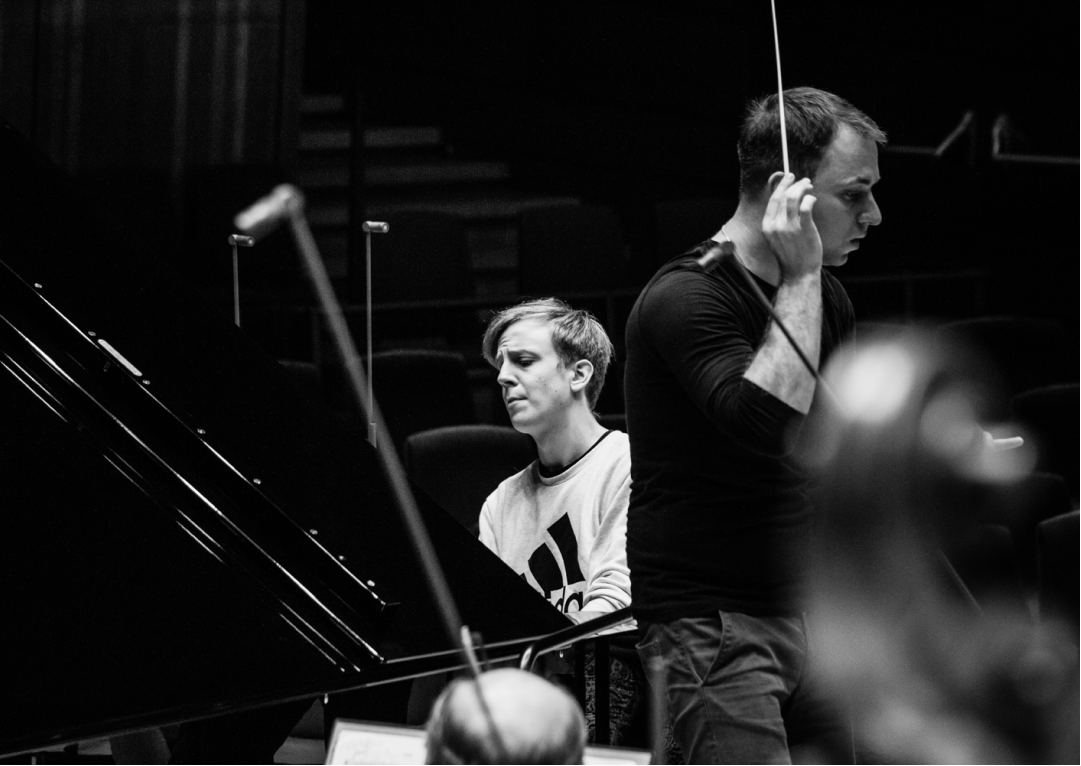
Is it possible to imagine Karol Szymanowski’s world without the piano? Absolutely not! The piano was his confidant and inseparable companion at times of creative reveries. It was the instrument which enabled him to express himself not only as a composer, but also as a performer.
In Tymoszówka, the Szymanowskis’ family estate, the piano was virtually a member of the family. The story of its alleged destruction – by being thrown into a pond – is at the same time a story of an end of an era, also an era in the history of music. Yet, history goes on. In the competition, we search for pianists who are able to find the meaning of Szymanowski – here and now.
Rules of the 2nd Karol Szymanowski International Music Competition
Rules for the Qualifying Committee
Appendix No3 - Competition Repertoire in the piano discipline
The winners will receive high monetary prizes and the title of a laureate will surely open up new artistic opportunities before them.
1st prize 25,000 €
2nd prize 18,000 €
3rd prize 10,000 €
Special prize for the best performance of a piece by Karol Szymanowski: 5,000 €.
Special prize for the best interpretation of a contemporary piece: 1,000 €.
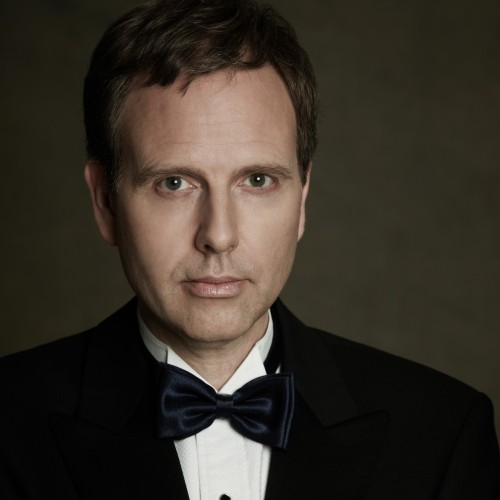
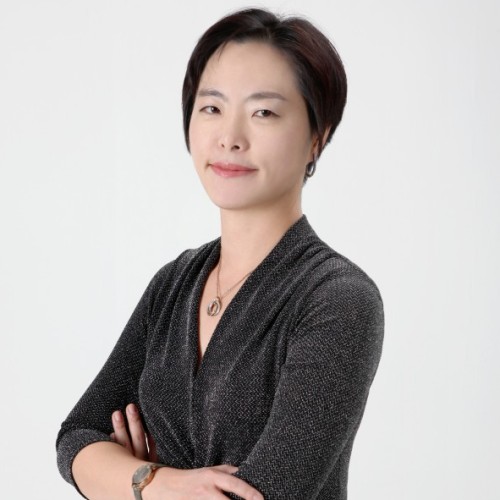
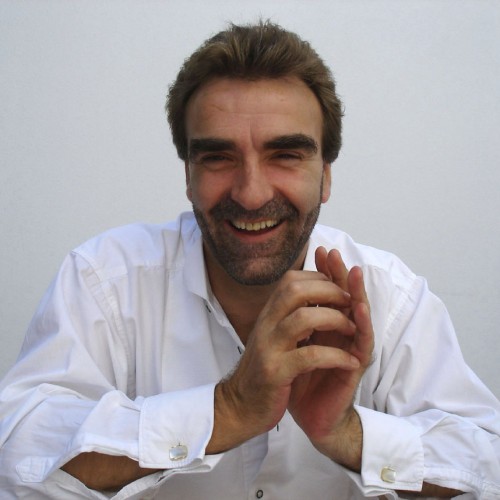
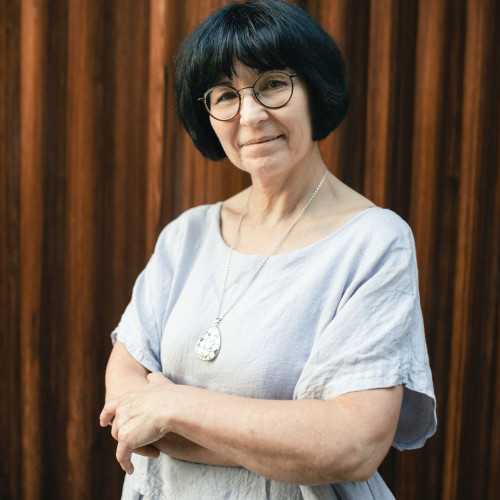
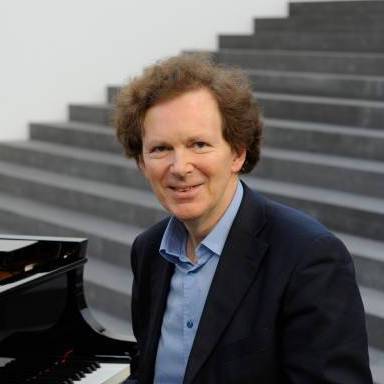
Laureate of the 2nd prize at the 12th International Chopin Piano Competition in Warsaw (no 1st prize awarded), the 5th prize at the Gina Bachauer Interna- tional Piano Competition, and the 3rd prize at the Pyotr Tchaikovsky International Piano Competition in Moscow. His career has included performances as a soloist with such world-class orchestras as: the Halle Orkiestra, BBC Symphony Orchestra, National Philharmonic in Warsaw, NHK Symphony of Japan, Radio and Television Orchestra in Brussels, Oslo Philharmonic, orchestras in the USA, and the Silesian Chamber Orchestra. He has performed at numerous festivals, including the International Chopin Festival in Duszniki-Zdrój. The pianist is the founder and artistic director of the Ensemble XIX, which performs Chopin’s music on 19th-century instruments. He has served on the juries of multiple prestigious competitions in Asia, Europe and the United States. He was also a juror at the 16th and 18th edition of the International Chopin Piano Competition in Warsaw. In 2018, he received an honorary doctorate from the Łódź Academy of Music. He currently teaches at the Royal College of Music in London.
Pianist and chamber musician, lecturer at the Royal Conservatoire of Scotland in Glasgow. She has worked with such orchestras as the Royal Scottish National Orchestra, Korean Symphony Orchestra, St. James Orchestra, Glasgow Orchestral Society, as well as the RCS Orchestra and Wind Ensemble. She has performed in New York, St. Petersburg, Riga, London, Edinburgh, Glasgow, as well as Seul, Suwon, and Busan. She is a laureate of the 1st prize of the London Intercollegiate Beethoven Competition and other competitions – Eurovision Young Musicians Semi-Finals in Festival Theatre in Edinburgh, Yamaha Music Foundation of Europe Piano Scholarships at Royal Northern College of Music, Scottish International Youth Piano Competition, A. Ramsay-Calder Debussy Prize, Walcer Prize, Peter Lindsay Miller Prize for Piano Duo, and Beethoven Prize for Junior Conservatoire at RCS. In 2006, Sinae Lee recorded Karol Szymanowski’s complete piano works for the Divine Art Record Company. The recordings met with acclaim from critics of the BBC Music Magazine, MusicWeb International, Pianist Magazine, All Music Guide, and Res Musica.
British pianist and chamber musician, laureate of the Royal Overseas League Competition and the European Piano Competition. He has performed with, among others, the London Philharmonic Orchestra, BBC Scottish Symphony, Royal Philharmonic Orchestra, and the English Chamber Orchestra. He has worked with outstanding conductors, such as Martyn Brabbins, Sir Neville Marriner, Christoph Koenig, Barry Wordsworth, and Łukasz Borowicz. He is an avid performer of the Polish romantic repertoire, which contributes to increasing the international popularity of Polish music. His album with Władysław Żeleński’s and Aleksander Zarzycki’s concertos was third in Classical Charts, while the Homage to Paderewski recording became record of the week with Daily Telegraph Classical CD. In 2012, together with the Szymanowski Quartet, he recorded pieces by Polish romantic composers – Juliusz Zarębski and Władysław Żeleński; this record became the BBC Music Magazine Chamber Choice. He taught the piano at Chichester University and was head of the piano faculty at the Royal Conservatoire of Scotland. He has been a Fellow of the Royal Academy of Music since 2013.
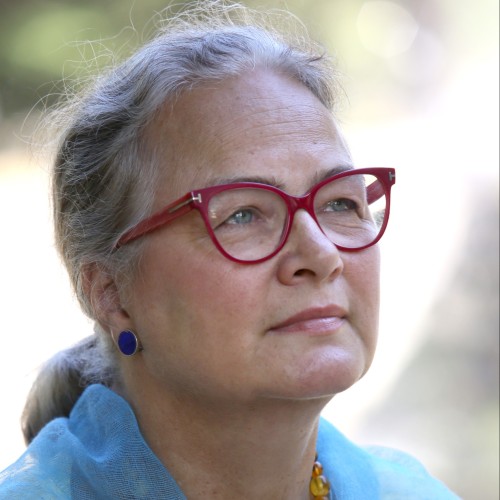
A student of Prof. Jan Hoffman and Prof. Andrzej Jasiński. She received a scholarship from the French government, studying with Livia Rév in Paris. Laureate of international piano competitions: M. Long and J. Thibaud in Paris (1981), A. Casagrande in Ternia in Italy (1982), and Estrada Młodych Festiwalu Pianistyki Polskiej in Słupsk (1982). She is an outstanding interpreter of Karol Szymanowski’s works – she has recorded most of his piano pieces, including the Harnasie ballet music in G. Bacewicz’s fourhand arrange- ment. These recordings brought her multiple nominations for the “Fryderyk” award, while the album with the Sonata No. 3 Op. 36 also won the prestigious “Pizzicato Supersonic” award. She is the author of the two-piano transcription of Karol Szymanowski’s Harnasie ballet music Op. 55 and the publications “Mazurki op. 50 K. Szymanowskiego” and “Preludia op. 1 i Etiudy op. 4 K. Szymanowskiego. Zagadnienia interpretacyjne”. From 2011 to 2017, she was the chairperson of the K. Szymanowski Music Society. For all her activity related to promoting Karol Szymanowski’s works, she was awarded the silver Gloria Artis medal.
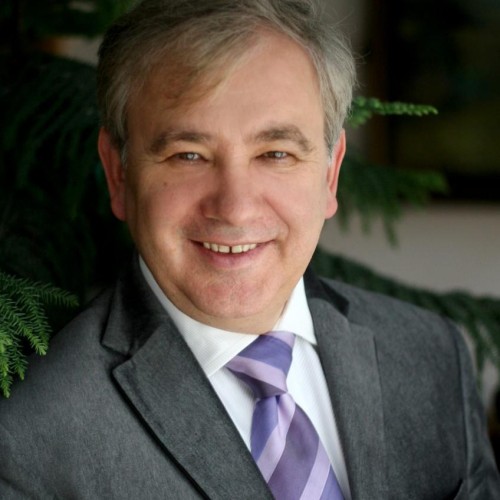
Debuted in Paris in 1977, performing Ludwig van Beethoven’s Triple Concerto with Mstislav Rostropovich and Isaac Stern. He has worked, with, among others, the Berliner Philharmoniker, St. Petersburg Philharmonic, and with such distinguished conductors as Lorin Maazel, Herbert von Karajan, and Michael Tilson Thomas. He is the initiator and artistic director of the Festival de Saint-Riquier in France. He wrote a play based on Władysław Szpilman’s The Pianist, in which he performed alongside the French actor Robin Renucci. He created a documentary on the life and work of Pyotr Tchaikovsky, as well as radio shows on the life and work of such composers as Alexander Scriabin, Johannes Brahms, Karol Szymanowski, and Leoš Janáček. His recording oeuvre includes Rachmaninoff’s complete piano concertos and the Paganini Rhapsody, as well as Pyotr Tchaikovsky’s Piano Concerto No. 1 recorded with the St. Petersburg Philharmonic conducted by Mariss Jansons. He has also recorded Shostakovich’s Piano Concertos No. 1 and 2 with the London and Berlin Philharmonics.
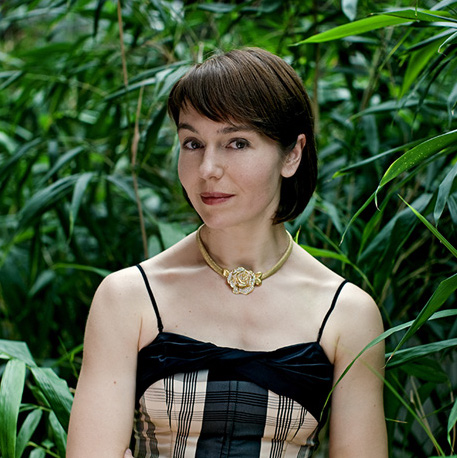
Laureate of the 5th prize at the 10th International Chopin Piano Competition in Warsaw in 1980, 1st prize at the G. Viotti International Music Competition in Vercella and Gold Medal at the International Festival of Young Laureates in Bordeaux. She has performed in almost every country of Europe, in both Americas, China, Indonesia, Vietnam, South Africa, Singapore, Korea, Japan, and Australia. As a soloist, she has performed with such ensembles as the London Symphony Orchestra, English Chamber Orchestra, Orchestra del Maggio Musicale Fiorentino, Bayerischer Rundfunkorchester, Tonkünstler-Orchester Niederösterreich, New Japan Philharmonic, Polish Chamber Orchestra, Sinfonia Varsovia, Warsaw National Philharmonic Orchestra, and the Polish National Radio Symphony Orchestra in Katowice. She is also a highly esteemed pedagogue. He teaches the piano at the Academy of Music in Bydgoszcz, where she is the head of the Piano Department. She often serves on the juries of national and international piano competitions, including the 15th, 17th, and 18th editions of the International Chopin Piano Competition in Warsaw.
A student of Prof. Jan Hoffman and Prof. Andrzej Jasiński. She received a scholarship from the French government, studying with Livia Rév in Paris. Laureate of international piano competitions: M. Long and J. Thibaud in Paris (1981), A. Casagrande in Ternia in Italy (1982), and Estrada Młodych Festiwalu Pianistyki Polskiej in Słupsk (1982). She is an outstanding interpreter of Karol Szymanowski’s works – she has recorded most of his piano pieces, including the Harnasie ballet music in G. Bacewicz’s fourhand arrange- ment. These recordings brought her multiple nominations for the “Fryderyk” award, while the album with the Sonata No. 3 Op. 36 also won the prestigious “Pizzicato Supersonic” award. She is the author of the two-piano transcription of Karol Szymanowski’s Harnasie ballet music Op. 55 and the publications “Mazurki op. 50 K. Szymanowskiego” and “Preludia op. 1 i Etiudy op. 4 K. Szymanowskiego. Zagadnienia interpretacyjne”. From 2011 to 2017, she was the chairperson of the K. Szymanowski Music Society. For all her activity related to promoting Karol Szymanowski’s works, she was awarded the silver Gloria Artis medal.
Selection stage:
The Competition programme must be performed from memory.
The Piano Sonata No. 2 in A major op.21 (2nd stage) marked „* ” is an exception.
1st Stage / 25-30 minutes
Étude in G flat major op.4 No 2 or
Étude in C major op.4 No 4
2nd Stage / 55-60 minutes
Grażyna Bacewicz [either 10 Concert Etudes for Piano (1957) or Piano Sonata No. 2 (1953)]
Béla Bartók
Claude Debussy
Sofia Gubaidulina [either Chaconne (1962) or Sonata (1965)]
Sergei Prokofiev
Sergei Rachmaninoff
Maurice Ravel
Alexander Scriabin
Igor Stravinsky
3rd Stage
Béla Bartók – Piano Concerto No 3
Krzysztof Penderecki – Piano Concerto Resurrection
Sergei Prokofiev – Piano Concerto No 3 in C major op. 26
Sergei Rachmaninoff – Piano Concerto No 2 in C minor op. 18
Maurice Ravel – Piano Concerto in G major
| 1.11.2022-31.01.2023 | entries |
| 1.03.2023 | announcement of the list of participants who have qualified for the competition |
| 4.09.2023 | performance order draw |
| 5–7.09.2023 | 1st stage |
| 9–10.09.2023 | 2nd stage |
| 13.09.2023 | final |
| 23.09.2023 | laureates' concert |
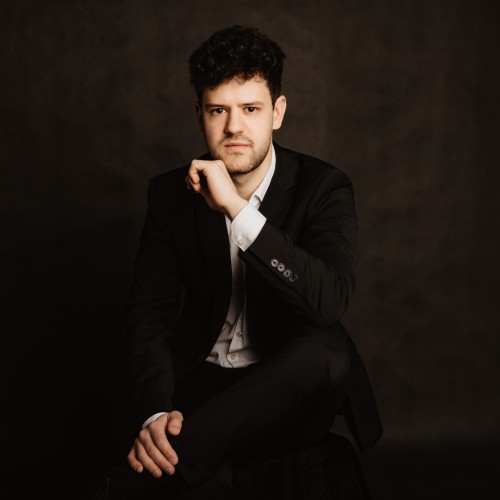
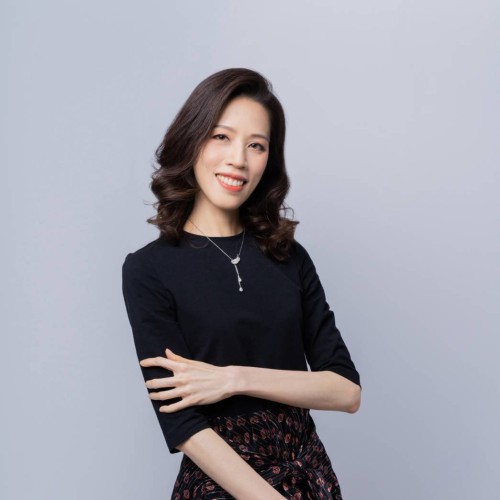
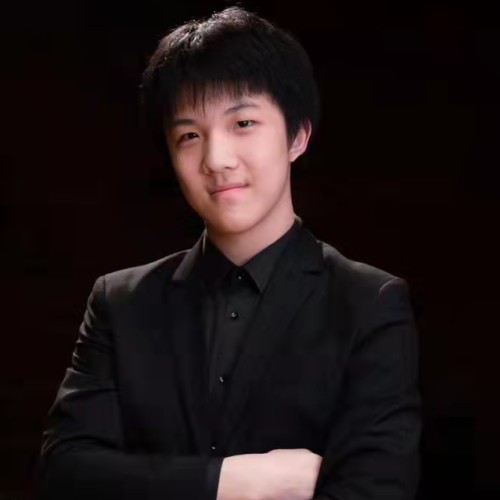
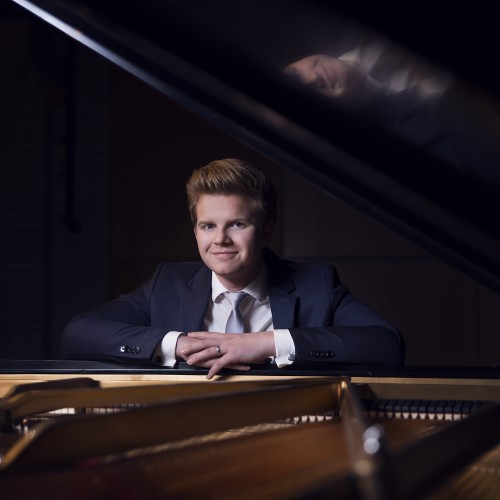
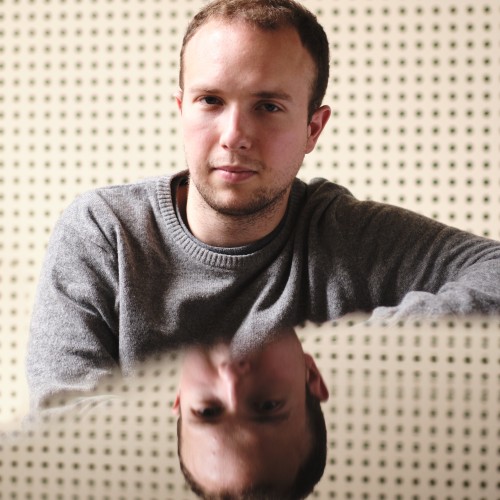
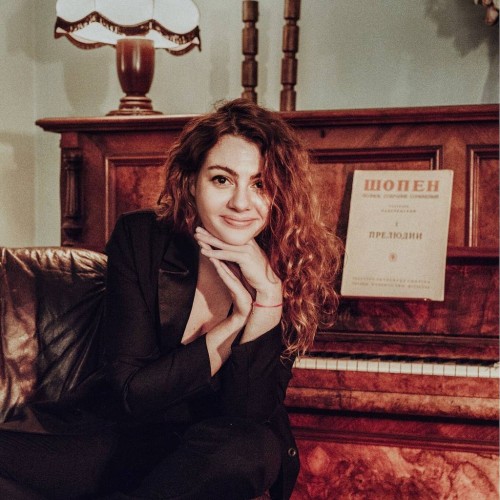
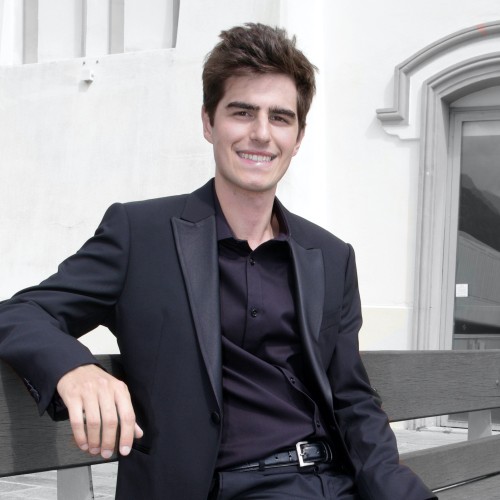
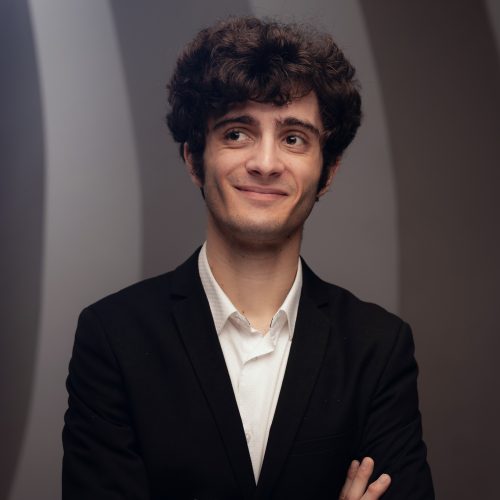
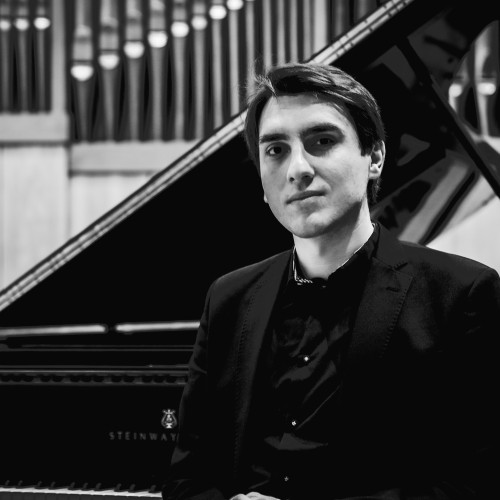
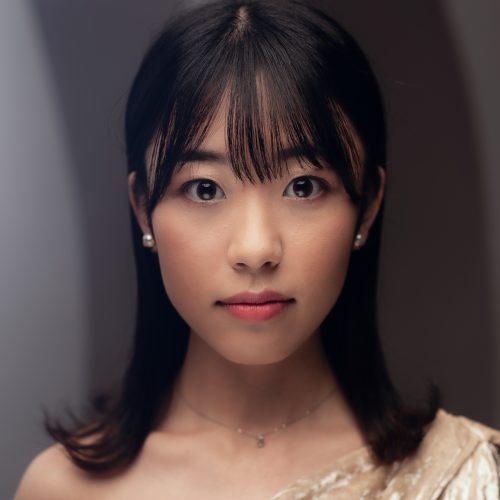

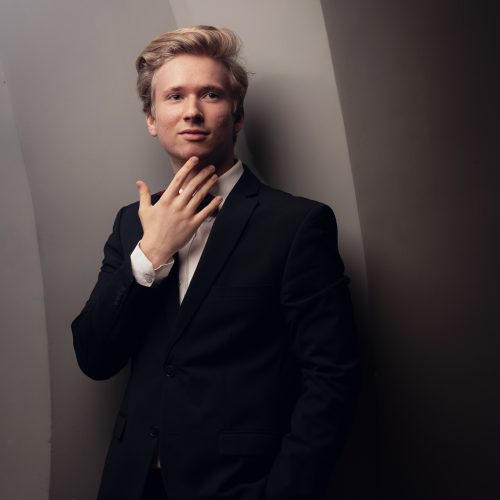
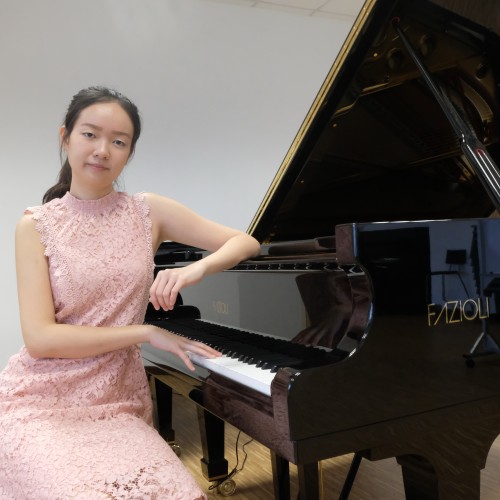
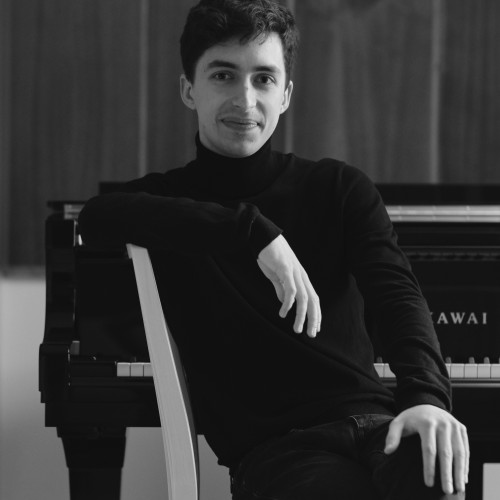
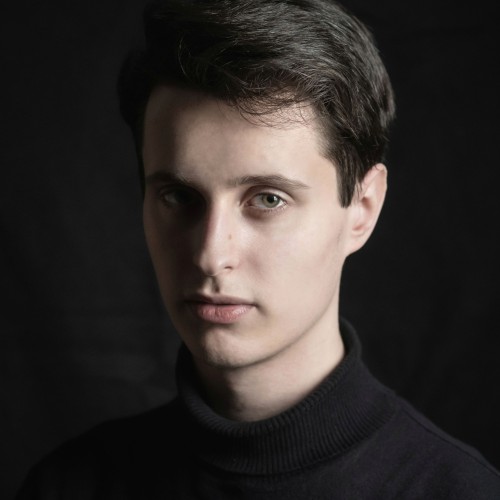
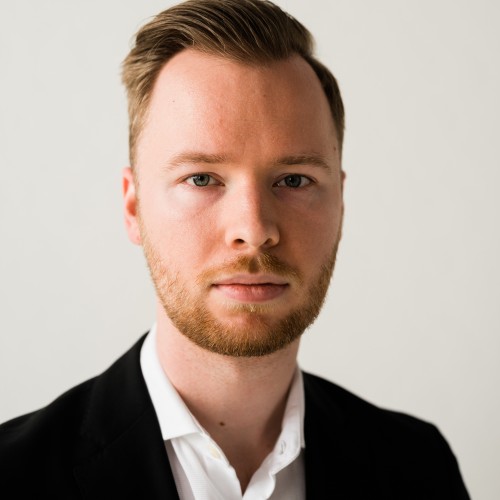
Born in Bilbao, he began to play the piano at the age of 10 at "Artebi" with professor Ireneusz Jagla. He has participated as a soloist in different music festivals, such as: Música-Musika International Festival, in Bilbao, Frederic Chopin International Festival in Duszniki Zdroj, Poland (where he received classes from Joaquin Achúcarro) and International Festival Bieszczady bez granic, Poland, where he won the “Gold Parnas 2020” award as well as the audience award. He has played in Italy, Spain, Sweden, Poland, and played with orchestras such as the Bilbao Symphony Orchestra, Lviv Chamber Orchestra and the Karol Szymanowski Academy of Music Orchestra.
Angela Szu-Hsuan Wu is a Taiwanese pianist currently residing in London. She has obtained a bachelor’s degree in performance with the distinction of “Outstanding Achievement in Piano" in 2016 and an Artist Diploma in 2018 from McGill University. At the Guildhall School of Music & Drama, Angela has completed her Master’s in Performance in 2020 and Artist Diploma in 2022 with Distinction. Her teachers include Ronan O’Hora, Martin Roscoe, Kyoko Hashimoto, André Laplante, and Sara Laimon.
Wu Boyang, male, 19 years old. He has been admitted to the Central Conservatory of Music majoring in piano since 2022 and studied with Professor Misha Namirovsky. In 2020, he participated in the 15th Shenzhen Double Piano Competition and won the first place in the professional group A. In 2019 and 2021, he participated in the Piano Concerto Festivals held in Taipei and Fuzhou, and performed Rachmaniv's Second Piano Concerto and Tchaikovsky's First Piano Concerto with the Taipei Youth Orchestra. He was invited by the "Russian Cultural Center" to participate in the Performance of "Classical Concert in Commemoration of the 130th Anniversary of Prokofiev's Birth”.
Praised for his interpretive sensitivity, imaginative programming, and ability to make classical music speak to all kinds of audiences, Canadian pianist Carter Johnson is quickly establishing a reputation as one of his generation’s most gifted and multi-faceted pianists. His most recent competition prizes include being the first prize laureate in the 2021 International Competition of Polish Music, the first prize winner of the 2020 Valsesia International Competition and first prize winner of the 2023 Weatherford College International Competition, and he was also recently awarded the Most Promising Pianist not Proceeding to the Final in the 2023 Sydney International Piano Competition. In 2018, Johnson won the top prize in two of Canada’s most important competitions, garnering both the grand prize in the Concours OSM and the first prize in the CMC Stepping Stone competition. Other competition experience includes the Santander International Competition, the Shenzhen International Concerto Competition, the Horowitz International Competition Kyiv-Geneva, the Dublin International Competition, and the Hilton Head International Competition.
Johnson has performed with orchestras including l’Orchestre Symphonique de Montréal, l’Orchestre Métropolitain, the Poznań Philharmonic Orchestra, the Victoria Symphony Orchestra, the Silesian Philharmonic Orchestra, and the Orchestra of the Americas, and his playing has been broadcasted by CBC Radio and medici.tv. Venues in which he has performed concertos or solo recitals include the Maison Symphonique, the Chan Centre for the Performing Arts, the Music Shed at Norfolk, the Shenzhen Concert Hall, and the Warsaw National Philharmonic Hall.
Born in 1996 on Vancouver Island, Canada, Johnson began the study of piano at age 5 with Shelley Roberts, with whom he had the privilege of studying both performance and pedagogy for over 12 years. After continuing his studies with Michelle Mares, he completed a Bachelor of Music with Mark Anderson at the University of British Columbia. He then received a Master of Music from the Juilliard School under the direction of Joseph Kalichstein and Matti Raekallio, and continued to the Yale School of Music, where he completed a Master of Musical Arts with Wei-Yi Yang and is continuing there for his Doctor of Musical Arts degree.
Equally at home in the worlds of solo, concerto, chamber, and art song, Johnson has a particular interest in bringing light to lesser-explored parts of the repertory, most recently championing a collection of works by nearly-forgotten Polish composers. In addition to the music of J.S. Bach (where he feels most at home), he is a special advocate for the music of composers such as Schumann, Grieg, Fauré, Ives, Hindemith, Poulenc, Shostakovich, and Messiaen. His secondary instrument work has included studies in oboe, voice, and harpsichord.
Trained in elocution as a teenager, Johnson holds an ATCL with distinction in speech and drama from Trinity College London, and he regularly brings this expertise to his recitals in his discussions on the music that is being played — for many audiences, these continue to be a highlight of his performances. This skill was recognized in the 2023 Sydney International Piano Competition, where he was awarded the Best Program Presentation in the Semifinal for his program design and verbal introductions.
Johnson currently resides in Hamden, Connecticut with his wife Hannah and their young boys Preston and Ambrose, where he maintains a busy schedule as a concert artist, student, and teacher. In his spare time, he and Hannah enjoy both cooking together and watching good films, and spending time outside with their boys enjoying the charms of New England.
Graduated with highest honors from the G.Verdi Conservatory in Turin under the guidance of Claudio Voghera, Francesco Maccarrone continued his specialization at the Pinerolo Academy and the Koninklijk Conservatorium in Brussels. He is currently attending the Master of Music at the „Hochschule für Musik und Theater” in Hamburg, with Aleksandar Madzar. His studies also benefited from meeting Pavel Gililov, Arie Vardi, Benedetto Lupo and Roberto Plano.
Winner of the 2021 edition of the Elisa-Meyer competition and first prize in 2019 at the National Competition "La Palma d'Oro," Francesco has given recitals in several halls in Italy and abroad, playing, among others, in Vercelli for the Camerata Ducale, in Pisa for the Contrappunto, in Brescia for the Aldebaran and in Turin, a city where he also took part in several concerts for the Unione Musicale seasons, most recently a Solo Recital in May 2022.
In 2015, he opened the Concert Season of the Turin Conservatory, performing Fryderyk Chopin's First Piano Concerto. Later, he was invited by the Fiat Executives Group to repeat the Chopin Concerto at the Lingotto Theater in Turin for the traditional spring concert.
In 2018, he was invited at the initiative of Bahrain's Ministry of Culture to give a recital in the capital city of Manama.
A "De Sono" Scholarship Holder since 2018, in 2017 he was the winner of the "Talenti Musicali" scholarship of the CRT foundation and since 2018 he has also been selected several times for the scholarship made available by the "International Music Academy" of Liechtenstein, thanks to which he took part in several "Intensive Weeks" held by Maestro Pavel Gililov.
CIDIM artist, he also has numerous chamber collaborations to his credit, including with violinist Valerio Scarano, with whom he recently performed at the Italian Cultural Institute in Oslo, and with the Tovesco Trio, together with cellist Thomas Haas and violinist Veronika Rädler. Togheter with the Tovesco Trio, Francesco won in march 2023 the 5th Prize at the International Chamber Music Competition “ICMC Pinerolo”. At the same competition the Ensemble received also the Public Prize and the Prize for the best performance of the semifinal.
Born in 1997, Gaspard THOMAS has won numerous awards in international competitions: First Prize at 2019 France-Amériques Competition as well as a Second Prize and 7 special prizes at the 2019 Piano Campus Competition in Pontoise; he is also a quarter-finalist at the 2021 Jaén Competition and selected for the 2019 Long-Thibaud Competition. He is laureate of the "Tchaïkovsky Promotion" of the Philippe Jaroussky Music Academy, and becomes artist in residence at the Singer-Polignac Foundation in Paris in 2021.
Gaspard THOMAS has performed as a soloist in both Chopin Concertos, Rachmaninov Concerto No. 1, Beethoven Concerto No. 4, Saint-Saëns Concerto No. 1 and Shostakovich's Concerto No. 1. He has played with the Orchestre Appassionato conducted by Mathieu HERZOG and the Orchestre Opéra Éclaté with conductor Victor JACOB.
He is a guest artist in several festivals in France, such as the Festival de la Roque d'Anthéron, the Festival de Deauville, the Lisztomanias, “Les Pianissimes”, the Festival Chopin de Nohant, Piano en Saintonge, the Festival de Saint-Céré. Gaspard THOMAS has performed at the Auditorium de Radio France, the Auditorium de la Seine Musicale in Boulogne-Billancourt, the Orangerie de Bagatelle, the Fondation SingerPolignac, the auditoriums of the Petit Palais and the Bibliothèque Nationale de France, the Guimet Museum, the Steinway & Sons showroom in Paris, the Polish Embassy and the Liszt Institute in Paris, the Théâtre de Fontainebleau, the Château de Lourmarin, the Abbaye de Pontlevoy. He also participated in the 20th Festival “Nuits Caraïbes” in Guadeloupe in February 2023.
As a much appreciated chamber musician, he regularly performs with the violinist and composer Élise BERTRAND (Sommets Musicaux de Gstaad in Switzerland, concert tour in Alsace on early 2023, recital at the Auditorium of the Bibliothèque Nationale de France). He also plays with cellist Stéphanie HUANG at the Palais des Beaux-Arts in Brussels, the Sala Verdi in Milan.
In 2023, Gaspard THOMAS is invited to perform at the Festival Chopin de Bagatelle and the Young Talents Europeen Festival in Paris. In December, he will take part in a tour of 7 concerts in New York thanks to the Orphée Musique association.
At the beginning of 2024, he will play as a soloist at the Salle des Concerts de la Cité de la Musique with the Conservatoire's Orchestra of Laureates under the direction of Lucie LEGUAY.
Gaspard THOMAS graduated from the CNSMDP with a Master's degree in Piano with honors in Claire DÉSERT’s class and has worked during masterclasses and academies with such artists as Sir András SCHIFF, Bertrand CHAMAYOU, Bruno RIGUTTO, David KADOUCH, Bernard d'ASCOLI, Jean-François HEISSER, Hortense CARTIER-BRESSON, Jean-Efflam BAVOUZET.
Having studied chamber music, accompaniment, writing and orchestration in the same establishment, his musical career has been enriched by encounters with personalities like Thierry ESCAICH, Fabien WAKSMAN, Anne Le BOZEC, Marc-André DALBAVIE, Jean-Frédéric NEUBURGER, François SALQUE, Emmanuelle BERTRAND.
He also composed in 2019 "Poème", a piece for 96 pianists which was premiered during a concert at the Philharmonie de Paris.
Kaho Araishi began learning the piano at the age of three. She won the 5th prize at 3rd Shigeru Kawai International Piano Competition in 2019. She won the Honor Diploma at Sardoal International Piano Competition in Portugal in 2020. She won the 2nd prize at Danubia Talents 3rd ‘Wiener Klassiker’ International Online Music Competition in Hungary in 2021. She performed at Kyoto City University of Arts Piano Festival and on-campus recital in 2021 and graduation concert in 2022 by on-campas selection. She became the Aoyama Music Foundation Scholarship Student in 2021. She studies the piano with Prof. Makoto Ueno and studies the Harpsichord with Prof. Sakurako Mitsuhashi at the Kyoto City University of Arts.
She won 2nd prize at 10th Johann Nepomuk Hummel International Piano Competition and Schumann competition in Düsseldorf, 1st prize at Orbetello Junior Piano Competition, Special prize at International Tchaikovsky competition for young musicians, and Franz Liszt Competition for young pianists in Weimar. She performed with Manchester Camerata, Slovak Philhamonic, Gunpo prime pillharmonic Orchestera, Heyri symphony Orchestra and performed in Spring Festival with LG in Lincoln Center, Recital in Kumho Prodigy Concert, Yamaha little pianist series, Ceramic palace hall Prodigy Concert and Win art hall. She currently studying in University Mozarteum Salzburg with Prof. Pavel Gililov.
Krzysztof Wiercinski was born on February 22, 2003 in Warsaw. He is currently studying at the Fryderyk Chopin University of Music in Warsaw in the class of Prof. Joanna Ławrynowicz-Just. He is a laureate at national and international piano competitions including: 5th Prize at the XII International Competition for Young Pianists "Artur Rubinstein in memorian" in Bydgoszcz, Poland, and 3rd Prize at the 51st Frederic Chopin National Piano Competition in Warsaw. He has studied with outstanding artists and pedagogues such as Prof. Vanessa Latarche, Prof. Alexander Gavryluk, Prof. Dang Thai-Son, Prof. Nikolai Demidenko, Prof. Janusz Olejniczak, Prof. Andrzej Jasinski, Prof. Tobias Koch.
Singaporean pianist Lily Phee studied in the Nanyang Academy of Fine Arts under Mrs Rena Phua. She gained her passion in music when she first kickstarted her journey in musical at the age of 5.
She is currently studying in the Krzysztof Penderecki Academy of Music in Kraków with Andrzej Pikul.
Some awards from her home country include First Prize at the Singapore International Youth Piano Competition, First Prize at the Singapore International Classical Piano Competition, Third Prize at the Cristofori Piano Competition, and Third Prize at the National Piano & Violin Competition. Additionally, she was awarded the title ‘Yamaha Artist’ as part of the ‘I Play Yamaha’ initiative in 2018.
Lily’s passion for music has also taken her abroad to Denmark, Russia, Hong Kong and Thailand where she performed in recitals and gained valuable exposures from competing. Her notable accomplishments from competing First Prizes at the Isaac Albéniz Summer Music Festival held in Camprodon, Spain, and Recondite Armonie III international Piano competition in Grosseto, Italy. In her latest achievements, she was granted a debut with the Częstochowa Philharmonic Orchestra through the ‘Gram z Orkiestrą’ competition organized by the Krzysztof Penderecki Academy of Music in Kraków, and won Second Prize at the Faust Zadra International Piano Competition in Italy. Recently, she received a prize from Prof. Oscar Macchioni for the best interpretation of Karol Szymanowski’s work (Sonata Op.21 No.2).
She has also attended masterclasses conducted by Prof Tamás Ungár, Robert Winter and Kenneth Hamilton, Dina Parakhina.
Mateusz Tomica is a graduate of the K. Szymanowski Academy of Music in Katowice, as well as the Universität für Musik und darstellende Kunst in Vienna. The pianist is currently studying at the Hochschule der Künste Bern in Switzerland in the class of Tomasz Herbut. His recent achievements include 2nd place at the 12th Chopin Competition in Darmstadt (1st place was not awarded) and the prize for the best performance of mazurkas (2022). Mateusz Tomica has collaborated with, among others, Marek Pijarowski and the Apollon Musagète Quartett. The artist has performed at the Royal Łazienki Park, Duszniki-Zdrój, Żelazowa Wola, NOSPR, National Philharmonic, Gorzów Philharmonic, Silesian Philharmonic, Torun Philharmonic, and Südwestdeutsche Philharmonie Konstanz.
Included in CBC Music’s 2017 edition of “30 Hot Canadian Classical Musicians under 30,” Paul Williamson is quickly establishing himself as one of Canada’s promising young pianists. He received first prize at the 2014 Canadian National Music Festival and the 2017 CFMTA National Piano Competition, and is also a prizewinner of the 2020 WMC McLellan Competition and the 2022 Shean Piano Competition. As a soloist, he has appeared with the Winnipeg Symphony Orchestra, the University of Manitoba Symphony Orchestra, and the Fraser Valley Symphony Orchestra. Williamson is an Artist Diploma degree candidate at the Colburn School where he studies with Fabio Bidini.
Kaho Araishi began learning the piano at the age of three. She won the 5th prize at 3rd Shigeru Kawai International Piano Competition in 2019. She won the Honor Diploma at Sardoal International Piano Competition in Portugal in 2020. She won the 2nd prize at Danubia Talents 3rd ‘Wiener Klassiker’ International Online Music Competition in Hungary in 2021. She performed at Kyoto City University of Arts Piano Festival and on-campus recital in 2021 and graduation concert in 2022 by on-campas selection. She became the Aoyama Music Foundation Scholarship Student in 2021. She studies the piano with Prof. Makoto Ueno and studies the Harpsichord with Prof. Sakurako Mitsuhashi at the Kyoto City University of Arts.
Krzysztof Wiercinski was born on February 22, 2003 in Warsaw. He is currently studying at the Fryderyk Chopin University of Music in Warsaw in the class of Prof. Joanna Ławrynowicz-Just. He is a laureate at national and international piano competitions including: 5th Prize at the XII International Competition for Young Pianists "Artur Rubinstein in memorian" in Bydgoszcz, Poland, and 3rd Prize at the 51st Frederic Chopin National Piano Competition in Warsaw. He has studied with outstanding artists and pedagogues such as Prof. Vanessa Latarche, Prof. Alexander Gavryluk, Prof. Dang Thai-Son, Prof. Nikolai Demidenko, Prof. Janusz Olejniczak, Prof. Andrzej Jasinski, Prof. Tobias Koch.
Born in 1997, Gaspard THOMAS has won numerous awards in international competitions: First Prize at 2019 France-Amériques Competition as well as a Second Prize and 7 special prizes at the 2019 Piano Campus Competition in Pontoise; he is also a quarter-finalist at the 2021 Jaén Competition and selected for the 2019 Long-Thibaud Competition. He is laureate of the "Tchaïkovsky Promotion" of the Philippe Jaroussky Music Academy, and becomes artist in residence at the Singer-Polignac Foundation in Paris in 2021.
Gaspard THOMAS has performed as a soloist in both Chopin Concertos, Rachmaninov Concerto No. 1, Beethoven Concerto No. 4, Saint-Saëns Concerto No. 1 and Shostakovich's Concerto No. 1. He has played with the Orchestre Appassionato conducted by Mathieu HERZOG and the Orchestre Opéra Éclaté with conductor Victor JACOB.
He is a guest artist in several festivals in France, such as the Festival de la Roque d'Anthéron, the Festival de Deauville, the Lisztomanias, “Les Pianissimes”, the Festival Chopin de Nohant, Piano en Saintonge, the Festival de Saint-Céré. Gaspard THOMAS has performed at the Auditorium de Radio France, the Auditorium de la Seine Musicale in Boulogne-Billancourt, the Orangerie de Bagatelle, the Fondation SingerPolignac, the auditoriums of the Petit Palais and the Bibliothèque Nationale de France, the Guimet Museum, the Steinway & Sons showroom in Paris, the Polish Embassy and the Liszt Institute in Paris, the Théâtre de Fontainebleau, the Château de Lourmarin, the Abbaye de Pontlevoy. He also participated in the 20th Festival “Nuits Caraïbes” in Guadeloupe in February 2023.
As a much appreciated chamber musician, he regularly performs with the violinist and composer Élise BERTRAND (Sommets Musicaux de Gstaad in Switzerland, concert tour in Alsace on early 2023, recital at the Auditorium of the Bibliothèque Nationale de France). He also plays with cellist Stéphanie HUANG at the Palais des Beaux-Arts in Brussels, the Sala Verdi in Milan.
In 2023, Gaspard THOMAS is invited to perform at the Festival Chopin de Bagatelle and the Young Talents Europeen Festival in Paris. In December, he will take part in a tour of 7 concerts in New York thanks to the Orphée Musique association.
At the beginning of 2024, he will play as a soloist at the Salle des Concerts de la Cité de la Musique with the Conservatoire's Orchestra of Laureates under the direction of Lucie LEGUAY.
Gaspard THOMAS graduated from the CNSMDP with a Master's degree in Piano with honors in Claire DÉSERT’s class and has worked during masterclasses and academies with such artists as Sir András SCHIFF, Bertrand CHAMAYOU, Bruno RIGUTTO, David KADOUCH, Bernard d'ASCOLI, Jean-François HEISSER, Hortense CARTIER-BRESSON, Jean-Efflam BAVOUZET.
Having studied chamber music, accompaniment, writing and orchestration in the same establishment, his musical career has been enriched by encounters with personalities like Thierry ESCAICH, Fabien WAKSMAN, Anne Le BOZEC, Marc-André DALBAVIE, Jean-Frédéric NEUBURGER, François SALQUE, Emmanuelle BERTRAND.
He also composed in 2019 "Poème", a piece for 96 pianists which was premiered during a concert at the Philharmonie de Paris.
Special award for interpretations of works by Karol Szymanowski - Gaspard Thomas
Honorable distinction for the best interpretation of a contemporary work awarded in a composition competition - Gaspard Thomas
Honorable distinctions:
Singaporean pianist Lily Phee studied in the Nanyang Academy of Fine Arts under Mrs Rena Phua. She gained her passion in music when she first kickstarted her journey in musical at the age of 5.
She is currently studying in the Krzysztof Penderecki Academy of Music in Kraków with Andrzej Pikul.
Some awards from her home country include First Prize at the Singapore International Youth Piano Competition, First Prize at the Singapore International Classical Piano Competition, Third Prize at the Cristofori Piano Competition, and Third Prize at the National Piano & Violin Competition. Additionally, she was awarded the title ‘Yamaha Artist’ as part of the ‘I Play Yamaha’ initiative in 2018.
Lily’s passion for music has also taken her abroad to Denmark, Russia, Hong Kong and Thailand where she performed in recitals and gained valuable exposures from competing. Her notable accomplishments from competing First Prizes at the Isaac Albéniz Summer Music Festival held in Camprodon, Spain, and Recondite Armonie III international Piano competition in Grosseto, Italy. In her latest achievements, she was granted a debut with the Częstochowa Philharmonic Orchestra through the ‘Gram z Orkiestrą’ competition organized by the Krzysztof Penderecki Academy of Music in Kraków, and won Second Prize at the Faust Zadra International Piano Competition in Italy. Recently, she received a prize from Prof. Oscar Macchioni for the best interpretation of Karol Szymanowski’s work (Sonata Op.21 No.2).
She has also attended masterclasses conducted by Prof Tamás Ungár, Robert Winter and Kenneth Hamilton, Dina Parakhina.
Entries: 1.11.2022-31.01.2023
A string quartet is an intimate form. It is a most challenging form, both for the composer and for the performers. Karol Szymanowski’s two string quartets are true gems, world-class masterpieces of the genre.
Like light focused in a lens, Szymanowski’s quartets concentrate within themselves the essence of his musical language, his style, and his emotionality. To perform them convincingly, one needs perfect workmanship and wide cultural horizons. Yet, the Karol Szymanowski Competition does not look for convincing performers. It looks for arch-masters.
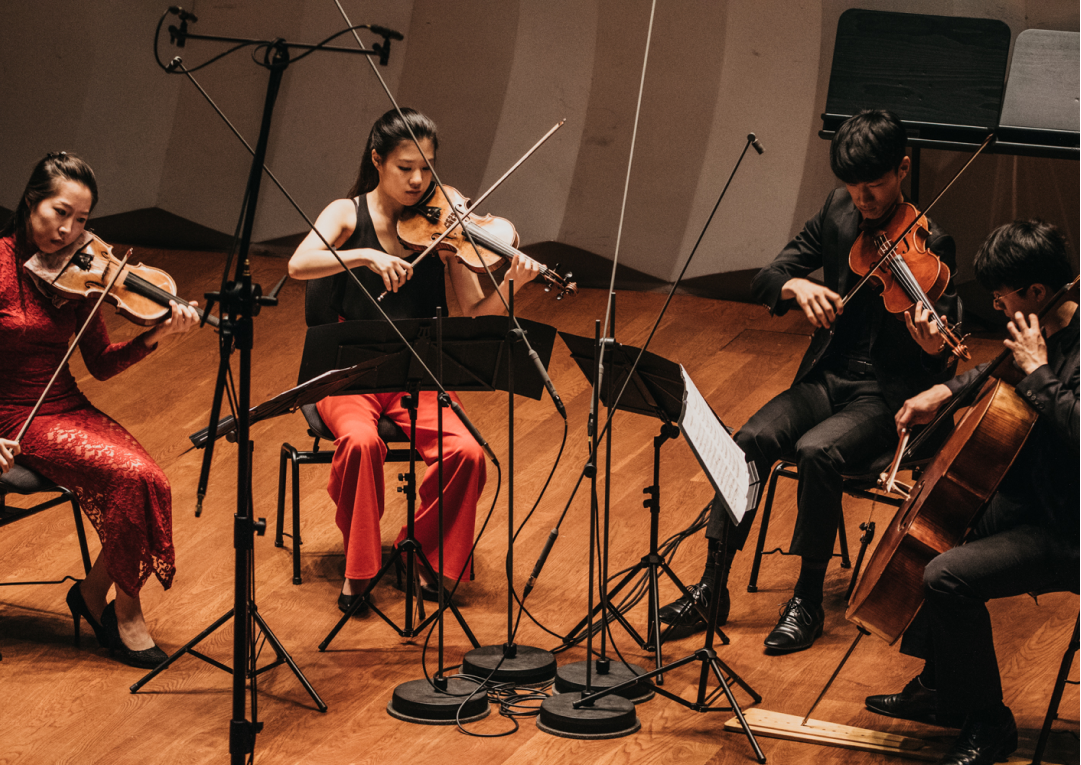
Rules of the 2nd Karol Szymanowski International Music Competition
Rules for the Qualifying Committee
Appendix No5 - Competition Repertoire in the string quartet discipline
The winners will receive high monetary prizes and the title of a laureate will surely open up new artistic opportunities before them.
1st prize 38,000 €
2nd prize 26,000 €
3rd prize 14,000 €
Special prize for the best performance of a piece by Karol Szymanowski: 8,000 €.
Special prize for the best interpretation of a contemporary piece: 2,000 €.
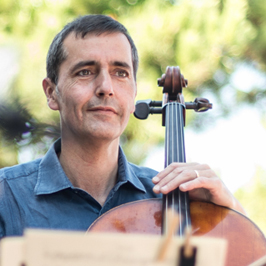
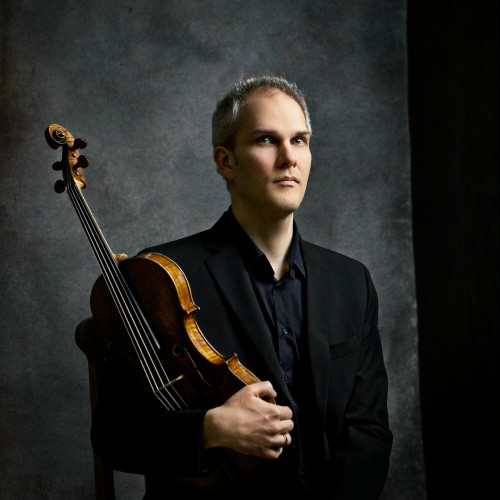
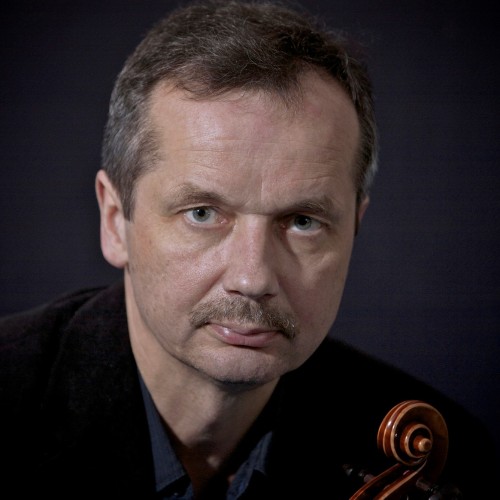
Violinist, lecturer at the University of Music and Performing Arts in Vienna. He has performed in Europe, the United States, and Asia. Throughout his artistic career, he has recorded over 40 albums, many of which found acclaim with such awards as Echo Klassik, Grand Prix du Disque, Diapason d’ Or, Prix Caecilia, Indie Award, Wiener Flötenuhr, and Midem Classical Award. He has served on the juries of multiple competitions and as visiting professor at such universities as: Royal College of Music London, East-man, Yale, Chapelle Musicale Reine Elisabeth Brussels, Central Conservatory Beijing, Seoul National University, Sibelius Academy, Mahidol University, Lithuanian Academy, International Summer Academy Prague-Vienna-Budapest, and European Chamber Music Academy. He has performed onstage with musicians of international renown, including Mischa Maisky, Nobuko Imai, Peter Frankl, Boris Berman, Christoph Eschenbach, Richard Stoltzman, and Michel Lethiec. From 1980 to 1985, he was a member of the Vienna String Soloists. He has worked with the Vienna Philharmonic Orchestra under the baton of such conductors as Herbert von Karajan, Carlos Kleiber, Claudio Abbado, and Daniel Barenboim.
Over more than 44 years of his collaboration with the Silesian String Quartet, they have recorded nearly 60 albums, premiered 150 pieces, and performed over 2500 concerts on the most important stages in Poland and abroad. He is currently full professor and head of the Chamber Music Department at the Karol Szymanowski Academy of Music in Katowice, where he also gives interdepartmental lectures on chamber literature. He spent 25 years as Artistic Director of the International Chamber Music Festival Silesian String Quartet and Guests. He also serves on the boards of the Karol Szymanowski Music Society in Zakopane (from 2018 to 2022 as its chairperson) and the Katowice Kultura Natura association. His activity has brought him numerous state honours and artistic awards. In 2017, he received the Gramophon Classical Music Award in London for recording Grażyna Bacewicz’s complete quartets (Chandos) and the Decoration of Honor Meritorious for Polish Culture. He is also a recipient of the Gold Medal for Long Service, silver (2008) and gold (2019) medals Gloria Artis, nine Fryderyk awards, and the Koryfeusz Muzyki Polskiej award for 2019, in the “Event of the year” category. The recording of Mieczysław Weinberg’s complete string quartets is considered the phonographic achievement of the decade.
Cellist, laureate of numerous prestigious prizes in international competitions, including the Clairmont Competition, the Braun-Roger Siegl Competition and the Pierre Tarcali Prize. He has worked with multiple orchestras, such as the Israel Philharmonic Orchestra, Jerusalem Symphony Orchestra, Ludwigsburg Symphony Orchestra, Gulbenkian Orchestra, West-Eastern Divan Orchestra, Jerusalem Camerata, and many conductors, including Daniel Barenboim, Zubin Mehta, Pierre Boulez, Lawrence Foster, Asher Fish, Simone Young. He is regularly invited by chamber music festivals: the Proms Festival, Bartok Festival, Vancouver, Menton, Ravinia „Rising Stars”, Schleswig-Holstein, Jerusalem, and Schwetzingen festivals. He has played multiple concerts with Daniel Barenboim, Jessye Norman, Pierre Boulez, Elena Bashkirova, Mitsuko Uchida, Natalia Gutman, Tabea Zimmermann, Miriam Fried, Hagai Shaham, Michael Tree, Asher Fish, Nikolaj Znaider, Lang Lang, and Richard Stoltzman. With Daniel Barenboim and Nikolaj Znaider, he made recordings of Mozart’s complete trios. Since 2002, he has been professionally engaged with the Jerusalem Quartet, with whom he has been recording for Harmonia Mundi.
A Royal String Quartet violinist. Together with the ensemble, she has recorded 17 albums, which found international critical acclaim and brought them two “Fryderyk” awards and six nominations. The Royal String Quartet has won multiple prizes at prestigious competitions, including Casale Monferrato (Italy), Kraków, Kuhmo (Finland) and at the highly esteemed competition in Banff (Canada). They have also received the Borletti-Buitoni foundation award “for outstanding musicians on the threshold of their career’ and the Special Award of the Minister of Culture and National Heritage “in recognition of contributions to the Polish culture”, while in 2007 they were nominated for the prestigious British Royal Philharmonic Society award. The Royal String Quartet gave five performances at BBC Proms, in addition to performances at the City of London Festival, Aldeburgh Festival, West Cork Music in Ireland, Schleswig-Holstein and Rheingau festivals in Germany, Ludwig van Beethoven Easter Festival in Warsaw, Sacrum Profanum in Kraków, Wratislavia Cantans in Wrocław, and the Australian Perth International Arts Festival. She is a professor at the Chopin University of Music’s Department of Instrumental Studies.
Cellist and long-time collaborator of the Brussels Opera. Co-founder of the Quatuor Danel, with whom he found success at innumerable competitions. The ensemble is characterised by an unusually broad programme repertoire, spanning pieces from baroque to contemporary music. He has formed multiple collaborations with the Amadeus, Borodine, and Lasalle quartets. Danel has performed in a number of recordings, working with numerous outstanding instrumentalists and composers. In 2013, he left the ensemble in order to focus on his development as a teacher and seek new artistic paths. From 2018 to 2020, he was recording Henri Marteau’s string quartets with the Isasi Quartet for the German CPO label. He regularly performs with the Malibran Quartet. Danel is the founder and chairperson of two chamber music societies: Chamber Music for Europe and Concerts en nos Villages.
Violist, member of the Cuarteto Casals of over 20 years. Together with the ensemble, he has performed in the greatest concert halls and at prestigious music festivals the world over. They have performed in such venues as Carnegie Hall, Philharmonie Berlin, Cité de la Musique Paris, the Viennese Konzerthaus and Musikverein, Concertgebouw Amsterdam, and Sun- tory Hall. The ensemble has won multiple first prizes in top-class competitions. The Cuarteto Casals continuously records for Harmonia Mundi, their repertoire spanning pieces from Boccherini to Kurtág. Jonathan Brown has also been a guest performer with such ensembles as the Tokyo, Kuss, Miro, Quiroga and Zemlinsky quartets, as well as the Kandinsky Trio. He is an artist who frequently reaches for contemporary pieces to premiere them. He has performed as a soloist with the BCN216, performing pieces by Morton Feldman and Luciano Berio. He is currently serving as professor of the viola and chamber ensembles at the ESMUC in Barcelona, being also an assistant professor at the Escuela Reina Sofia in Madrid.
Violist, member of the Camerata Quartet. With the quartet, he has won multiple awards, in Munich, Tokyo, and Paris. Moreover, his discography spans several dozen albums with chamber music released by Polish and international labels, such as: DUX, Koch International, Ricercar, Thorofon, and PSCM Records; some of the recordings were awarded such prizes as Diapason d’Or, Sforzando, Pizzicato Supersonic Award, the “Studio” monthly Record of the Year, and Fryderyk. The quartet has performed in prestigious concert halls, including the Alte Oper (Frankfurt), the Tokyo Bunka Kaikan Hall, the Sibelius Academy (Helsinki), the Royal Conservatory of Brussels, the Centro Cultural (Mexico City), the Hermitage Theatre (St. Petersburg), the Forbidden City Hall (Pekin), and London’s National Gallery, as well as at such festivals as: Kuhmo Chamber Music Festival, Festival de Wallonie, Festival van Vlaanderen, Warsaw Autumn, Festival de Sintra, and Bodensee Festival. He is a professor at the Chopin University of Music and the F. Nowowiejski Academy of Music in Bydgoszcz, where he teaches the viola and chamber music.
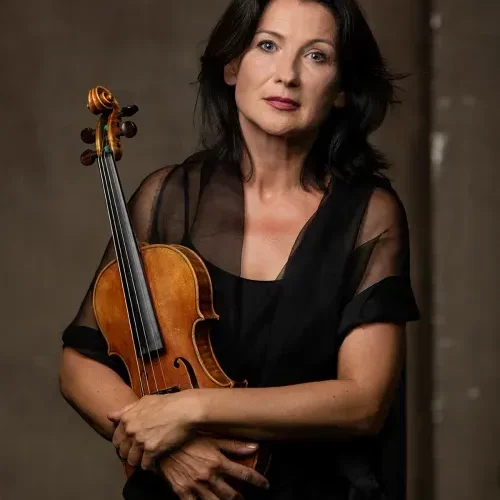
Over more than 44 years of his collaboration with the Silesian String Quartet, they have recorded nearly 60 albums, premiered 150 pieces, and performed over 2500 concerts on the most important stages in Poland and abroad. He is currently full professor and head of the Chamber Music Department at the Karol Szymanowski Academy of Music in Katowice, where he also gives interdepartmental lectures on chamber literature. He spent 25 years as Artistic Director of the International Chamber Music Festival Silesian String Quartet and Guests. He also serves on the boards of the Karol Szymanowski Music Society in Zakopane (from 2018 to 2022 as its chairperson) and the Katowice Kultura Natura association. His activity has brought him numerous state honours and artistic awards. In 2017, he received the Gramophon Classical Music Award in London for recording Grażyna Bacewicz’s complete quartets (Chandos) and the Decoration of Honor Meritorious for Polish Culture. He is also a recipient of the Gold Medal for Long Service, silver (2008) and gold (2019) medals Gloria Artis, nine Fryderyk awards, and the Koryfeusz Muzyki Polskiej award for 2019, in the “Event of the year” category. The recording of Mieczysław Weinberg’s complete string quartets is considered the phonographic achievement of the decade.
Selection stage:
The Competition programme may be performed with the use of sheet music.
1st Stage
1. one of Ludwig van Beethoven’s 6 String Quartets op. 18 (1800):
2. a first movement of a string quartet by Karol Szymanowski, other than in the 3rd stage:
2nd Stage
1. one string quartet by one of the following composers (alphabetical order):
Johannes Brahms
Alexander Borodin
Pyotr Tchaikovsky
Antonín Dvořák
Felix Mendelssohn-Bartholdy
Robert Schumann
Bedřich Smetana
2. one piece from the following
3. one of the three pieces awarded in the composition competition [its performance time does not count in the performance time for the remainder of the programme to be performed in the 2nd stage]
3rd Stage
| 1.11.2022-31.01.2023 | entries |
| 1.03.2023 | announcement of the list of participants who have qualified for the competition |
| 4.09.2023 | performance order draw |
| 14–16.09.2023 | 1st stage |
| 18–19.09.2023 | 2nd stage |
| 21.09.2023 | final |
| 23.09.2023 | laureates' concert |
Absalon String Quartet is a young Copenhagen-based ensemble formed in 2020. The quartet gained recognition after they won Rued Langgaard Competition in 2021. The ensemble played concerts at Rued Langgaard Festival, Bornholm Music Festival and the Oslo Chamber Music Festival. ASQ has also taken part in masterclasses with David Harrington from the Kronos Quartet and with members of the Danish String Quartet. In 2023 the quartet won 1st prize at the Danish Radio Chamber Music Competition. ASQ consists of violinists Thera Ortved and Andreas Larsen, Alva Rasmussen on viola and Olga Chwaszczewska on cello. They study with Professor Tim Frederiksen at the Royal Danish Academy of Music.
AKELA was founded in 2019 at the Royal Danish Academy of Music, under the tutelage of Professor Tim Frederiksen, and has since been interpreting quartet repertoire with presence and curiosity at chamber music festivals, international masterclasses, competitions and in concerts all over Denmark.
The quartet consists of Clara Glasdam (violin), Gustav Ranum (violin), Kirsten Wilbrandt Kjær (viola) and Oskar Reuben Friis-Hansen (cello). All four members has since childhood played together, greatly contributed to their strong common musical and personal understanding.
AKELA strives towards the goal of being a caring and inspiring ensemble and has arranged and played concerts of very different character – from school concerts with singing and storytelling, concerts in some of the biggest concert halls in Denmark and side-by-side concerts with music students, to nursing home concerts during the corona-lockdown in Denmark.
Since its formation AKELA has played around 50 concerts and in 2021 they won first prize in the ENKOR International Chamber Music Competition. Recently they also won first prize in the LFN International Chamber Music Competition. Furthermore the quartet has participated in several masterclasses with teachers such as Hatto Beyerle (Alban Berg Quartet), Johannes Meissl (Artis Quartet) and the members of The Danish String Quartet. In 2022 the quartet was selected to join Le Dimore del Quartetto - an international network supporting young string quartets.
Individually, the four members are an active part of Danish musical life, both in their soloistic endeavours and as part of many orchestras in Denmark. For all of them, though, their biggest passion is chamber music, which they always approach with creativity and openness.
The Atenea Quartet, born in 2019 in Barcelona, is positioned as one of the most relevant quartets of its generation. Throughout his young career he has won significant awards such as the Prix Jeunes Solistes Credit Suisse 2023, being the first quartet to obtain this distinction, and El Primer Palau 2022 (First Prize, Critics' Prize, JJMM Spain Extraordinary Prize, audience and Catalunya Music Award).
Despite its youth, the ensemble has been invited to perform throughout Europe in venues and festivals such as the Lucerne Festival, the Barcelona String Quartet Biennial, the Vilabertran Schubertíada, the Musikdorf Ernen Festival, the Kulturfest Resonanzen Sils, the Wissembourg International Music Festival, the Festival d'Aix-en-Provence and the Juan March Foundation, among others.
Currently, the ensemble continues its musical training at the Hochschule für Musik FHNW in Basel, under the advice of Rainer Schmidt (Hagen Quartet), Silvia Simionescu (Gringolts Quartet), Claudio Martínez Mehner, Anton Kernjak and Anna Gebert. Previously, he formed with the Casals Quartet, during his time in Barcelona.
In addition, the ensemble has participated in renowned academies and masterclasses such as the Prussia Cove International Seminar (Claus- Christian Schuster), the Swiss Chamber Academy (Heinz Holliger), Jeunesses Musicales Deutschland's International Chamber Music Campus (Donald Weilerstein) and Festival Aix-En- Provence (Quatuor Diotima).
Neuma Quartet was established in 2022. They have graduated with distinction from the Academy of Music in Łódź and Bydgoszcz. They have participated jointly in some chamber competitions, achieving very high notes, among others, they have reached the final in the International Rubinstein Competition and qualified for this year's edition of the International Nielsen Chamber Competition. They have debuted at concerts with the laureate of the Chopin competition - Leonora Armellini, with whom had such great opportunity to give jointly the competition’s opening concert at one of the most prestigious chamber competition in Poland - Kiejstut Bacewicz international Chamber Music Competition in Łódź.
Founded in late 2020, the quartet has already performed in countries such as Belgium, France, Netherlands, Italy, Switzerland and Portugal. They have worked in masterclasses with masters such as Eberhard Feltz, Mathieu Herzog, Joseph Kluson, Guy Danel, António Saiote, the Van Kuik Quartet, the Danel Quartet, the Bennewitz Quartet and the Jerusalem Quartet. It also integrates the Nederlandse Strijkkwartet Academie (NSKA) where they are regularly and intensively mentored by the Danel String Quartet, and concluded a Postgraduate degree in String Quartet at the Koninklijk Conservatorium Brussel (KCB) under the tutelage of Eric Robberecht.
The Monbijou Quartet is based in Malmö, Sweden. The quartet is relatively newly formed, but has since its start made a name for itself in Sweden and Scandinavia. It is one of the leading, young and promising quartets in Sweden today. The Monbijou Quartet has given concerts and guesting chamber music festivals all over Sweden, and in May of 2023 the quartet participated in the finals in the biggest chamber music competition in Sweden - the biennale Ung & Lovande.
The Turicum Quartet is based in Switzerland, connecting musicians from four different corners of the world. Already some months after their founding, they were awarded second prize at the Kiwanis Music Competition in Zurich (2022). Invitations followed right away: 2023 included their debut in Tonhalle Zurich with music of the Japanese composer Toshio Hosokawa, a collaboration with the renowned Gringolts Quartet at the Mizmorim Festival and a series of concerts in Germany for the Chamber Music Academy Villa Musica.
Recently they were honoured to work with Hariolf Schlichtig (Cherubini Quartet) and Markus Fleck (Casal Quartet).
The members of the Turicum Quartet met at the Zurich University of the Arts. They are receiving guidance and support from Ilya Gringolts and Thomas Grossenbacher. They consider their various cultural backgrounds as an enrichment to perform music together, broadening their horizons.
Jiska Lambrecht, violin (Belgium)
Karolina Miśkowiec, violin (Poland)
Amir Liberson, viola (Israel)
Maura Rickenbach, cello (Switzerland)
The Turicum Quartet is based in Switzerland, connecting musicians from four different corners of the world. Already some months after their founding, they were awarded second prize at the Kiwanis Music Competition in Zurich (2022). Invitations followed right away: 2023 included their debut in Tonhalle Zurich with music of the Japanese composer Toshio Hosokawa, a collaboration with the renowned Gringolts Quartet at the Mizmorim Festival and a series of concerts in Germany for the Chamber Music Academy Villa Musica.
Recently they were honoured to work with Hariolf Schlichtig (Cherubini Quartet) and Markus Fleck (Casal Quartet).
The members of the Turicum Quartet met at the Zurich University of the Arts. They are receiving guidance and support from Ilya Gringolts and Thomas Grossenbacher. They consider their various cultural backgrounds as an enrichment to perform music together, broadening their horizons.
Jiska Lambrecht, violin (Belgium)
Karolina Miśkowiec, violin (Poland)
Amir Liberson, viola (Israel)
Maura Rickenbach, cello (Switzerland)
Neuma Quartet was established in 2022. They have graduated with distinction from the Academy of Music in Łódź and Bydgoszcz. They have participated jointly in some chamber competitions, achieving very high notes, among others, they have reached the final in the International Rubinstein Competition and qualified for this year's edition of the International Nielsen Chamber Competition. They have debuted at concerts with the laureate of the Chopin competition - Leonora Armellini, with whom had such great opportunity to give jointly the competition’s opening concert at one of the most prestigious chamber competition in Poland - Kiejstut Bacewicz international Chamber Music Competition in Łódź.
Special award for Karol Szymanowski quartet interpretation - Neuma Quartet
Special awards for the best interpretation of a contemporary piece awarded in the composition competition:
The Monbijou Quartet is based in Malmö, Sweden. The quartet is relatively newly formed, but has since its start made a name for itself in Sweden and Scandinavia. It is one of the leading, young and promising quartets in Sweden today. The Monbijou Quartet has given concerts and guesting chamber music festivals all over Sweden, and in May of 2023 the quartet participated in the finals in the biggest chamber music competition in Sweden - the biennale Ung & Lovande.
Founded in late 2020, the quartet has already performed in countries such as Belgium, France, Netherlands, Italy, Switzerland and Portugal. They have worked in masterclasses with masters such as Eberhard Feltz, Mathieu Herzog, Joseph Kluson, Guy Danel, António Saiote, the Van Kuik Quartet, the Danel Quartet, the Bennewitz Quartet and the Jerusalem Quartet. It also integrates the Nederlandse Strijkkwartet Academie (NSKA) where they are regularly and intensively mentored by the Danel String Quartet, and concluded a Postgraduate degree in String Quartet at the Koninklijk Conservatorium Brussel (KCB) under the tutelage of Eric Robberecht.
Entries: 1.11.2022-31.01.2023
The human soul expresses itself most directly through singing. While singing Szymanowski, one may touch upon the mysticism of the East, get lost in the mist of Młoda Polska poetry, stand against the spiritual titans of Modernism, wander among the rhymes of Tuwim’s Słopiewnie, as well as lose oneself in King Roger’s dilemmas and Roxanne’s sensual charm.
Karol Szymanowski’s sister, Stanisława, was a singer herself. It is singing that his music breathes with. We seek singers who will find a common breath with Karol Szymanowski.
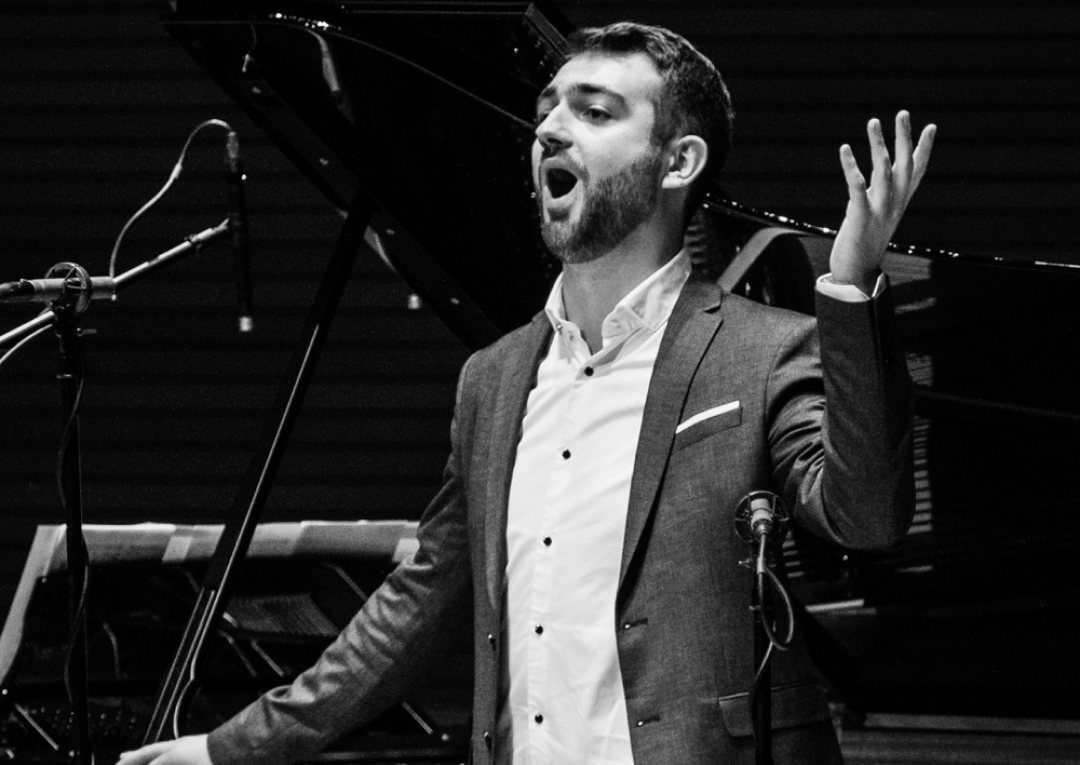
Rules of the 2nd Karol Szymanowski International Music Competition
Rules for the Qualifying Committee
Appendix No6 - Competition Repertoire in the voice discipline
The winners will receive high monetary prizes and the title of a laureate will surely open up new artistic opportunities before them.
1st prize 25,000 €
2nd prize 18,000 €
3rd prize 10,000 €
Special prize for the best performance of a piece by Karol Szymanowski: 5,000 €.
Special prize for the best interpretation of a contemporary piece: 1,000 €.
Honourable mention for the best accompanying pianist: 2,000 €.
Dominik Licht serves as Director of Casting and Planning at the Salzburg Easter Festival as well as Casting Consultant of the Royal Danish Opera, where he holds the primary responsibility of casting singers and conductors. Previously, he was Head of Artistic Operations at the Bayerische Staatsoper Munich as well as Head of Planning at the Komische Oper Berlin. Dominik Licht is a native of Munich, Germany and completed his studies in music at McGill University in Montreal.
Laureate of numerous Polish and international musical competitions. He has performed in multiple venues and European festivals (Théâtre du Châtelet, Salle Pleyel and Cité de la Musique in Paris, Victoria Hall in Geneva, La Monnaie in Brussels, op. ras in Lyon, Montpellier, Marseille, Berlin, Frankfurt, Bremen, Lausanne, Geneva, Festival d’Aix-en-Provence, Festival Radio-France, Chorégies d’Orange, Maifestspiele-Wies- baden and Musique en Côte Basque). His repertoire spans over 40 parts, such as Ford in the Falstaff op. ra, Posa – Don Carlos, Count Almaviva in The Marriage of Figaro, Sharpless in Madama Butterfly, Figaro in The Barber of Seville, and Germond – La Traviata. He performs parts in oratorio works by Bach, Haydn, Mozart, Beethoven, Berlioz, Fauré, Britten, Bruckner, and Ligeti. His recordings include ones for Radio France, TSR, EMI, RAI, SBB, and Decca. He is head of the Vocal Department at the Haute école de musique Genève, member of the Artistic Committees of the International Music Competition in Geneva and the Tibor Varga Academy, as well as professor at the National Conservatory in Lyon.
Ewa Biegas - graduate of the Katowice Academy of Music in the class of prof. J. Ballarin and the Vienna Universitat fur Musik und Darstellende Kunst in the class of prof. H. Łazarska; winner of many prestigious international vocal competitions (including the St. Moniuszko Competition in Warsaw, the F. Tagliavini Competition in Deutchlandsberg, the BBC Cardiff Singer of the World Competition) and a scholarship holder of the Government of Austria, the Swiss Thyll-Dur Foundation and the Government of the Republic of Poland. She has sung over 30 leading roles on the stage of Polish and world opera houses, including: Lady Billows "Albert Herring", Halka, "Halka", Rozalinda "Die Fledermaus", Małgorzata "Faust", Mimi "La Bohème", Liza "The Queen of Spades". ", Cio-Cio San "Madama Butterfly", Ariadna "Ariadna auf Naxos" , Leonora "The Troubadour", Fata Morgana "The Love of Three Oranges", Tatiana "Eugene Onegin", Miss Wingrave "Owen Wingrave", Joanna "The Devils of Loudun ", Duchess "Rusalka", Hagith "Hagith", Syrena "Syrena", Ereshkigal "Ahat Ihli", Tosca "Tosca", Titania "Fary Queen", Leonora "La forza del destino". She is an outstanding interpreter of the works of Polish composers, recording works including: I.F. Dobrzyński, F. Nowowiejski, E.Bogusławski, A. Dziadek, W. Friemann and W. Lutosławski for Polish Radio. She performed during the world premiere of “Missa pro pace” by W. Kilar at the Cathedral of St. Patrick in New York and was invited to take part in a tour of Germany as a performer of the solo part in St. Lukas Passion by K. Penderecki, conducted by Antoni Wit. Professor, currently dean of the Vocal and Acting Faculty of the Karol Szymanowski Academy of music in Katowice.
Melanie Diener gained international recognition with major roles in the operas of Richard Wagner and Richard Strauss. Not only her exceptionally beautiful and timbre-rich soprano voice, but also her intense dramatic prowess established her as one of the most sought-after singers in the international opera and concert scene.
After achieving great success as Fiordiligi in performances at the Royal Opera House in London, the Palais Garnier in Paris, the Metropolitan Opera in New York, as well as in Ferrara, Dresden, and Zurich, she made her highly acclaimed debut as Elsa at the Bayreuth Festival in 1999. Further significant milestones in her career included the title role in "Katja Kabanova" at the Berlin Lindenoper and Ellen Orford in Britten's "Peter Grimes" at the Vienna State Opera. Both audiences and critics were enthralled by her touching interpretation of Ursula in Hindemith's "Mathis der Maler" at the Opéra Bastille in Paris, as well as her compelling portrayals of the Marschallin at the Helsinki Opera and the Bolshoi Theater in Moscow.
Melanie Diener is also a sought-after guest on the concert stage and as a song interpreter. Her exceptional musicality, empathy, and dramatic expression are highly esteemed. She has collaborated with renowned conductors including Claudio Abbado, Philippe Jordan, Riccardo Chailly, Christoph von Dohnanyi, Michael Gielen, Bernard Haitink, Marek Janowski, Simone Young, Kent Nagano, Lorin Maazel, and Franz Welser-Möst. Her engagements have taken her to numerous festivals, including the Berliner Festwochen, Lucerne Festival, Salzburg Festival, Richard Strauss Weeks in Garmisch-Partenkirchen, Vienna Festival, and Tanglewood Festival.
Melanie Diener places great importance on her commitment to fostering young artistic talent. She has conducted numerous masterclasses, including in Barcelona, the Rotterdam Conservatory, and the Stuttgart Conservatory. In 2016, she served as a jury member for the "Piano and Voice" Competition at the Tchaikovsky Conservatory in Moscow and in 2018 as a jury member for the inaugural "First Pyongyang International Vocal Competition" in Pyongyang, North Korea. In September 2019, together with Thomas Hampson, she initiated the first "International Opera Workshop Waiblingen." The 2nd International Opera Workshop
In addition to her professional career, she has chosen to expand her horizons through a part- time master's degree program in the field of Music Therapy: Empowerment, Participation, and Inclusion. She is expected to successfully complete her master's degree by the end of the summer semester. The master's program has provided her with the opportunity to delve deeply into the themes of Music Therapy: Empowerment, Participation, and Inclusion. She has developed a solid understanding of the significance of these concepts in various contexts, whether social, educational, or health-related. With the knowledge and skills acquired, she is now capable of implementing inclusive and participatory approaches in her professional practice. During her studies, she participated in various hands-on projects that allowed her to translate theoretical knowledge into practical application. She has learned how to support and empower individuals from diverse backgrounds and with varying needs, helping them to reach their full potential and actively engage in society. The master's program has also expanded her network and enabled her to connect with other professionals and students. This interdisciplinary approach has broadened her perspective and empowered her to develop innovative and holistic solutions. She takes pride in completing this part-time master's program, as it has allowed her to continuously expand her knowledge and skills while fulfilling her professional commitments. She is confident that her completed master's degree in the field of Music Therapy: Empowerment, Participation, and Inclusion will broaden her career opportunities and open new doors for her.
Thomas Mittermayer received his initial musical training in Krems/Donau, Austria. Later, following his business education, he attended the University of Music and Performing Arts where he studied organ with Alfred Mitterhofer, voice with Margit Klaushofer, choral conducting with Erwin Ortner, and piano with Maria Regina Seidlhofer.
Mr. Mittermayer was the head of vocal casting Vienna’s Musikverein for three decades. He has been a juror for numerous singing competitions, including the Helmut Deutsch Song Competition, the Hilde Zadek Singing Competition, and the Stella Maris Singing Competition.
He served as a member and president of the Arnold Schoenberg Choir, and is an experienced collaborative pianist, organist and arranger.
Raised in a musical family in Pittsburgh, Francesca Condeluci trained as a violinist. From a young age she won seats in youth orchestras and ensembles, touring and competing internationally. She discovered her passion for opera while completing her studies at Duquesne University, and soon after graduating, moved to Italy for several years to immerse herself in the European opera world. She returned to the States inspired to pursue a career in the arts, beginning at Pittsburgh Opera and Spoleto Festival USA. Ms Condeluci has spent the past decade as a manager with Columbia Artists Management (CAMI) and UIA Talent Agency, and in her current role as Associate Director for North America at Centre Stage Artist Management, she continues to support and nurture the careers of the most in-demand artists in the industry. Recognized for her ability to identify great talent, Ms Condeluci has twice been a judge for the Metropolitan Opera’s Laffont Competition, as well as for the inaugural Nicola Martinucci Competition in Lucca, Italy. She has served as guest faculty at the Manhattan School of Music, The Juilliard School, and Drake University. Francesca Condeluci lives with her spouse and daughter in New York City.
Ewa Biegas - graduate of the Katowice Academy of Music in the class of prof. J. Ballarin and the Vienna Universitat fur Musik und Darstellende Kunst in the class of prof. H. Łazarska; winner of many prestigious international vocal competitions (including the St. Moniuszko Competition in Warsaw, the F. Tagliavini Competition in Deutchlandsberg, the BBC Cardiff Singer of the World Competition) and a scholarship holder of the Government of Austria, the Swiss Thyll-Dur Foundation and the Government of the Republic of Poland. She has sung over 30 leading roles on the stage of Polish and world opera houses, including: Lady Billows "Albert Herring", Halka, "Halka", Rozalinda "Die Fledermaus", Małgorzata "Faust", Mimi "La Bohème", Liza "The Queen of Spades". ", Cio-Cio San "Madama Butterfly", Ariadna "Ariadna auf Naxos" , Leonora "The Troubadour", Fata Morgana "The Love of Three Oranges", Tatiana "Eugene Onegin", Miss Wingrave "Owen Wingrave", Joanna "The Devils of Loudun ", Duchess "Rusalka", Hagith "Hagith", Syrena "Syrena", Ereshkigal "Ahat Ihli", Tosca "Tosca", Titania "Fary Queen", Leonora "La forza del destino". She is an outstanding interpreter of the works of Polish composers, recording works including: I.F. Dobrzyński, F. Nowowiejski, E.Bogusławski, A. Dziadek, W. Friemann and W. Lutosławski for Polish Radio. She performed during the world premiere of “Missa pro pace” by W. Kilar at the Cathedral of St. Patrick in New York and was invited to take part in a tour of Germany as a performer of the solo part in St. Lukas Passion by K. Penderecki, conducted by Antoni Wit. Professor, currently dean of the Vocal and Acting Faculty of the Karol Szymanowski Academy of music in Katowice.
Selection stage:
Persons who qualify for the competition are requested to perform the following by 30.06.2023:
1st Stage / 15 minutes
The jury reserves the right to choose the pieces to be presented in the 1st stage.
The set of pieces to be performed by each participant shall be announced by the Jury an hour before the participant’s performance.
The participant decides about the order the pieces are performed in.
1. an aria satisfying all the following conditions:
a. is part of an opera premiered from 1800 to 1840 (written by a composer of any nationality)
b. is representative of the belcanto technique
c. performance – in the original key
2. a piece by Witold Lutosławski in original key, to be chosen from the following
a. Lacrimosa version for soprano and organ / whole
b. Chantefleurs et Chantefables for organ and orchestra; words Robert Desnos, arr. for soprano and piano Eugeniusz Knapik / two songs to be chosen from the following
La belle-de nuit
La sauterelle
La Véronique
L’Eglantine, l’Aubépine et la Gycine
La torture
La rose
L’alligator
L’Angélique
Le papillon
c. Lawina words A.S. Pushkin, trans. J. Tuwim – soprano or tenor
d. Nie dla ciebie words K. Iłłakowiczówna – soprano, mezzosoprano, or tenor
e. Pięć pieśni do słów Kazimiery Iłłakowiczówny for mezzosoprano and piano / two songs to be chosen from the following / performance by a countertenor is allowed
Morze Wiatr Zima
Rycerze
Dzwony cerkiewne
f. Paroles tissées for tenor and chamber orchestra; words Jean-François Chabrun, arr. for tenor and piano Edward Sielicki / one movement to be chosen
Un chat qui s’émerveille...
Quand le jour a rouvert les brances du jardin...
Mille chevaux hors d’haleine...
Dormez cette pâleur nous est venue de join ...
g. Tarantella for baritone and piano; words. Hilaire Belloc / performance by a countertenor is allowed
or
Wojciech Kilar – from F. Petrarca’s „Sonnets for Laura” cycle trans. Jalu Kurek in original key – 1 song
Benedetto sia'l giorno
Era il giorno
Soleasi nel mio cor
E mi par d'or in ora
or
A song by H.M. Górecki in original key to be chosen from the following:
a. from the „Trzy pieśni do sł. M. Konopnickiej” op. 68 cycle – 2 songs to be chosen from the following
Przez te łąki , przez te pola
Kiedy Polska
U okienka, u mojego
b. from the „Śpiewy do sł. Juliusza Słowackiego” op. 48 cycle – 1 song to be chosen from the following
We łzach, Panie ręce podnosimy do Ciebie
Panie, o którym na niebiosach słyszę
c. from the „Dwie pieśni do sł. F. G. Lorki” trans. M. Bieszczadowski op. 42 cycle – 1 song
Nokturn
Malagena
d. from the „Trzy fragmenty do sł. S. Wyspiańskiego” op. 69 cycle – 1 song to be chosen from the following
Jakżeż ja się uspokoję
Może z mętów się dobędzie
Poezjo!
e. from the „Błogosławione pieśni malinowe” op. 43 cycle – 2 songs to be chosen from the following
Błogosławione pieśni malinowe
Co ranek skoro ustępują cienie Litość
O! Boże
H. M. Górecki’s songs were published by Boosey & Hawkes in 2013
3. two songs satisfying all the following conditions / transpositions allowed (only if published)
a. sung in two different languages, different from the languages of the pieces presented previously
b. contrastive in mood
c. written by composers from early Romanticism to Neoromanticism
4. one song by Karol Szymanowski chosen by the participant, satisfying the following conditions
a. performance in the original key
b. must not be repeated in other stages of the competition
c. the language version may be a repetition of one of the language versions of the pieces presented in this stage (1st stage)
2nd stage / 20 minutes
Participants present the whole programme of the 2nd stage.
The participant decides about the order the pieces are performed in.
1. to be chosen from works by Karol Szymanowski no fewer than three songs, from any opus, or a whole cycle of songs, or a fragment of a cycle / performance in original keys
2. two songs in different languages chosen from the following composers’ works / in original keys (alphabetical order)
Grażyna Bacewicz
Béla Bartók
Alban Berg
Luciano Berio
Lili Boulanger
Benjamin Britten
John Cage
Aaron Copland
George Crumb
Claude Debussy / except for Nuit d’étoiles and Mandoline Artur Honegger
Jacques Ibert
Charles Ives
Leoš Janáček
Wojciech Kilar
Stefan Kisielewski
Zoltán Kodály
György Ligeti
Anna Mahler
Bohuslav Martinů
Olivier Messiaen
Paweł Mykietyn
Roxanna Panufnik
Hans Pfitzner
Poldowski [Irène Wieniawska]
Francis Poulenc
Prasqual
Sergei Prokofiev
Maurice Ravel
Ludomir Różycki
Arnold Schönberg
Igor Stravinsky
Georgy Sviridov
Dmitri Shostakovich
Paweł Szymański
Michael Tippet
Anton Webern
Mieczysław Weinberg
Alexander von Zemlinsky
Agata Zubel
3. one of the three pieces awarded in the composition competition [its performance time does not count in the performance time for the remainder of the programme to be performed in the 2nd stage]
3rd stage
1. one or more pieces arranged for voice and orchestra, duration time no longer than 8 minutes; (pieces different from those performed in the preceding stages)
a. Król Roger op. 46, libretto Karol Szymanowski and Jarosław Iwaszkiewicz, one of the following fragments:
Roksana’s Uśnijcie krwawe sny króla Rogera... aria from Act 2 (soprano)
Mój Bóg jest piękny jako ja... Shepherd’s song from Act 1 (tenor)
Hymn to the sun (Roger): Edrisi, już świt!...Słońce! Słońce! Edrisi... from Act 3 (baritone)
b. Trzy fragmenty z poematów Jana Kasprowicza op. 5, instrumentation Grzegorz Fitelberg / 1 hymn to be chosen from the following, different from any performed in a preceding stage (mezzosoprano, baritone, soprano spinto or countertenor)
Święty Boże
Jestem i płaczę
Moja pieśń wieczorna (Błogosławioną niech będzie ta chwila)
c. Penthesilea op. 18 for soprano and orchestra, words Stanisław Wyspiański
d. Des Hafis Liebeslieder für Gesang und Orchester/ Pieśni miłosne Hafiza for voice and orchestra op. 26, words Hans Bethge, translated into Polish by Stanisław Barącz (soprano, mezzosoprano, tenor, countertenor) / a selection – maximum duration approximately 8 minutes (songs different from the ones performed in a preceding stage).
Wünsche / Życzenia
Der verliebte Ostwind / Zakochany wiatr
Tanz / Taniec
Die Perlen meiner Seele / Serca mego perły
Jugend im Alter / Wieczna młodość
Deine Stimme / Głos Twój
Trinklied / Pieśń pijacka
Das Grab des Hafis / Grób Hafiza
e. Pieśni księżniczki z baśni op. 31 words Zofia Szymanowska (soprano) / a selection – maximum duration approximately 8 minutes (songs different from the ones performed in a preceding stage).
Samotny księżyc
Słowik
Taniec
f. Pieśni muezina szalonego op. 42, words Jarosław Iwaszkiewicz (mezzosoprano, tenor, coutertenor / a selection – maximum duration approximately 8 minutes (songs different from the ones performed in a preceding stage)
Allah, Allah Akbar
W południe miasto białe
O tej godzinie
Odeszłaś w pustynię zachodnią
g. Słopiewnie op. 46 bis, words Julian Tuwim (soprano) / a selection – maximum duration approximately 8 minutes (songs different from the ones performed in a preceding stage)
Słowisień
Zielone słowa
Święty Franciszek
Kalinowe dwory
Wanda
h. Trzy kołysanki op. 48, words Jarosław Iwaszkiewicz (soprano or tenor)
instrumentation Jan Krenz
Pochyl się cicho nad kołyską
Śpiewam morzu, gwiazdom i tobie
Biały krąg księżyca olbrzymi
2. one operatic aria or scene from an opera, to be chosen from the following list:
for sopranos
Samuel Barber – Vanessa, libretto Gian Carlo Menotti
Act 1, Vanessa: Do not utter a word, Anatol...
Leonard Bernstein – Candide, libretto Lillian Hellman and Richard Wilbur after Voltaire
Act 1, Cunegonde: Glitter and be gay...
Leoš Janácek – Její pastorkyňa JW I/4, libretto Leoš Janácek after Gabriela Preissovea
Act 2, Jenůfa: To je mamin ina jizba...
Erich Wolfgang Korngold – Die tote Stadt op. 12, libretto Paul Schott
image 2, Marietta: Glück das mir verblieb...
Gian Calro Menotti – The Medium, libretto
Act 2, Monica’s Waltz: Bravo! And after the theatre...
Krzysztof Penderecki – Paradise Lost, libretto Christopher Fry after John Milton
Act 1, Eve’s dream: Adam, glad I see thy face...
Giacomo Puccini - Turandot, libretto Giuseppe Adami and Renato Simoni
Act 1, Liú: Signore, ascolta...
Act 3, Liú: Tu, che di gel sei cinta...
Richard Strauss – Ariadne auf Naxos op. 60, TrV 228, libretto Hugo von Hofmannsthal
Zerbinetta: Grossmächtige Prinzessin... (pt 1)
Igor Stravinsky – The Rake’s Progress, libretto Wystan Hugh Auden and Chester Simon Kallman
Act 1, Anna: No word from Tom... (recitative, aria, cabaletta, recommended edition – Boosey & Hawkes)
Mieczysław Weinberg – Passażirka, libretto Jurij Łukin and Aleksandr Miedwiediew after Zofia Posmysz
image 6, Marta: Wurde er mich rufen... (nos. 12-18 / ed. Peermusic Classical)
for mezzosopranos and altos
Benjamin Britten – The Rape of Lucretia op. 37, libretto Ronald Duncan after André Obey
Act 2, Lucretia: Give him this orchid... (nos. 51-77 / ed. Boosey & Hawkes)
Gian Carlo Menotti - The Consul, libretto Gian Carlo Menotti
Act 2, Mother: I shall find for you...
Francis Poulenc – Dialogues des carmélites op. 159, libretto Georges Bernanos
Act 2, Madame de Croissy: Relevez-vous, ma fille...
Richard Strauss – Der Rosenkavalier op. 59, TrV 227, libretto Hugo von Hofmannsthal
Act 1, Octavian: Wie du warst!...
Richard Strauss – Ariadne auf Naxos op. 60, TrV 228, libretto Hugo von Hofmannsthal
prologue, Composer: Sein wir wieder gut...
Igor Stravinsky – The Rake’s Progress, libretto Wystan Hugh Auden and Chester Simon Kallman
Act II, Baba the Turk: As I was saying ... Scorned !..(nos. 152-187 / ed. Boosey &
Hawkes)
for countertenors
Benjamin Britten – A Midsummer Night’s Dream op. 64, libretto Benjamin Britten, Peter Pears after William Shakespeare
Act 1, Oberon: Welcome wanderer!... (nos. 45-53 / ed. Boosey & Hawkes)
Philip Glass – Akhnaten op. 3, libretto Philip Glass and others
Act 1, Akhnaten: Tut wu-a yeri enti...
for tenors
Samuel Barber – Vanessa, libretto Gian Carlo Menotti
Act 1, Anatol: Outside this house...
Leoš Janácek – Její pastorkyňa JW I/4, libretto Leoš Janácek after Gabriela Preissova
Act 1, Laca Klemeň: Vy, stařenko...
Carl Orff - Die Kluge: die Geschichte von dem König und der klugen Frau, libretto Carl Orfa after the Grimm brothers
scene 6, Eselman: Weh mir, wie konnt’ mir das Geschehn
Giacomo Puccini - Turandot, libretto Giuseppe Adami and Renato Simoni
Act 3, The Unknown Prince (Calaf): Nessun dorma...
Igor Stravinsky – The Rake’s Progress, libretto Wystan Hugh Auden and Chester Simon Kallman
Act 1, Tom Rakewell: Here I stand... (nos. 27-46 / ed. Boosey & Hawkes)
or
Act 2, Tom Rakewell: Vary the song... (nos. 1-26 / ed. Boosey & Hawkes)
Act 3, Selem: Ladies, both fair and gracious... (nos. 43-65 / ed. Boosey & Hawkes)
or
Act 3, Selem: Behold it, Roman... (nos. 68 - 97 / ed. Boosey & Hawkes)
for baritones
Samuel Barber – Vanessa, libretto Gian Carlo Menotti
Act 2, The Old Doctor: You rascal you I never knew you had a soul...
Gian Calro Menotti – The Consul, libretto Gian Calro Menotti
Act 1, The Footman: Mrs. Sorel, your husband has many friends...
Erich Wolfgang Korngold – Die tote Stadt op. 12, libretto Paul Schott
image 2, Fritz: Mein Sehnen, mein Wähnen...
Sergei Prokofiev – War and Peace op. 91, libretto Sergei Prokofiev and Mira Mendelssohn after Leo Tolstoy
image 1, Prince Andrei Bolkonsky: Svetloje vesenneje nebo...
Igor Stravinsky – The Rake’s Progress, libretto Wystan Hugh Auden and Chester Simon Kallman
Act 2, Nick Shadow: Come, master, observe the host... (nos. 29 - 47 / ed. Boosey & Hawkes)
| 1.11.2022-31.01.2023 | entries |
| 1.03.2023 | announcement of the list of participants who have qualified for the competition |
| 4.09.2023 | performance order draw |
| 15–17.09.2023 | 1st stage |
| 19–20.09.2023 | 2nd stage |
| 22.09.2023 | final |
| 23.09.2023 | laureates' concert |
MA student at the Department of Vocal and Acting at the Karol Szymanowski Academy of Music in Katowice. In both her high school and undergraduate studies she was taught by Prof. Dr. Agata Kobierska. She began her master's studies in the class of Prof. Dr. Ewa Biegas, Dean of the Vocal and Acting Department. Her most recent achievements are: 1st place at the 7th Krystyna Jamroz National Vocal Competition in Kielce; 3rd place at the 1st Monika Swarowska-Walawska International Vocal Competition in Krzeszowice; the Scholarship of the Minister of Culture and National Heritage for outstanding artistic achievements in 2021/2022.
Aleksandra holds degrees in Music from the University of Cambridge and in Voice & Acting from the Fryderyk Chopin Music University in Warsaw, where she studied with Jolanta Janucik. In 2022, Aleksandra performed the title role in Puccini’s Suor Angelica at the Polish National Opera in Warsaw, which was met with great acclaim and reviews highlighting how she ‘combined a profound dramatic interpretation with a secure vocal performance of the incredibly demanding role’, while her voice was praised for its ‘noble timbre, clear intonation and beautiful legato’. At Cambridge, she sang in the Choir of Gonville & Caius College under Geoffrey Webber, working with Kate Symonds-Joy and Amanda Roocroft.
Polish-American coloratura soprano Alexandra Nowakowski returns to The Metropolitan Opera for the 2022-23 season to cover Barbara/Mrs. Latch in The Hours (Puts), Voce dal cielo in Don Carlo, and Sophie in Der Rosenkavalier. She sings Queen of the Night with Opera Popular de Barcelona, and sings Mozart's Exsultate jubilate, K. 165 with the Symphony in C. She sang a solo recital with The Embassy Series. Alexandra joined the roster of The Metropolitan Opera for the 2021-22 season to cover Zerbinetta in Ariadne auf Naxos, Lucia in Lucia di Lammermoor and Gilda in Rigoletto. She sang Shostakovich's Op. 127 with the Brooklyn Art Song Society, and was a recipient of the Beebe Fund fellowship.
Mezzo-soprano. Already as a child she performed on the stage of the D. Baduszkowa Musical Theater in Gdynia in the play „Król Niechciej…wcale nie bajka”. In 2011 she took up studies at the Faculty of Vocal and Acting at the F. Nowowiejski Academy of Music in Bydgoszcz. In 2017, she graduated with honors from the Fryderyk Chopin University of Music in Warsaw in J. Rappe's singing class. Laureate of the 3rd prize and the special prize of the Ostrava Opera at the 52nd A. Dvorakaw Karlovy Vary International Vocal Competition 2017. Laureate of special prizes at the 9th J. Kiepura International Vocal Competition in Krynica-Zdrój 2022.
A student of the Hochschule für Musik Theater und Medien Hannover in the class of Prof. Marek Rzepka. Previously, she honed singing at the Fryderyk Chopin University of Music in Warsaw in the class of ad. dr. hab. Magdalena Idzik from 2019-2021. She gained her first opera experience at the Staatsoper Braunschweig in 2022, and even before she began her studies, she won a number of prizes at international and national competitions, led by Magdalena Spytek- Stankiewicz. At the same time, she sang for the first time on the NOSPR chamber stage and performed with the Silesian Chamber Orchestra.
Catherine Hooper graduated with distinction from the Royal College of Music in London. She is an OperaUpClose Associate Artist and covered Senta in their recent production of The Flying Dutchman, as well as performing a touring solo production. She is an Opera Prelude Young Artist and a former SongEasel Young Artist. In 2022, Catherine was part of the Glyndebourne Chorus and performed solos from Mozart’s Requiem in their outreach projects. At RCM, Catherine covered the Queen of the Night with the Opera Studio and performed Contessa Almaviva, Donna Anna and Alcina in opera scenes. She previously performed Vixen Sharp-Ears and Miss Jessel with Byre Opera in Scotland and has been a soloist for a number of major concert works, including Fauré’s Requiem, Handel’s Messiah, and Rossini’s Petite messe solennelle.
Born and raised in Scotland, Colum is a recent graduate of the Master’s programme at the Royal Conservatoire of Scotland.
This summer, Colum was a fellow of Music Academy of the West, in Santa Barbara, California, where he covered and performed the principal role of Marcello in La Bohème in concert.
Colum received First Prize at the Charles Wood Song Competition 2023 in Armagh, Northern Ireland. He recently returned to Armagh to perform a solo recital at the gala concert of the annual Charles Wood Festival.
He is an alumnus of The Sixteen’s flagship training programme, Genesis Sixteen, and of the Dunedin Consort’s inaugural young artist programme. He was highly commended at the Leonie Kayser Prize for Singing, 2020 and won 3rd Place in the Hugh S Roberton Prize for Scottish Singing in 2019.
Opera appearances include chorus work in Donizetti’s L’Elisir D’Amore (New Generation Festival, Florence) and Wagner’s Götterdämmerung with Sir Andrew Davis and the RSNO. He also played The Boy in Kurt Weill’s Der Jasager with Scottish Opera Connect.
Colum has performed alongside The Sixteen in the world premiere of Sir James MacMillan’s 5th Symphony Le Grand Inconnu at The Usher Hall and with The Dunedin Consort on their Golden Age tour and at the Edinburgh Fringe Festival.
Colum appears in the Netflix Originals feature film Outlaw King and the official live recording of Le Grand Inconnu at the Barbican Centre in London.
Colum is deeply grateful to Creative Scotland, the Dewar Arts Awards, the McGlashan Trust and Help Musicians UK for their generous support towards his studies and career development.
Baritone. He has had many successes in international and national vocal competitions, including 1st prize in the 2nd Bogdan Paprocki National Vocal Competition, 2nd prize in the 19th Ada Sari International Vocal Competition, 1st prize in the 21st Imrich Godin International Vocal Competition IUVENTUS CANTI 2019, 2nd prize in the 3rd Ars et Gloria International Sacred Music Vocal Competition. In August 2022, he participated in the production of Gioachino Rossini's "Il viaggio a Reims" at the Rossini Opera Festival in Pesaro. He graduated with honors from the Feliks Nowowiejski Academy of Music in Bydgoszcz in the vocal class of Professor Adam Zdunikowski.
Mezzo-soprano, 5th year student at the K. Szymanowski Academy of Music in Katowice in the class of Prof. Ewa Biegas and Natalia Skrycka, MA.
She is the laureate of the 1st place at the Imrich Godin International Vocal Competition in Vrablach and 3rd place at the Ars et Gloria International Sacred Vocal Competition in Katowice.
She studied under the tutelage of esteemed artists in workshops including Piotr Beczala, Mariusz Kwiecień, Joanna Freszel, Jan Ballarin, Robert Cieśla, Tadeusz Kozłowski.
Graduated from the vocal department of the Molodechno Music College named after M. K. Oginsky (class of teacher Shibko N. G., 2013). Then graduated from the vocal department of the Belarusian State Academy of Music (class of Professor Lyudmila Yakovlevna Kolos, 2021). As a guest soloist performed with the honored team of the Republic of Belarus, the Symphony Orchestra named after M.K. Oginsky. While studying at the Academy of Music took part in the performances of the opera studio, performed the parts of Pamina (The Magic Flute by W.A. Mozart), Marfa (The Tsar’s Bride by N. Rimsky-Korsakov), Countess (The Marriage of Figaro by V.A. Mozart).
Born on March 3, 2000 in Tarnow, Poland. In June 2018. graduated from the Ignacy Jan Paderewski 2nd Degree Music School in Tarnow, with a specialty in vocal performance. In 2019, he began studies at the vocal and acting department of the Karol Szymanowski Academy of Music in Katowice, majoring in vocal performance. In 2022 he graduated from the first degree program and began second degree studies in vocal performance. Laureate of 3rd place in the Mikulasz Schneider Trnavsky International Vocal Competition in Trnava, Slovakia 2021. Laureate of 1st place in the XXIII International Vocal Competition named after Imrich Godin "Iuventus Canti" Vrable Slovakia 2022.
Graduate of the Karol Szymanowski Academy of Music in Katowice, Poland, where he received his Doctor of Arts degree in 2022. He was a member of the Opera Academy at the Grand Theater of the National Opera and the Lyon Opera Studio. He won 2nd prize at the Otto Edelmann Singing Competition in Vienna and 2nd prize at the Giuseppe Di Stefano Competition in Trapani. He also received the award for the best performance of Mieczyslaw Weinberg's songs at the Stanislaw Moniuszko International Vocal Competition (2019). He has collaborated with TWON, WOK, TW in Poznań, Silesian Opera, Baltic Opera, and the Glyndebourne on Tour Festival.
Johanna Will earned her BA in Hamburg,then received a full scholarship for her Master's in NYC. 2021 she was selected for San Francisco Opera's Merola Program,in 2022 she opened the Viennese Opera Ball NYC.Stage credits include Mimi,Angelica,Contessa,Fiordiligi,Tatyana. She was awarded the Rolex Scholarship to the Georg Solti Academia di Bel Canto, where she worked with Angela Gheorghiu and Richard Bonynge.Current coaches include Gerald Martin Moore and Nadine Sierra. She was District Winner of the Met Opera Competition 2021/22, 1st prize at the G. Mahler and Elise Meyer Competition, 2nd at the Mozart and Strauss competition.The Gerda Lissner Foundation honoured her with their Award in 2021.
She graduated from the K. Lipinski Academy of Music in Wroclaw and K. Szymanowski in Katowice. She is a laureate of numerous National and International vocal competitions, including the National Competition for Duets with Piano in Gdansk, Bogdan Paprocki Vocal Competition, the Jan Kiepura International Vocal Competition in Krynica-Zdrój, Imrich Godin International Vocal Competition IUVENTUS CANTI in Vrablach (Slovakia), International Jean Sibelius Vocal Contest (Finland), International Vocal Competition ZŁOTE GŁOSY in Warsaw, Inter-University Competition for Instrumental Duets and Vocal Duets.
Soprano, since the beginning of her vocal path, she has been mainly associated with early music performance. She graduated from the Faculty of Vocal and Acting at the Krzysztof Penderecki Academy of Music in Cracow in the class of Dr. Ewa Wolak, where she continues her master's studies. She has participated in festivals, i.e. Bach Festival in Świdnica, Opera Rara, Mid Europe Early Music Festival and Bach Days. She has collaborated with, among others, Capella Cracoviensis, the Cracow Philharmonic and the orchestra Baroque Collegium 1685, as well as with the Grand Theater - National Opera in Warsaw in the opening of the exhibition Beyond "Aida": Egyptomania on the Polish stage".
Graduate of the Karol Szymanowski Academy of Music in Katowice. She won first prize in the Rudolf Petrak International Vocal Competition in Žilina, Slovakia (2018); third prize in the Imrich Godin Iuventus Canti Vocal Competition in Vrablach, Slovakia (2018); and third place in the 5th Inter-University Chamber Competition for Instrumental Duets and Vocal Duets (Lodz, 2018).
She has participated in numerous vocal courses under the direction of Ewa Wolak, Jacek Laszczkowski, Thomas Heyer, and others. Her repertoire includes opera parts, sacred music, as well as songs - from the late Renaissance to contemporary works.
Magdalena Lucjan was born in April 1999 in Pszczyna, Poland. She graduated from the Music and Arts Private University of the City of Vienna (MUK), gaining a diploma with distinction. Magdalena is currently doing her MA degree in Vocal Performance at the University of Music and Performing Arts Vienna (MDW). Since October 2022 Magdalena is a member of the Opera Academy at the Polish National Opera in Warsaw. Lucjan worked with acclaimed singers and teachers such as Olga Pasiecznik, Izabela Klosinska, Melba Ramos, Gabriele Lechner, Vesselina Kasarova, Birgid Steinberger, Angelika Kirchschlager, Claudia Visca, Michael Kraus, Gerhard Kahry, Michał Biel, Maciej Pikulski and Helmut Deutsch. Magdalena made her Switzerland debut as Clorinda in Rossini’s Opera ‘La Cenerentola’ at the Ticino Musica Festival under the musical direction of Umberto Finazzi and staged by Daniele Piscopo. In December 2022 Magdalena sang the roles of Sandmann/Taumann in “Hansel and Gretel” by E. Humperdinck at the Schlosstheater Schönbrunn in Vienna. In December 2023 she will sing the role of Gretel in the same production. In June 2023 Magdalena first performed the songs from the cycle ‘Night Scenes’ by Julian Cochran at the Witold Lutoslawski Concert Studio of Polish Radio.
Graduate of the Jozef Adamovich Conservatory of Music in Kosice (Slovakia) with two majors, acting and solo singing. Currently a bachelor's student at the Karol Szymanowski Academy of Music in Katowice at the vocal and acting department in the class of Dr. Ewa Biegas. Laureate of 2nd prize at the Antonin Dvorak International Vocal Competition v Karlovy Vary (Czech Republic, 2022). Finalist at the Imrich Godin Iuventus Canti International Vocal Competition in Vrablach (Slovakia, 2022).
Graduate of the K. Szymanowski Academy of Music in Katowice in the voice class of Prof. Ewa Biegas and Dr. Ewa Tracz. She is a laureate of many international and national vocal competitions, including 3rd place at the M. Schneider-Trnavský International Vocal Competition in Trnava, 1st place at the 2nd Tournament of Polish Academies of Music, and 1st place at the I. Godin International Vocal Competition in Vrablach. The mezzo-soprano has so far performed with the orchestra of the Silesian Opera conducted by Tadeusz Kozłowski, the Zabrze Philharmonic Orchestra conducted by Slawomir Chrzanowski, or on the chamber stage of the National Polish Radio Symphony Orchestra in Katowice with the Orchestra of New Music, conducted by Szymon Bywalec.
Graduate of the Fryderyk Chopin University of Music in Warsaw in the class of Prof. Jadwiga Rappé. He honed his skills at the Opera Academy at the Grand Theater - National Opera in Warsaw and at the Mascarade Opera studio in Florence, among others. He was also a member of the prestigious Young Singers Project program at the Salzburg Festival. He is currently a member of the Opéra de Lyon Opera Studio. He has performed on many prestigious stages such as the Salzburg Festival, Opéra de Lyon, Théâtre des Champs-Elysées, Lyric Opera of Chicago, Teatro La Fenice in Venice, National Opera in Warsaw, Wroclaw Opera and many others. Winner of more than 20 international and national vocal competitions.
Shanley Horvitz, an American mezzo-soprano, who recently debuted with Opera San Jose as Meg Page in Verdi’s Falstaff. She has had a fruitful competition season winning 1st place of the: Wagner Society of New York, International Czech and Slovak Competition, International Orpheus Competition, Mario Lanza Institute Competition, and Houston Gilbert & Sullivan Competition. Her recent debuts include: Anacoana in Franchetti’s Cristoforo Colombo with Teatro Grattacielo and the title role in Bizet’s Carmen which she debuted in concert at Carnegie Hall, in the fall she will be debuting as La Gran Vestale in Spontini’s La Vestale.
Graduate student at the Academy of Music in Wroclaw in the class of Prof. Monika Kolasa-Hladíková. Her education includes participation in numerous master classes (under Mariusz Kwiecień, Aleksandra Kurzak, Robert Nakoneczny, W. Stephen Smith, Ingrid Kremling-Domanski, Kristīne Gailīte, and others). She honed her skills by also taking part in workshops in acting, white singing, traditional singing, and alivot singing. As part of student projects, she created the roles of the Queen of the Night ("The Magic Flute" by W. A. Mozart), Lisa ("Engagement at the Lanterns" by J. Offenbach), Despina ("Così fan tutte" by W. A. Mozart). She also participated in dance and acrobatic performances.
Tatiana Hajzušová is lyric soprano from Slovakia.
She graduated piano and opera singing studies at the State Conservatory in Bratislava and also finished Master degree under the renowned opera singer Mgr. art. Božena Ferancová ArtD., at the Academy of performing arts in Bratislava.
She has been a stable guest at the State Theatre Košice (W.A.Mozart - Don Giovanni - Donna Elvira, Klaman- The Duchess of Chicago - Rosemary.. At the Staatstheater Wiesbaden “ Internationale Maifestspiele” - has sung in project Liederzyklus von Leoš Janáček - “ Tagebuch eines Verschollenen” with Pavol Bršlík to mention few. Her intensive collaboration has been also with the Slovak Philharmonie, Košice Philharmonie or with the Slovak radio, State Televisions etc.
She has been also chosen for her debut at the Elbphilharmonie in Hamburg as a winner of the competition "III.International Music Competition-Debut-Concert 2020".
In 2021 her recent great successes are debuts at the Hvorostovsky Festival in Krasnoyarsk in Russia,where she made her debut as Donna Elvira in the new production of Don Giovanni directed by M.Sturminger under the baton of Peter Feranec.
In 2022 she was a finalist of the 13. Concorso Internazionale di Canto Lirico “ Omaggio a Maria Callas - Citta di Brescia”.
Soprano. Doctoral degree: 2019.10-2022.11 The Chopin University of Music with prof. dr hab.Ryszard Cieśla and coach prof.dr hab. Beaty Szebesczyk Master degree: 2015.10-2018.4 Conservatorio Arrigo Boito di Parma, 2022.7 Special Award”the Best performance of a polish composer ” in Monika Swarowska-Walawska International Competiton in Poland 2022.8 First Prize in Bella Voce international competition in Poland. 2022.10 VIENNA BTHVN competition Third prize 2022.12 Poland“viva calisia”international vocal competition,third prize
Magdalena Lucjan was born in April 1999 in Pszczyna, Poland. She graduated from the Music and Arts Private University of the City of Vienna (MUK), gaining a diploma with distinction. Magdalena is currently doing her MA degree in Vocal Performance at the University of Music and Performing Arts Vienna (MDW). Since October 2022 Magdalena is a member of the Opera Academy at the Polish National Opera in Warsaw. Lucjan worked with acclaimed singers and teachers such as Olga Pasiecznik, Izabela Klosinska, Melba Ramos, Gabriele Lechner, Vesselina Kasarova, Birgid Steinberger, Angelika Kirchschlager, Claudia Visca, Michael Kraus, Gerhard Kahry, Michał Biel, Maciej Pikulski and Helmut Deutsch. Magdalena made her Switzerland debut as Clorinda in Rossini’s Opera ‘La Cenerentola’ at the Ticino Musica Festival under the musical direction of Umberto Finazzi and staged by Daniele Piscopo. In December 2022 Magdalena sang the roles of Sandmann/Taumann in “Hansel and Gretel” by E. Humperdinck at the Schlosstheater Schönbrunn in Vienna. In December 2023 she will sing the role of Gretel in the same production. In June 2023 Magdalena first performed the songs from the cycle ‘Night Scenes’ by Julian Cochran at the Witold Lutoslawski Concert Studio of Polish Radio.
Graduate of the Karol Szymanowski Academy of Music in Katowice, Poland, where he received his Doctor of Arts degree in 2022. He was a member of the Opera Academy at the Grand Theater of the National Opera and the Lyon Opera Studio. He won 2nd prize at the Otto Edelmann Singing Competition in Vienna and 2nd prize at the Giuseppe Di Stefano Competition in Trapani. He also received the award for the best performance of Mieczyslaw Weinberg's songs at the Stanislaw Moniuszko International Vocal Competition (2019). He has collaborated with TWON, WOK, TW in Poznań, Silesian Opera, Baltic Opera, and the Glyndebourne on Tour Festival.
Special prize for the interpretation of a piece by Karol Szymanowski - Jan Żądło
Special prize for the best interpretation of a contemporary piece, awarded in the composition category of the Szymanowski Competition - Monika Radecka
Special prize for the best pianist - cameralist - Grzegorz Biegas
The first edition of the competition took place in 2018 and it was a truly pioneering event. The initiators were Joanna Wnuk-Nazarowa, then director of NOSPR, and the authorities of the Karol Szymanowski Academy of Music in Katowice.
The competition took place merely four years after NOSPR had moved to its new seat, where the final auditions were run. Invitations to form the Honourable Committee were accepted by Sir Simon Rattle and Krzysztof Penderecki. The competition was divided into five categories: piano, violin, string quartet, voice, and composition.
The participants were judged by a jury composed of the following members:
Piano: Andrzej Jasiński (chair), Joanna Domańska, Olga Kern, Aviram Reichert, Martin Roscoe, Tamás Ungár.
Violin: Bartłomiej Nizioł (chair), Eszter Haffner, Laurent Korcia, Szymon Krzeszowiec, Alexander Trostiansky, Andreas Vierziger.
String Quartet: Valentin Erben (chair), Krzysztof Chorzelski, Tim Frederiksen, Tadeusz Gadzina, Arkadiusz Kubica, Mats Lidström.
Voice: Jadwiga Rappé (chair), Ewa Biegas, Hartmut Höll, Bruno Michel, Mitsuko Shirai, Elżbieta Szmytka.
Composition: Eugeniusz Knapik (chair), Jakob Kullberg, Krzysztof Penderecki, Martin Smolka.
The laureates of the 1st Karol Szymanowski International Music Competition were:
Piano:
• Tymoteusz Bies – 1st prize, special prize for the best performance of a piece by Karol Szymanowski
• Mateusz Krzyżowski – 2nd prize
• Seung Hui Kim – 3rd prize
Violin:
• Sławomira Wilga – 1st prize
• Roksana Kwaśnikowska – 2nd prize
• Maja Horvat – 3rd prize, special prize for the best performance of a piece by Karol Szymanowski:
Voice:
• Ewa Tracz – 1st prize, special prize for the best performance of a piece by Karol Szymanowski
• Sylwia Olszyńska – 2nd prize
• Agnieszka Jadwiga Grochala – 3rd prize
String Quartet:
• Eliot Quartett – 1st prize, special prize for the best performance of a piece by Karol Szymanowski
• Selini Quartet – 2nd prize
• New Music Quartet – 3rd prize
Composition:
• Giovanni Bonato – 1st prize
• Lim Youngjin, Daniele Gasparini, Eunho Chang – 3rd prize ex aequo
Honourable mentions for the best accompanying pianists:
Maurycy Stawujak – best accompanying pianist in the voice category
Radosław Kurek – best accompanying pianist in the violin category